

Most landscaping companies still rely on referrals. That’s not wrong, but referrals have a ceiling, and the ceiling is set by how many happy clients you already have. A great landscaping website removes that ceiling entirely. When two landscaping companies are equally capable, but one has a professional 2026-era website, that company captures the lead. The difference between a site that books jobs and one that simply exists often comes down to a handful of specific decisions about photography, layout, and conversion structure.
This article breaks down 10 of the best landscaping websites and exactly what each one gets right.
Here’s what we cover:
- What makes a landscaping website generate consistent local leads
- 10 of the best landscaping websites, reviewed and linked
- The design and content choices worth applying to your own site
- What every great landscaping website needs to convert visitors into estimates
- How to build a landscaping site that works as hard as your crew does
We’ve built contractor and home services websites that turn visitors into booked consultations, and our contractor web design work is a solid place to start if you want inspiration. Take a look before you start your own redesign.
What makes a landscaping website generate real leads
A strong landscaping website serves three distinct purposes, and the best ones do all three well: lead generation, defining the audience, and showing who they are before anyone picks up the phone.
Landscaping is inherently visual. Potential customers evaluating a landscaping company are imagining what that company could do to their own property, and the website is the first and most powerful tool for making that imagination concrete. A high-performing landscaping website must use high-impact imagery and intuitive galleries to let the quality of their work act as the primary selling point.
Here’s what the best landscaping websites consistently get right:
- They lead with stunning hero images of completed projects. Your homepage should answer who you serve, what you do, and where you work within 5 seconds using a strong hero image, a clear headline, and visible calls to action. A large, professionally photographed project photo above the fold communicates the quality and style of the work before any copy is read. Potential customers make their emotional decision to explore further or leave based almost entirely on this first visual impression.
- They make the free estimate request frictionless. Unlike sites that hide their contact options on a separate page, the best layouts feature a prominent quote form directly on the homepage. This one-click accessibility is perfect for busy homeowners who want to request information quickly without navigating through multiple menus.
- They communicate service area and specialization immediately. Landscaping is a local service. A website that doesn’t make the service area immediately clear makes potential customers do unnecessary work to determine whether to continue. The best landscaping websites pair what they do with where they do it in a single above-the-fold view.
- They organize service offerings with clear categories. Lawn maintenance, landscape design, hardscaping, irrigation, and seasonal services all attract different customers searching with different intent. Clear service categories help potential clients self-select and confirm that the company offers exactly what they need.
| Weak landscaping website | High-converting landscaping website |
|---|---|
| Small or generic homepage photos | Large hero image of a stunning completed project |
| No free estimate CTA above the fold | Prominent quote form or free estimate button immediately visible |
| No service area information | Service area listed alongside services on the homepage |
| One general services page | Clear service categories with dedicated pages |
| No customer testimonials or Google reviews | Reviews near CTAs throughout the site |
The 10 best landscaping websites of 2026
For landscapers, having a great landscaping website requires a few specific things. Not only does it need to be easy for customers to get in touch with you quickly, whether to book a service or get an estimate, but landscaping websites also need to have outstanding professional images and design. An aesthetic-oriented business, landscaping companies need to have their websites speak volumes about their personal style and design, especially if they want to stand out from the competition.
When we looked online to find the best landscaping websites that have made use of quality website design services, and the best really stood out.
1. Highlands Landscaping
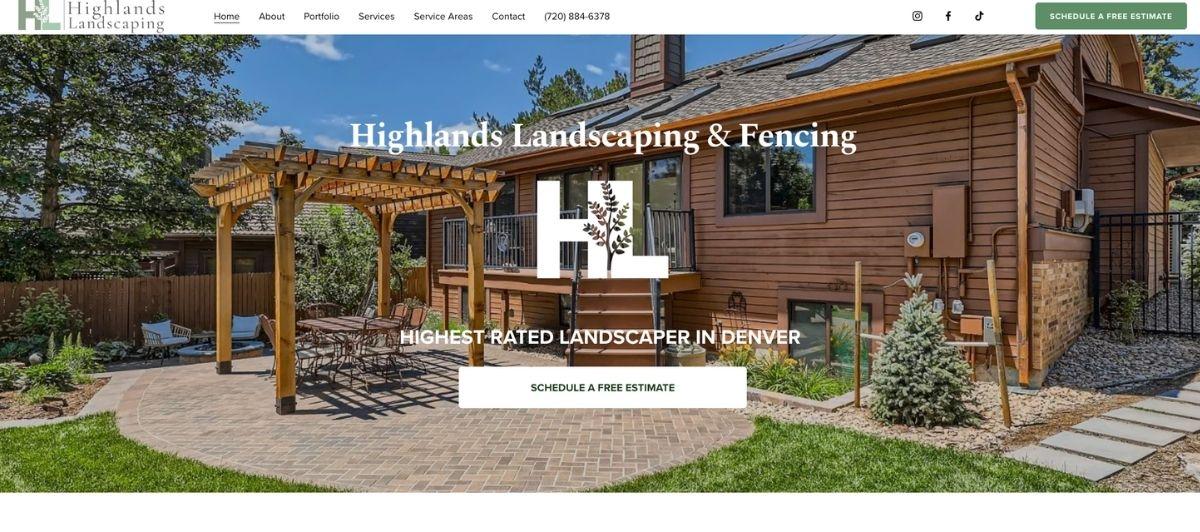
Highlands Landscaping makes a professional first impression from the moment you land on their Denver-based site. A smartly organized homepage with a professionally designed logo communicates a traditional, formal approach to landscaping before a word of copy is read.
What elevates this site above many competitors is the short “About” blurb on the homepage that makes the business feel personal and trustworthy. For landscaping companies whose brand identity is built around the personality of the owner or team, this site is one of the best examples of how to give a local business a distinctive, memorable web presence without overcomplicating the design.
2. Anderson Landscape Maintenance

Anderson Landscape Maintenance understands something many landscaping websites miss: trust is built through signals, not just style. The Portland-based company deploys “Best Of” badges alongside its founding year of 2006 prominently on the homepage, giving potential customers immediate confirmation that this is a business with an established reputation and community recognition.
These details signal experience and reliability before a visitor reads a service description or views a project photo. For local landscaping companies competing in markets where homeowners are vetting multiple contractors, this kind of credibility display is a significant conversion advantage.
3. Brookscapes

Brookscapes solves one of the most common problems on landscaping websites: unclear positioning. With a headline reading “Resort Style Living in Your Backyard,” the site immediately distinguishes itself from lawn maintenance companies and communicates exactly what kind of landscaping work this company specializes in.
A well-organized layout, aesthetically pleasing typography, and a concise paragraph about services and experience ensure that no potential client leaves the homepage without understanding precisely what this company offers and who it serves best. For landscaping businesses with a clear specialty, this site demonstrates how a single strong headline can do more positioning work than any number of service list pages.
4. Juniper Landscape Company
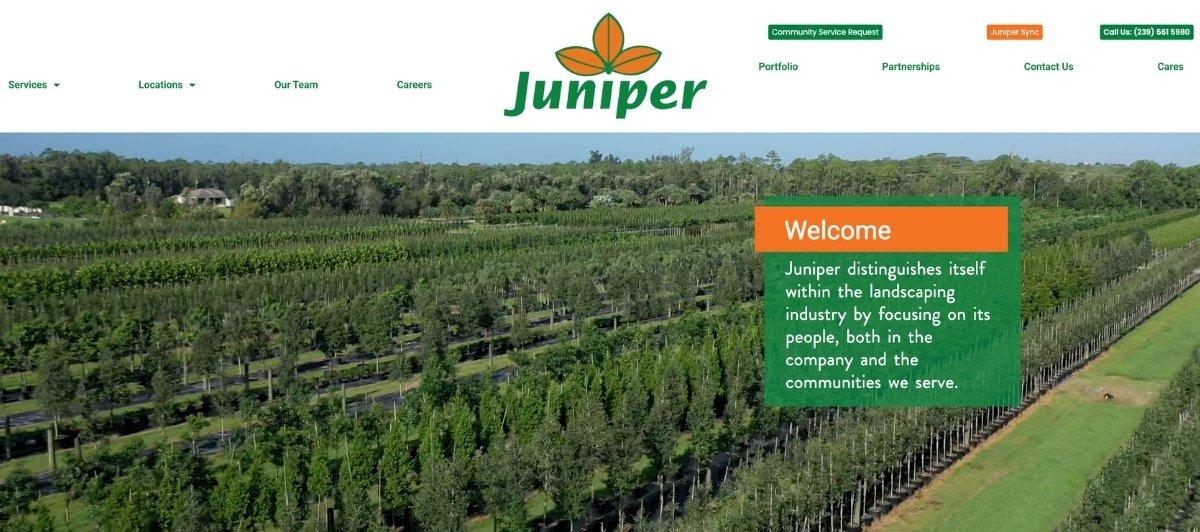
Juniper Landscape Company uses photography as its primary conversion tool in a way that few landscaping websites execute as deliberately. The San Diego company’s almost moody, atmospheric project images create a visual quality and emotional tone that immediately communicates premium work and distinctive design sensibility.
Beyond the photography, the site’s practical design decisions, including an easy-to-find clickable phone number, social media links, and logical main menu structure, ensure that the beautiful visuals serve a functional conversion purpose rather than simply inspiring admiration. For landscaping companies with a strong visual identity, this site shows how to make photography do the heavy lifting across the full homepage experience.
5. Gibbs Landscape Co.
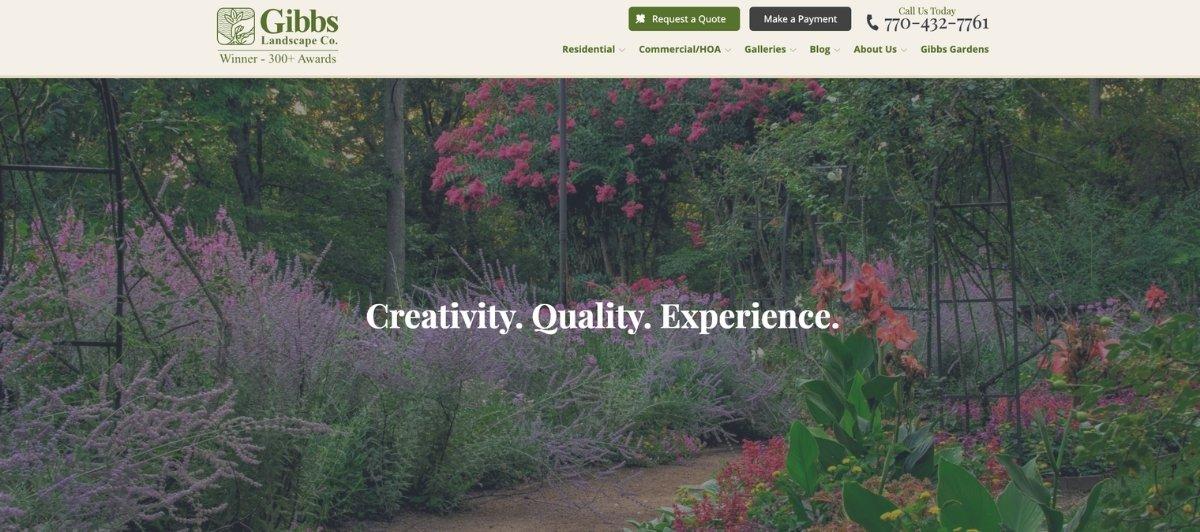
Gibbs Landscape Co. opens with one of the most effective headline choices on any landscaping website: “Winner of Over 300 Awards.” This single statement immediately positions the Atlanta-based company as the most recognized landscaping business in its market, giving potential customers the social proof they need to move from consideration to contact within seconds of arrival.
Stunning project photos reinforce the award-winning reputation visually, and the homepage flow moves naturally from services to customer testimonials to calls to action to a compelling “Get Your Project Started” form. The overall structure is a near-perfect example of how a landscaping company homepage should convert curious visitors into qualified leads.
6. Pearl Landscaping and Patio Co.
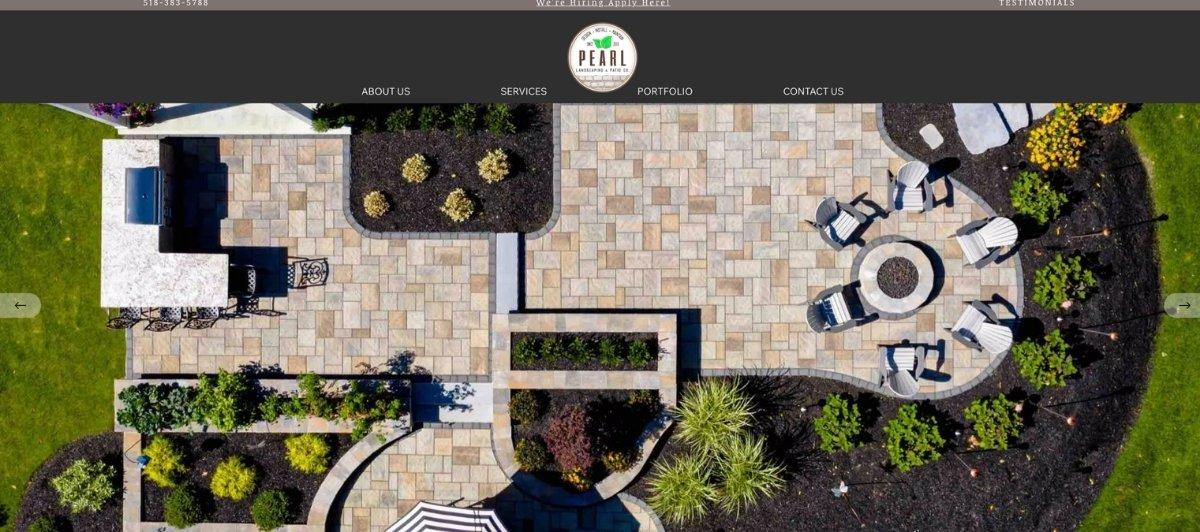
Pearl Landscaping and Patio Co. stands out from the sea of white-background landscaping websites by committing to a dramatic black background that makes every project photo appear more vivid, and the entire site feel more sophisticated and premium. A full-screen video and well-organized content blocks create a browsing experience that feels immersive without becoming confusing.
As visitors scroll deeper into the homepage, the black gives way to a softer cream-white, ensuring that the photography and content feel appropriately warm and inviting rather than consistently dark. For landscaping companies targeting higher-end residential or commercial clients, this unconventional color choice communicates a level of design confidence that standard earth-tone layouts cannot.
7. Seattle Urban Farm Company

Seattle Urban Farm Company demonstrates how a landscaping website can extend beyond a standard contractor site to become a genuine content and education platform. Rather than simply listing services, the site provides visitors with podcast episodes, multimedia content, courses, and opportunities to engage with the company’s philosophy about productive land use.
This content-rich approach serves a specific audience, homeowners who want more than just a maintained yard but who need to be convinced of the value of productive landscaping before they commit to a project. For landscaping companies with a distinctive point of view or specialty, this site is one of the strongest examples of how to build a community around that perspective rather than simply advertising services to it.
8. Carrington Lawn and Landscape
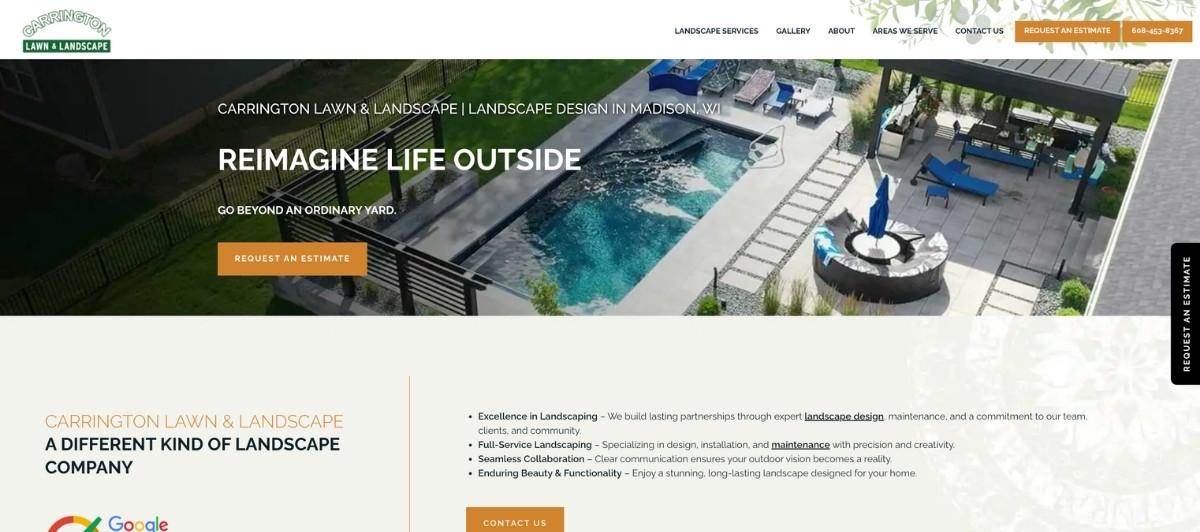
Carrington Lawn and Landscape creates a browsing experience that feels genuinely compelling rather than merely informative. Inviting project photography, strong copy that speaks to the emotional value of a beautiful outdoor space, and customer testimonials featuring before-and-after transformations together build a case for the landscaping investment rather than simply describing what the company offers.
For landscaping businesses that want their website to do persuasive work, not just informational work, this site is a strong reference for how imagery, copy, and social proof can be combined to move a potential customer from passive interest to active inquiry.
9. Davey Tree

Davey Tree takes a distinctly human-centered approach to its homepage by leading with images of the company’s hard-working staff rather than leading exclusively with completed project photography. This team-forward visual strategy communicates the dedication and expertise behind the work rather than just the results.
Fun animated icons in the header bar’s service sections add a welcoming layer of personality to what could otherwise feel like a corporate site, while the Davey Blog, regularly updated with scientific and industry information about tree and lawn care, positions the company as an authority in the landscaping and arboriculture field rather than simply a service provider.
10. Green Tree Landscaping

Green Tree Landscaping closes this list with a site that earns its place through radical simplicity executed with genuine discipline. The Los Angeles company uses a minimalist design with a large white border encompassing each page’s content, and deliberately limits every page to a single, non-scrolling view.
This design constraint requires every element on each page to earn its place, producing a site where nothing competes for attention and every piece of photography or copy serves the company’s positioning. The approach mirrors their slogan, “Our approach is simple,” and demonstrates that simplicity at this level is its own form of sophistication when the photography is strong enough to carry the experience.
Design choices worth applying to any landscaping website
Looking across all 10 of the best landscaping websites above, specific decisions consistently separate sites that generate leads from those that simply exist online. Here’s what’s worth applying to any landscaping company website.
Start with a hero image that sells the transformation
The hero section of a landscaping website should show the most stunning completed project the company has in its portfolio, not a generic grass photo or a staff headshot. A strong hero image that immediately conveys the quality and style of the landscaping work is the most powerful single conversion element on the page. Juniper Landscape Company, Gibbs Landscape Co., and Pearl Landscaping all demonstrate what happens when this choice is made deliberately rather than as an afterthought.
Put the free estimate request above the fold
A prominent quote form directly on the homepage creates zero-friction lead capture that is perfect for busy homeowners who want to request information quickly without navigating through multiple menus.
Every extra click between a visitor’s interest and a submitted estimate request costs conversions. For landscaping companies that want their website to work harder than their current one, adding or repositioning the estimate request form is consistently the highest-impact single change available.
Use clear service categories, not a single services page
Potential clients searching for lawn maintenance have different needs and different timelines than those looking for a full landscape design project. Clear service categories in the main menu and on dedicated service pages help visitors self-select quickly and confirm the company serves their specific need. This also supports local SEO by giving search engines specific, keyword-rich pages for each service type. Our SEO services help landscaping companies build exactly this kind of structured, service-specific visibility over time.
Feature customer testimonials and Google reviews strategically
Gibbs Landscape Co.’s homepage flow, moving from services to customer testimonials to calls to action, demonstrates how social proof placed before the final conversion step significantly increases the likelihood that a potential customer submits a request.
Reviews from satisfied past clients that speak to quality, professionalism, and transformation are among the most persuasive content a landscaping website can display, particularly for larger projects where potential customers need confidence before committing to a significant investment.
Build a blog section for long-term local SEO
Davey Tree’s regularly updated blog is a clear competitive advantage that most landscaping company websites overlook entirely. Content covering lawn care tips, seasonal maintenance guides, plant recommendations for specific climates, and how to plan a landscaping project all attract organic search traffic from potential clients in the early stages of their research.
A well-maintained blog section builds compounding visibility over time and positions the landscaping company as the most knowledgeable provider in its area. Our web design team builds these content structures into landscaping sites from the start.
What every great landscaping website needs
Whether your landscaping business focuses on residential lawn care, high-end landscape design, or commercial maintenance contracts, these are the non-negotiables for any landscaping website that should generate consistent project inquiries.
- High-quality project photos throughout the site. Every page of a landscaping website is an opportunity to show the quality of the work. Real before-and-after photos, professional shots of completed projects, and seasonal work galleries all communicate expertise and visual style more persuasively than any written description.
- A free estimate CTA visible without scrolling. The most important action any potential client can take is requesting a free estimate. This option should appear above the fold on the homepage and in a persistent header or sticky banner across all pages. For mobile devices specifically, a click-to-call button paired with the estimate form ensures no visitor leaves without a clear contact path.
- Clear service area information. Landscaping is a local business. A homeowner evaluating landscaping companies needs to confirm you serve their neighborhood before investing any more time on your site. Display your service area on the homepage, in the footer, and on a dedicated service area page that also supports local search visibility.
- A well-organized project gallery. Potential customers researching a landscaping company want to see work similar to what they’re imagining for their own property. Organizing project photos by service type, whether lawn care, hardscaping, landscape design, or garden installation, helps visitors find relevant inspiration and builds confidence that the company has handled their specific type of project before.
- Mobile-first design and fast load speeds. Most homeowners research landscaping companies on their phones, often while standing in their yard, imagining what it could look like. A site that loads slowly or doesn’t display well on mobile devices loses those visitors before they see a single project photo. Our WordPress speed optimization service keeps contractor sites performing well across all devices and connection speeds.
- Local SEO structure that drives organic visibility. Well-optimized landscaping websites generate organic traffic for years. Unlike paid advertising that stops when spending stops, local SEO creates a long-term lead engine for landscaping companies. Location pages, service-specific pages, Google Business Profile optimization, and a regularly updated blog section all contribute to the local search visibility that drives the majority of new landscaping project inquiries.
The work you do transforms outdoor spaces — your website should show it — Freshy makes that happen
The best landscaping websites share one quality: they make a homeowner standing in their underwhelming yard believe that a beautiful outdoor space is achievable, and that this company is the one to create it. Every design choice, from the hero image to the estimate form to the customer testimonials, should serve that moment of conviction.
Key takeaways:
- A stunning hero image of completed landscaping work is the highest-impact single element on any landscaping website
- A free estimate CTA above the fold and accessible from every page is non-negotiable for consistent lead generation
- Clear service categories and dedicated service pages serve both user experience and local search visibility
- Customer testimonials placed before the final conversion step significantly increase inquiry rates
- A blog section covering lawn care and landscaping topics builds compounding organic search visibility over time
- Mobile-first design and fast load speeds are critical when most homeowners research on their phones
If your current landscaping website isn’t generating the inquiries your work deserves, let’s talk about building one that does. Tell us about your business, and we’ll walk you through what your site needs. You can also browse our contractor portfolio to see the kind of work we bring to home services businesses just like yours.
FAQs
What makes a great landscaping website design?
A great landscaping website design combines high-quality images of completed projects, clear calls to action, easy navigation, and a simple layout that guides potential customers toward requesting a free estimate. A consistent color scheme, strategic white space, and minimal text alongside large project photos create the visual appeal that separates modern design from cluttered, outdated sites.
What should a landscaping company website include?
The best landscaping websites feature high-quality images throughout, clear descriptions of specific services, dedicated service pages with concise descriptions, a project gallery organized by landscaping services offered, a mobile-responsive layout, and contact options above the fold. Many top sites also include an Instagram feed to showcase recent work and add a personal touch that static galleries cannot replicate.
How do design examples from the best landscaping websites help?
Studying design examples from leading landscaping companies helps you identify what works across different website design approaches. Whether that’s a bold color scheme used by Pearl Landscaping or the minimal text and white space strategy of Green Tree Landscaping, these design examples show how visual choices translate into real lead generation for landscaping businesses of every size.
What design tips matter most for landscaping website design?
The most impactful design tips for landscaping website design are: lead with large project photos in the hero section, use white space generously to let the imagery breathe, keep body text concise and scannable, organize landscaping services into clear categories, and include clear calls to action on every page. Landscape architects and high-end companies often use modern design with minimal text to let the work speak for itself.
How does web design affect lead generation for landscaping companies?
Strong web design directly increases the number of potential customers who request estimates. A simple layout with easy navigation, high-quality images, a clear color scheme, clear descriptions of specific services, and well-placed contact options all reduce the friction between a visitor’s first impression and a submitted quote request. Poor website design with cluttered body text and buried contact options consistently loses leads to competitors with a cleaner, more conversion-focused landscaping website design.
Should a landscaping website have an Instagram feed?
Yes, when the company is actively posting project photos. An embedded Instagram feed adds a personal touch and real-time social proof that complements the static project gallery. It signals to potential customers that the landscaping business is active, current, and proud of its ongoing work, which reinforces trust alongside the more formal design examples and completed project sections of the site.




)