Physical therapy asks a lot of a new patient. They arrive in pain, often self-conscious about their mobility, unsure whether treatment will hurt or help. A clinic’s website is where that anxiety either eases or hardens, which is why the best physical therapy websites lead with warmth, clarity, and proof that other people got better.
Here’s what this guide covers:
- The 6 best physical therapist websites of 2026, reviewed
- Why mobile performance decides whether patients find you
- How local SEO works for single and multi-location clinics
- Building service pages for every treatment you offer
- The trust signals and booking tools that convert visitors
Healthcare sites carry a particular responsibility: they have to reassure someone before they’ve met anyone. That balance of empathy and performance is what our WordPress design work is built around, and the six examples below show it done well.
These are the 6 best physical therapist websites we’ve found…
Whether you’re recovering from a physical injury or need help with a disability, a good physical therapist makes you feel comfortable with being more active. For many, using PT can feel physically uncomfortable or even personally embarrassed, so a compelling website could mitigate or even completely erase those fears in a new client.
Just how to narrow down physical therapy services and branding depends on the trainer and customer needs, so we’ve got you covered with a short list of the best personal training websites around and what they offer individually to keep people’s attention.
1. Sports Rehab Unlimited
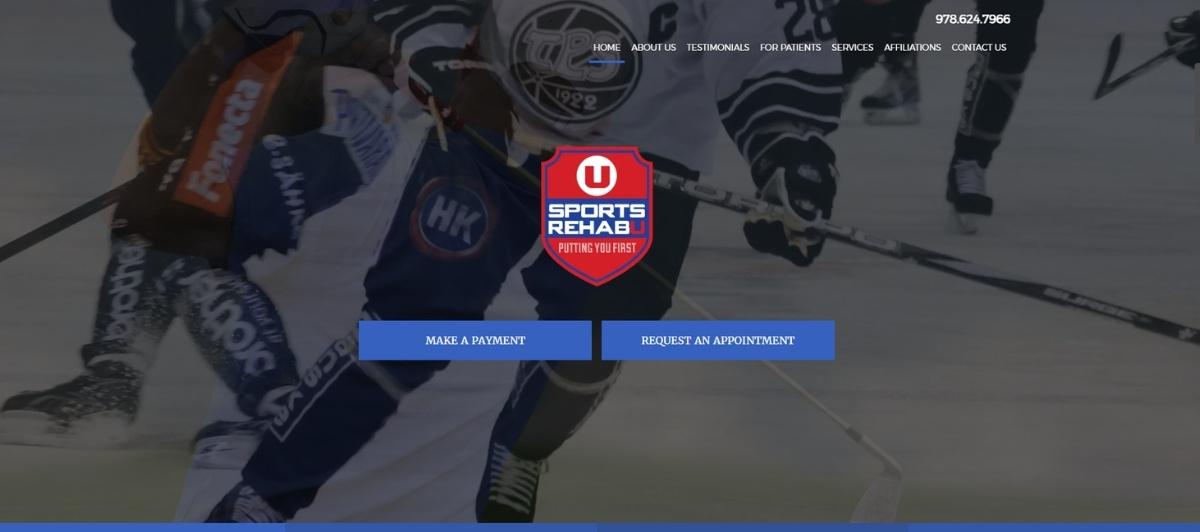
Established in 2017, Sports Rehab Unlimited provides physical therapy and sports rehabilitation services, making their site’s audience predominantly for average people with physical injuries and those who were likely injured via sports-specific activities. Their homepage slider scrolls through images of almost every major sport to indicate their treatment versatility, with sign-up and appointment-booking buttons leading to a scheduler system just below.
With their specialized injury database, Sports Rehab gives visitors the ability to sort through what doesn’t pertain to their situation more quickly, and their list of local professional awards and extensive customer support testimonials only helps a newer business stand out.
2. Integrity Rehab + Home Health
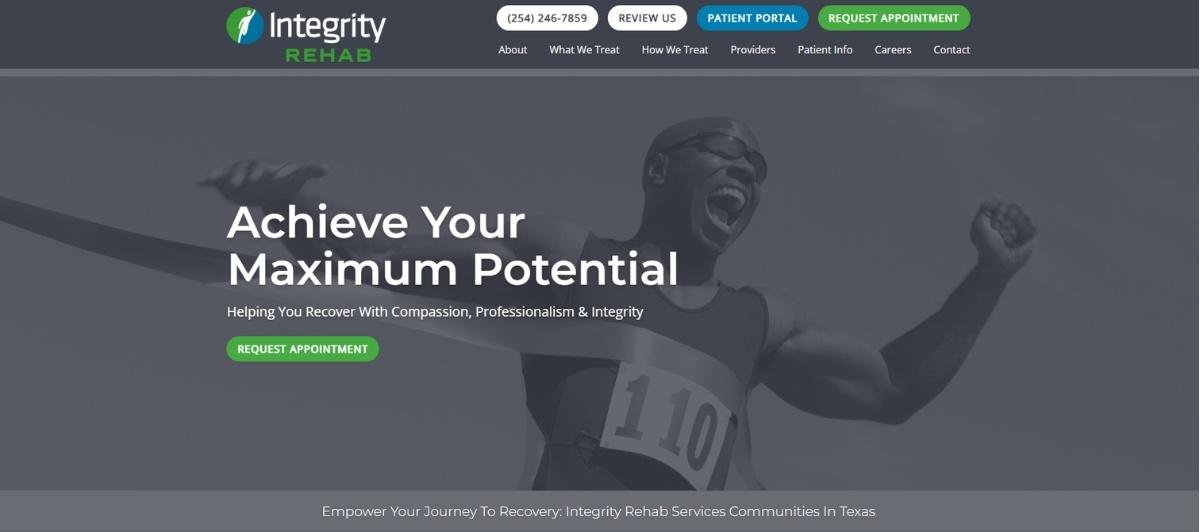
An independent healthcare provider, Integrity‘s site quickly differentiates the types of care they provide with a homepage image slider and a short description detailing that they treat both adults and children. They’ve got a simple, but unique info bar in the middle of the homepage describing how many of their therapists have doctorates, how many patients are reporting self improvement, and the sheer number of patients they’ve had since 2014.
The unobtrusive “quick connect” slider on the right side pops up under your mouse cursor and gives immediate contact information for visitors who already know what they’re looking for.
3. Apex Network Physical Therapy

The privately-owned Apex therapy network is huge, with over 80 locations across the United States, and they let you know with a location search button right on the homepage’s first image. Each of their homepage slides describe a distinct aspect of their professional success to show their professional chops, like being listed in Entrepreneur Magazine and their status as Southern Illinois University’s sole therapy choice for the whole basketball team.
Each homepage service title, like Speech Therapy, has its own icon within a grid for easy recognition, and every service gets its own web-page for a more thorough description.
4. Ivy Rehab
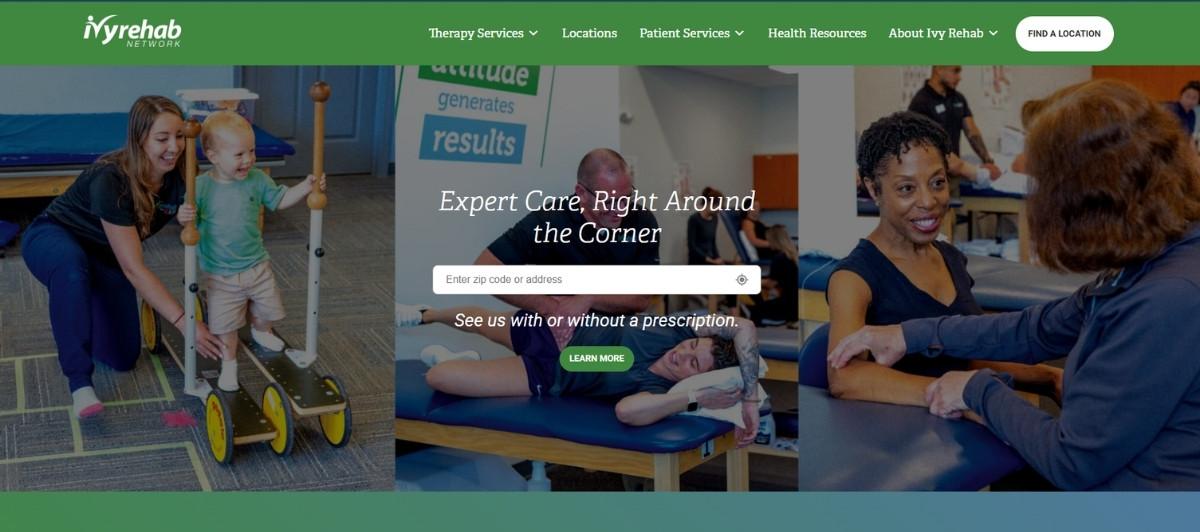
Ivy Rehab has a great site, with snappy, simple animations and an easy to navigate layout that all loads quickly. The well-organized and straightforward navigation easily leads users to the information they want, and the site’s visually-appealing animations and high-quality pictures don’t slow down its speedy load time.
Their homepage lists topical concerns, like over-training and the relevant current risks with undetected TBIs, and new patients will find it easy to book an appointment from anywhere on the site because its call to action (CTA) is a part of the constant header.
They rightly bring up that their staff have more annual contact hours in continuing-education courses than any other state, and their 30 second video introducing visitors to the scheduling process and general benefits at Ivy is very clear and informative.
5. Athletix Rehab and Recovery
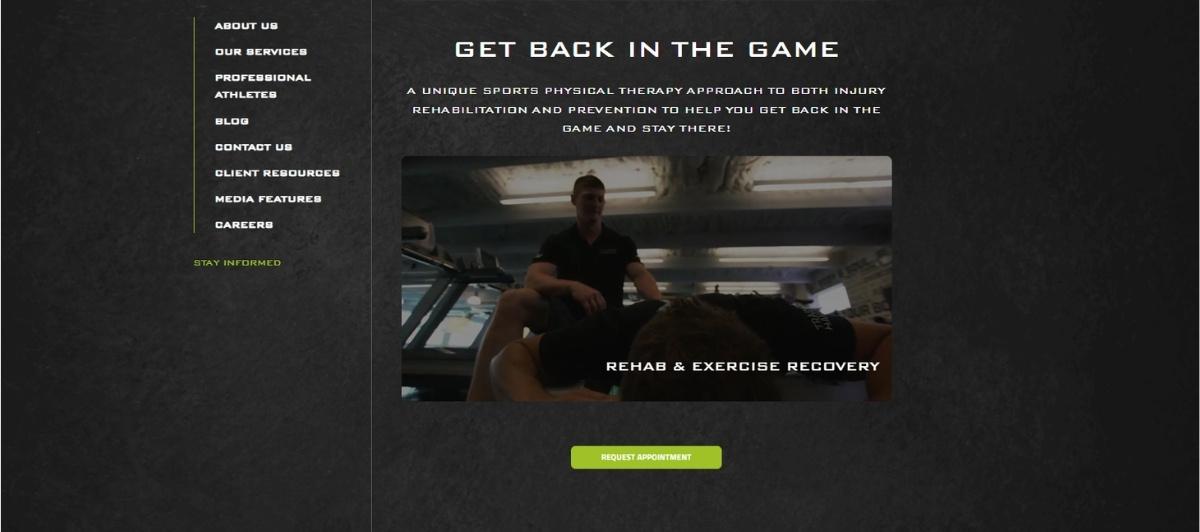
The Athletix site starts off strong and gets stronger, opening with a video loop of everything they do, from training actual clients to consultations to using specialized recovery devices during treatment. Their brand is intense and upbeat, with “Get Back in the Game” as their main call to action and lots of images of more extreme sports and physique.
This helps narrow their prospective clients to recovering athletes, and they even have a testimonials section just from professional athletes to emphasize their industry expertise between very different sports. With appointment-booking and customer review buttons always in the upper right screen corner, it’s easy to get both the essentials and without losing the edgier feel of this design.
6. Loudoun Sports Therapy Center

While Loudoun Sports Therapy‘s site may seem a little bare, they offer a lot of different service types that benefit from the cleaner-looking sections with more descriptive text. Their header toolbar takes the cake here, with more general physical therapy differentiated from sports therapy options, and physician-specific practice areas for people who are looking for a specific therapist.
Their customer testimonials stays at the center of the homepage with photos of patients relishing sporty environments outside the center. The site’s focus on clear information without much flair helps visitors quickly get to the information they need.
Mobile is where patients actually find you
More than 60% of healthcare searches now happen on mobile devices, often from someone sitting on the couch with a sore back or standing on a sideline after an injury. Mobile optimization is critical for physical therapy websites, and it affects far more than convenience.
Google prioritizes mobile-friendly sites in its rankings, so a clinic with a clunky mobile experience is invisible to a majority of its potential patients. Ivy Rehab’s mobile-friendly site directly boosts its Google ranking, and SPEAR Physical Therapy’s site loads lightning-fast while remaining fully mobile-friendly. Both practices show that speed and polish aren’t in conflict.
The technical priorities are straightforward:
- Fast loading speeds, which improve both user experience and search rankings. Ivy Rehab proves that visually appealing animations and high quality pictures don’t have to slow down a speedy load time.
- Responsive layouts that adapt cleanly from desktop to phone without breaking navigation
- Mobile-friendly forms so a patient can complete an intake or booking request with one thumb
- A strong technical SEO foundation that ensures proper site indexing across devices
Getting a media-rich physiotherapy site to load in under two seconds takes real attention, which is where managed hosting and speed optimization do their quiet work.
Local SEO for single and multi-location clinics
Physical therapy is an inherently local business. Patients search for a clinic near their home or office, and local SEO is what determines whether they find yours or a competitor’s. This matters whether you run one practice or, like Apex Network with over 80 locations, a national footprint.
Give every location its own page
The single most effective structural move is giving each clinic location its own page. A dedicated page lets you target the specific city or neighborhood, list that location’s hours and phone number, and rank in nearby searches. Apex Network puts a location search button right on its homepage first image, which is exactly the right instinct for a multi-location practice.
Optimize the details that search engines read
Beyond location pages, a few fundamentals drive visibility:
- Unique, informative page titles and URLs for every page, rather than generic templates
- A complete Google Business Profile with accurate hours, photos, and real reviews
- A well-structured blog that captures long-tail search traffic from patients researching symptoms
- Consistent contact information across your site and every directory listing
Foothills Sports Medicine keeps a frequently updated blog, which steadily builds authority and pulls in searches a service page never would. Regular content covering topics like recovery timelines, injury prevention, and direct access rules in your state gives your practice something to rank for beyond its name.
For clinics also running Google Ads or broader digital marketing, strong organic search engine optimization lowers the cost of every paid click by capturing patients who would otherwise have to be bought.
Build a page for every treatment you offer
Physical therapy practices often treat far more than patients realize. Condition-specific and service-specific pages improve both SEO and patient confidence, because someone searching for help with neck pain wants to see that exact phrase, not a generic services list.
Apex Network handles this well, giving each homepage service title its own icon in a grid and, more importantly, its own web page with a thorough description. Loudoun Sports Therapy Center takes a related approach with a header toolbar that separates general physical therapy from sports therapy and physician-specific practice areas.
Here are the services most practices should consider giving their own page:
| Service | Who it reaches |
|---|---|
| Sports injuries and injury recovery | Athletes and active adults returning to play |
| Dry needling | Patients seeking targeted myofascial treatment |
| Pelvic health | An underserved group actively searching for specialists |
| Massage therapy | Patients looking for complementary manual therapy |
| Speech therapy | Families needing multidisciplinary care under one roof |
| Virtual PT | Patients wanting remote sessions or follow-ups |
| Neck and back pain | The most common entry point into physical therapy |
Clear service descriptions matter as much as the pages themselves. Sports Rehab Unlimited’s specialized injury database lets visitors quickly filter out what doesn’t apply to their situation, which is a smart way to handle a broad catalog. Integrity Rehab differentiates its care types immediately, noting that it treats both adults and children, so families know they’re in the right place. Structuring this content well is exactly what considered WordPress development delivers.
Proof, transparency, and the trust that books appointments
Physical therapy involves months of commitment and often significant out-of-pocket cost. Patients want evidence that a clinic delivers real results and clarity about what they’ll pay. The best PT websites provide both without making anyone hunt.
Show real results from real patients
Patient testimonials are the strongest currency in this field, and the clinics on this list use them well:
- Ivy Rehab includes a testimonials page with publish dates, which signals the reviews are current
- SPEAR Physical Therapy features real results pulled from patient satisfaction surveys, plus video testimonials that boost engagement
- ApexNetwork showcases testimonials from professional athletes, reinforcing its sports expertise
- Athletix Rehab and Recovery dedicates an entire testimonials section to professional athletes
- Hands of Hope highlights “Real Stories of Recovery” right on its homepage
- Loudoun Sports Therapy Center keeps customer testimonials at the center of its homepage, paired with photos of patients back in active environments
Build credibility with authentic detail
Trust signals go beyond reviews. Professional headshots of your licensed physical therapists, clear contact information, and authentic clinic photography establish rapport before a patient walks in. Consistent branding across every page reinforces that impression.
Integrity Rehab’s info bar showing how many therapists hold doctorates and how many patients report improvement is a simple, effective way to quantify expertise, and Ivy Rehab’s note about continuing education courses does the same.
Be upfront about insurance
Transparency about insurance plans and pricing reduces friction for potential patients more than almost anything else. A clear insurance information page listing accepted plans, explaining direct access in your state, and outlining typical costs removes the biggest unanswered question a new patient carries. Practices that hide this information force patients to call, and many simply won’t.
Making booking effortless and content useful
Once a visitor is convinced, the path to an appointment should be nearly frictionless. High-performing websites feature online booking and mobile-friendly forms that streamline scheduling, turning interest into a confirmed visit before hesitation sets in.
Booking that follows the patient
Ivy Rehab keeps its appointment booking call to action in the constant header, so new patients can book from anywhere on the site. Athletix places appointment-booking and customer review buttons permanently in the upper right corner, and Sports Rehab Unlimited puts sign-up and booking buttons directly beneath its homepage slider leading into a scheduler.
Integrity Rehab’s “quick connect” slider surfaces contact details instantly for visitors who already know what they want.
Content that builds authority
Patient-focused educational content, including blogs and FAQs, builds both trust and search authority. Ivy Rehab’s homepage addresses topical concerns like over-training and undetected TBI risks, and its 30-second video walking visitors through scheduling and clinic benefits is clear and informative. This kind of content does double duty: it answers questions for prospective clients while capturing long-tail searches from people who don’t yet know they need PT.
A practice that regularly publishes helpful, informative content becomes a resource for its community rather than just another clinic listing. Keeping that content current and the site running smoothly is where ongoing WordPress maintenance earns its place.
Get your physical therapy practice moving with Freshy
The best physical therapist websites all do the same core things: they load fast on mobile, rank locally, explain every service clearly, prove results with real patient stories, and make booking simple.
Here are the key takeaways from this guide:
- Optimize for mobile first, since over 60% of healthcare searches happen on phones
- Give each clinic location its own page for stronger local search rankings
- Build a dedicated page for every treatment, from dry needling to pelvic health
- Feature dated testimonials, video reviews, and authentic clinic photography
- Publish clear insurance information to remove the biggest barrier to booking
- Keep an appointment CTA visible from every page on the site
Whether you’re a single-location practice or a growing network, your website should ease a nervous patient’s mind before they ever step onto a treatment table. Freshy builds high-performing WordPress websites for healthcare practices nationwide, backed by dependable support and maintenance. When you’re ready to bring more patients through the door, talk to our team.
Frequently asked questions
What makes a great physical therapy website?
The best PT websites load fast on mobile, offer easy online appointment booking, include dedicated pages for each service and location, display real patient testimonials, and clearly list accepted insurance plans.
Why is mobile optimization important for PT clinics?
Over 60% of healthcare searches happen on mobile devices, and Google prioritizes mobile-friendly sites in rankings. A slow or awkward mobile experience means losing most of your potential patients before they ever see your services.
How do physical therapy practices improve local SEO?
Give each clinic location its own page with unique content, optimize page titles and URLs, maintain a complete Google Business Profile with real reviews, publish a regular blog, and ensure the site is mobile-optimized.
What services should have their own page?
Give every treatment a dedicated page: sports injuries, dry needling, pelvic health, massage therapy, speech therapy, virtual PT, and common conditions like neck and back pain. Condition-specific pages improve both SEO and patient confidence.
How do PT websites build patient trust?
Through dated patient testimonials, video reviews, professional headshots of licensed physical therapists, authentic clinic photography, clear contact details, and transparent insurance and pricing information that removes uncertainty.