Physiatry has a marketing problem that has nothing to do with quality of care: most patients have never heard the word. Someone living with chronic pain may spend years bouncing between primary care and surgical consults without ever learning that an entire medical specialty exists to restore function without an operation. That makes a physiatrist’s website part explanation, part invitation.
Here’s what this guide covers:
- The 25 best physiatrists websites, reviewed
- How these sites turn pain sufferers into booked appointments
- What physical medicine and rehabilitation actually involves
- The conditions physiatrists diagnose and treat
- The training path and professional resources behind the specialty
A site that has to teach visitors what a specialty is before it can sell them on a clinic is a genuinely interesting design brief. Our WordPress design team works on these problems constantly, and the examples below show how the field’s best handle it.
The top 25 websites in the physiatry industry today
Physiatry is a unique service that offers pain sufferers relief from their chronic conditions. The physiatry industry is poised to take advantage of modern web design practices in important ways. With excellent UX design, uniform branding and dynamic programming, physiatry clinics can encourage their websites’ visitors to take action right away.
The key to making a great first impression is to keep design elements subtle and highly relevant to the needs of prospective patients.
1. New York Sports Medicine Institute

The New York Sports Medicine Institute website features eye-catching graphics and fast page-load times. The first thing visitors see when landing on the homepage is a slider alternating photos of athletes with New York magazine’s endorsement of the institute’s doctor as one of the city’s best. With smooth animations and dynamic scrolling effects, this site immediately captures readers’ attention.
2. PhysMedi
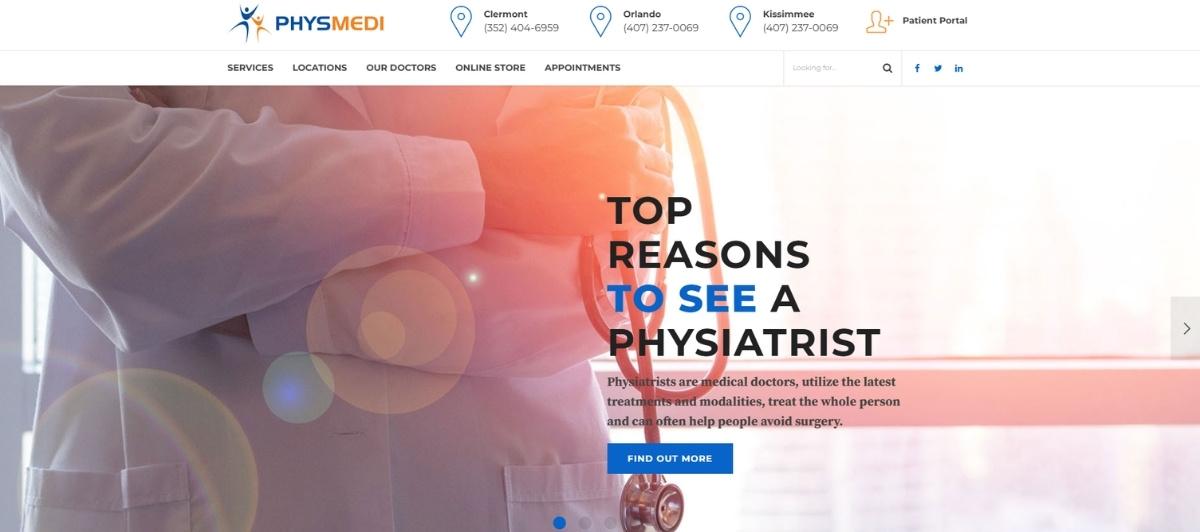
The standout feature of the PhysMedi website is its high-resolution images at the top of the site’s homepage, accompanied by buttons to click for reasons to see a physiatrist and other helpful information. Responsive design is on display throughout the website. Browsers are likely to be impressed with the dynamic graphics and smooth HTML transitions on every page.
3. Empire Physical Medicine
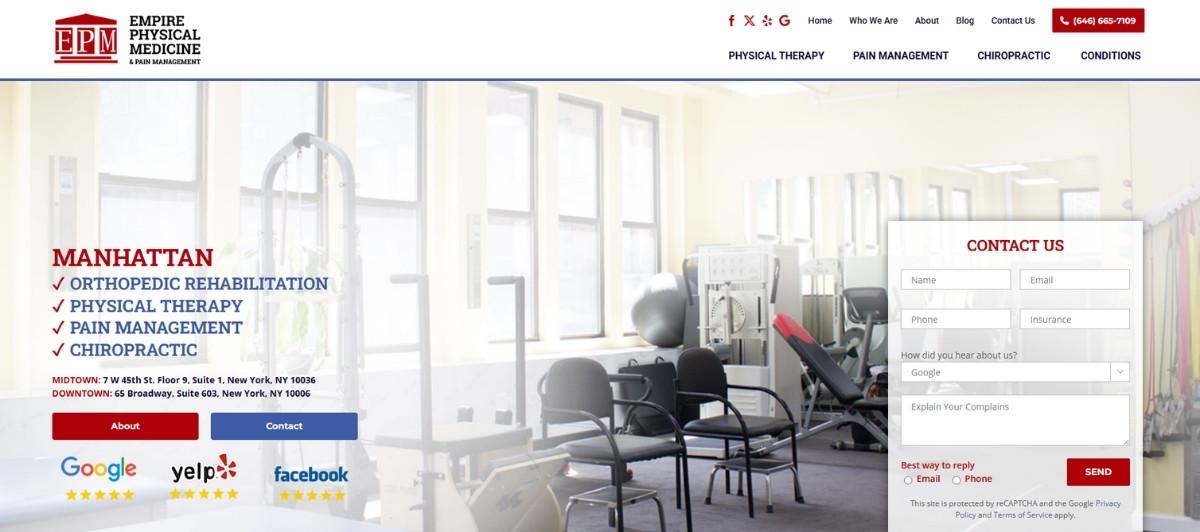
When it comes to effective design, the Empire Physical Medicine website offers a sterling example. Great care has been taken to design the user experience of this site. Users can easily find information about the practice and its services soon after landing on the homepage.
4. Robert F. Mancuso, M.D.

On the website of Robert F. Mancuso, M.D., visitors are greeted by full-screen graphics and compelling typography. The site is very effective because it keeps unnecessary details to a minimum and puts the spotlight on serving customers.
5. City Physical Therapy

The City Physical Therapy website wows readers with captivating photography and top-notch UX design. The branded graphics on the homepage make a great impression for anyone visiting for the first time. All relevant information about the practice is easy to access from the navigation bar at the top of every page.
6. Central New York Physiatry

Central New York Physiatry has one of the top websites in the industry. The professional graphic design and UX layout give this website a polished look and feel. Pages load quickly, and the site map is straightforward and intuitive.
7. Dr. Tova Alladice

The website of Dr. Tova Alladice presents users with a wealth of information organized into easily digestible sections. No matter which page of the website you land on, every other page is just one click away. The site’s visual design is pleasing to the eye, and the company branding gives this page a professional touch.
8. California Sports & Spine Institute
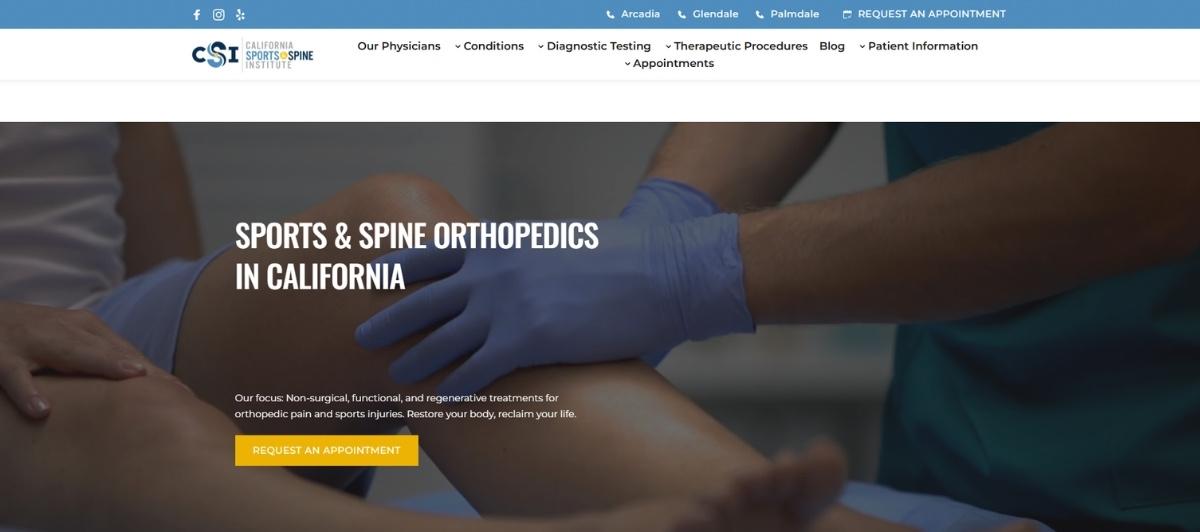
Arriving at the California Sports & Spine Institute website, visitors see a full-screen photo of a man jogging effortlessly in a scenic setting. With a dynamic homepage layout and minimalist graphic elements, this website is visually striking and professionally effective. It offers two dozen brief but helpful videos explaining various procedures the practice offers.
9. Shasta Orthopaedics

With breathtaking high-resolution photography and branded visual elements, the Shasta Orthopaedics website is an excellent addition to this list. Its layout is perfectly crafted to ensure that users can always find the information they’re looking for. A convenient portal allows patients to make or change appointments, make payments and get answers to their questions.
10. Risser Orthopaedic Group

The Risser Orthopaedic Group website features top-notch graphic design and eye-catching photography. This fast-loading site is easy to navigate and provides abundant information about the clinic’s services and history. A big button to request an appointment is front and center.
11. Pinellas Physiatry Associates
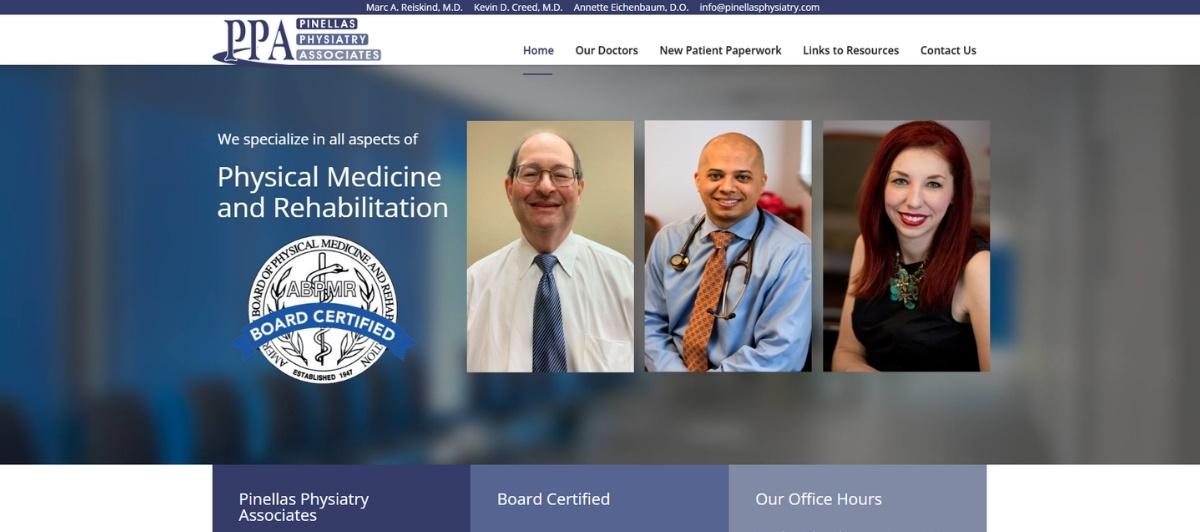
The graphic design on the Pinellas Physiatry Associates website is effective because it blends perfectly with the photography, video and animations embedded in the homepage. The overall effect is striking without being overstated. Users are likely to remember their experience on the site and retain the information they learn about the clinic’s staff and services.
12. Roger Kasendorf, D.O.
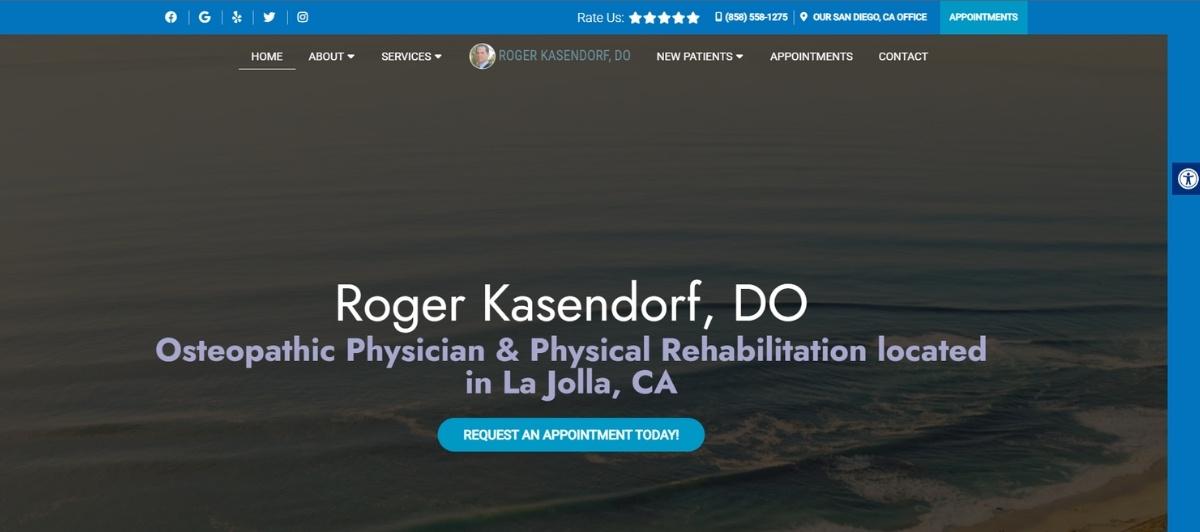
The website of Roger Kasendorf, D.O., offers easily accessible information about physiatry and the common ailments that can lead people to seek treatment. Its branded graphics, photography and web design give browsers a rewarding experience. New patients can access forms to fill out before their initial appointment.
13. Piedmont Physical Medicine & Rehabilitation

On the homepage of the Piedmont Physical Medicine & Rehabilitation website, users can find relevant information about physiatry treatment. The homepage is well-organized and packed with visual and textual information. The website draws attention to the clinic’s hours of operation and sign-up page where patients can schedule their appointments.
14. Kansas City Bone & Joint

The website of Kansas City Bone & Joint presents branded visual elements and comprehensive information about common ailments and treatment options. From the homepage to the About Us page, every detail is likely to be relevant to the concerns of potential patients.
15. Orthopedic Physician Associates
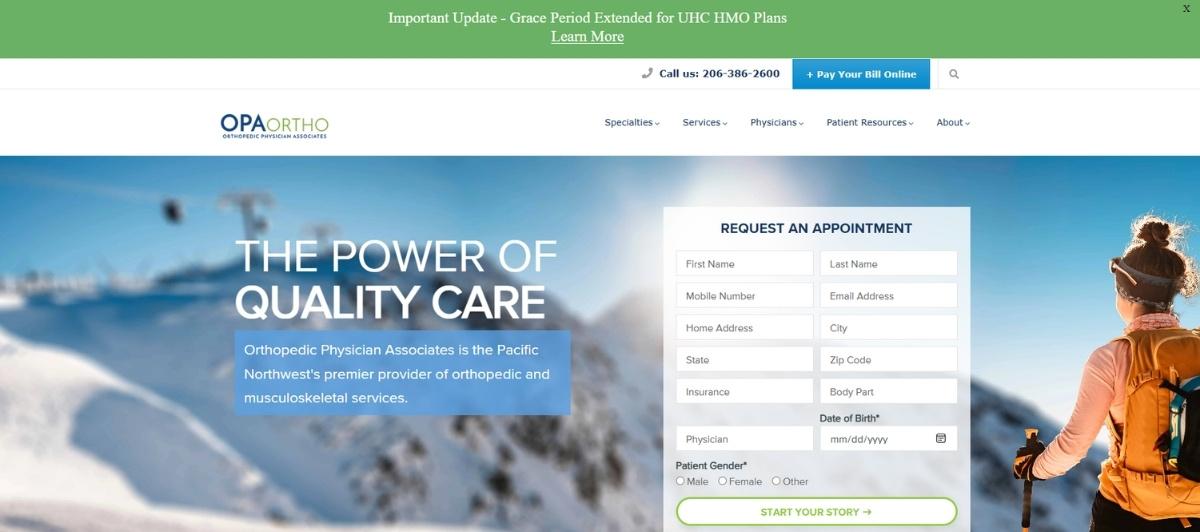
The Orthopedic Physician Associates website contains eye-catching, full-screen imagery at the top of the homepage. Details about the clinic’s hours of operation and friendly staff members are displayed where visitors are sure to find them. Potential patients can look up treatment options by body part.
16. OrthoNeuro
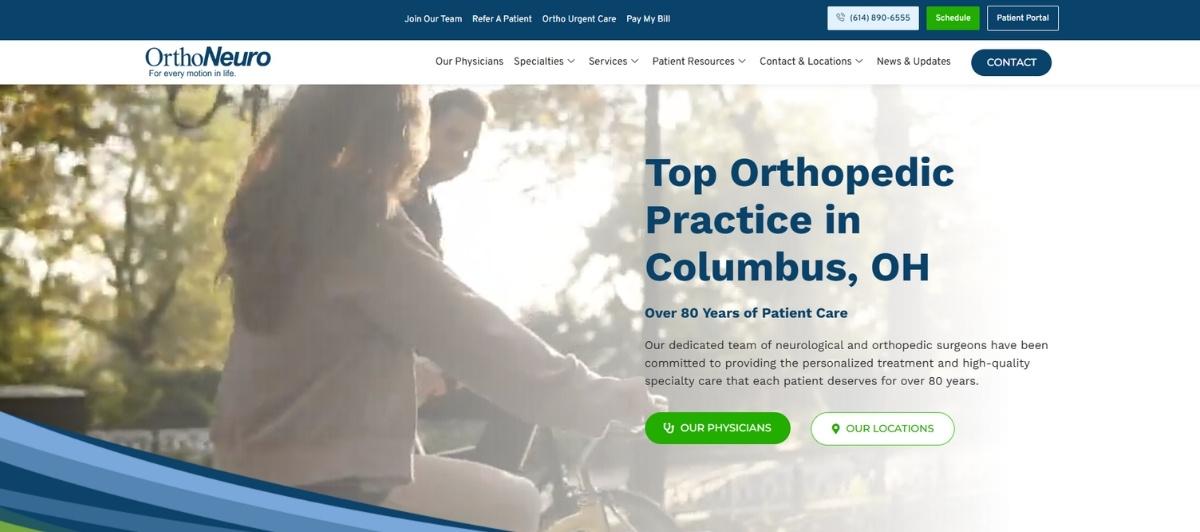
With its top-notch graphic design and promise of next-day appointments, the OrthoNeuro website goes a long way toward creating a memorable first impression. The layout is intuitive and responsive to various screen sizes, so readers can find relevant information whether they’re using a laptop, tablet or smartphone.
17. Orthopaedic Specialty Institute
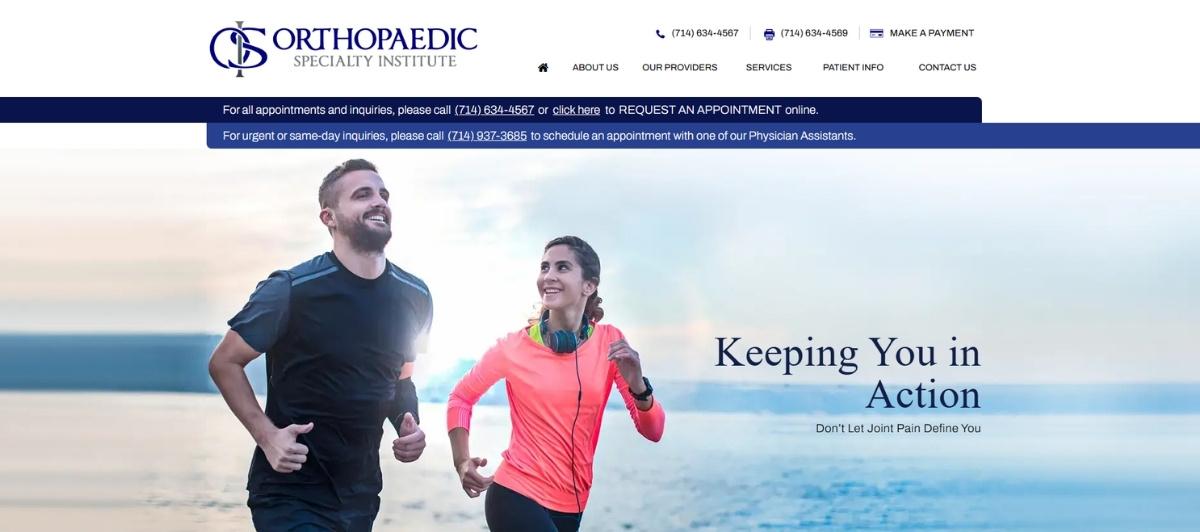
The Orthopaedic Specialty Institute website is designed to guide visitors toward setting up an appointment. Answers to common questions are prominently displayed on the homepage, and the main menu contains links to additional details about the clinic, its staff and the services offered.
18. OrthoIndy
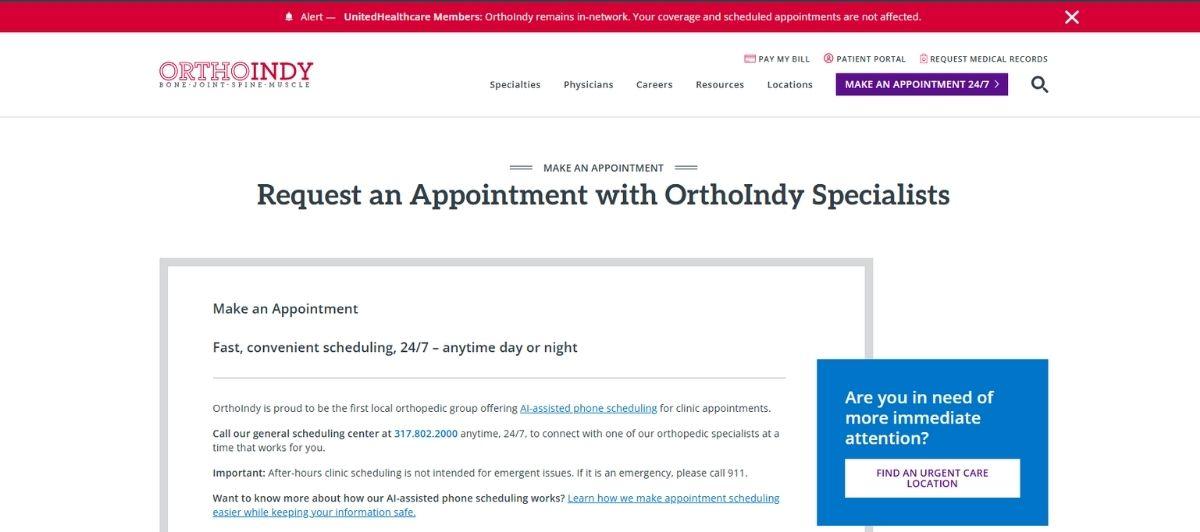
When it comes to visual design, the OrthoIndy website is one of the best examples in the physiatry industry. The graphical elements are uniform and branded across the site, and the high-resolution images on each page immediately grab viewers’ attention. So does the offer to avoid the emergency room by visiting this clinic any day of the week.
19. OrthoTexas

When visitors land on the OrthoTexas website homepage, they’re greeted by striking visuals and well-organized text about the award-winning doctors and features that set this practice apart. The site creates a memorable first impression by pairing beautiful graphic design with a top-notch user experience.
20. Desert Spine and Sports Physicians
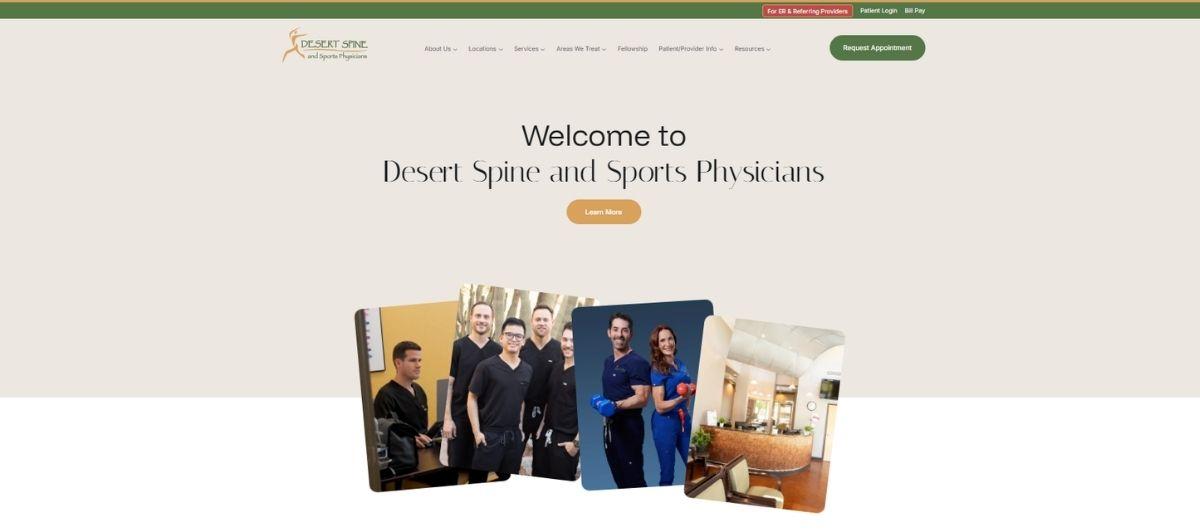
The website of Desert Spine and Sports Physicians offers outstanding graphic design and full-screen embedded photography. It’s easy for potential patients to learn about procedures offered and conditions treated. The homepage features branded graphics and dynamic HTML programming for a smooth, professional overall effect.
21. Valley of the Sun Institute for Pain Management

“It’s Time You Felt Better!” is the rallying cry that’s sure to draw patients to Valley of the Sun Institute for Pain Management. The site’s high-resolution photography speaks volumes about the clinic’s quality of care. Effective design choices can be seen on every page. The UX layout is designed to direct users’ attention to the sign-up page where they can schedule their appointments.
22. New York Orthopedics

Another example of top-notch UX design is the website of New York Orthopedics. With its branded graphics and full-screen photography, the website creates a memorable impression for visitors landing here for the first time. Specialties are easy to locate and learn more about.
23. Spine Team Texas

The Spine Team Texas website features wonderful UX design and art direction in a minimalist package. Visual elements are consistent across all pages, creating a branded effect that looks professional and polished. The practice’s team approach to wellness is likely to attract new patients.
24. Tahoe Fracture

The Tahoe Fracture website offers some of the best graphic design in the physiatry field. The effective, understated photography and graphic elements are eye-catching without distracting attention from the clinic’s overall purpose of treating patients. Ten specialties are explained with text and graphic elements.
25. OrthoVirginia
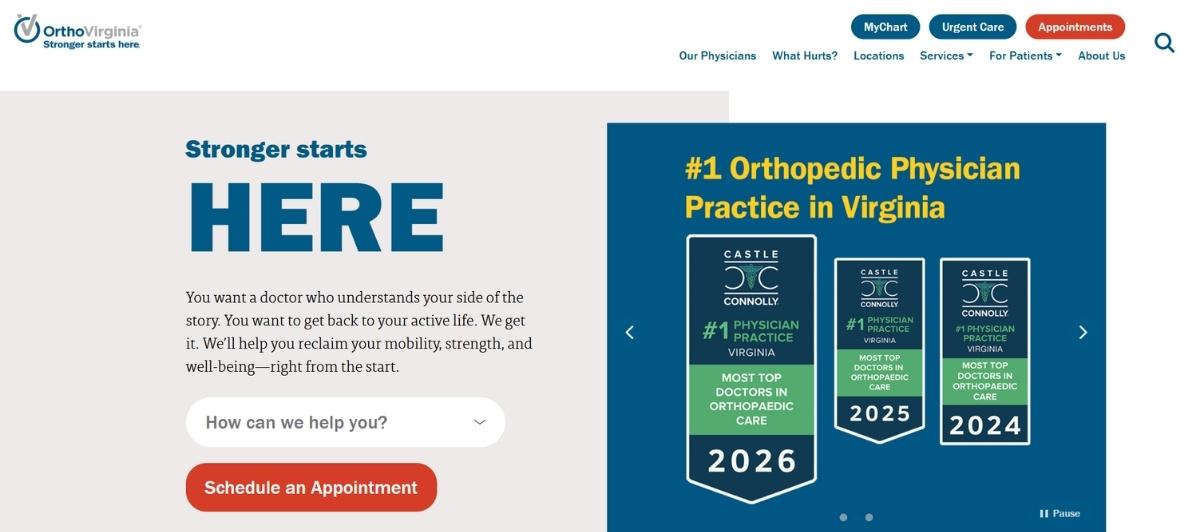
The best features of the OrthoVirginia website are its UX design, bold but minimalist typography, and overall attention to detail. Page-load times on this website are fast. Visitors can easily find the information they’re looking for on the homepage or by clicking through the main menu.
It’s easy to see why the 25 best physiatry websites are so effective at persuading their readers to make appointments without delay.
Turning pain sufferers into booked appointments
Someone searching for help with chronic pain is often frustrated and skeptical, having already tried several things that didn’t work. The websites above succeed because they reduce friction at every step, from the first impression to the moment a patient schedules.
The techniques that consistently work include:
- Fast page-load times, which enhance user experience and matter enormously when a visitor is in discomfort. Central New York Physiatry, Risser Orthopaedic Group, and OrthoVirginia all load quickly.
- High-resolution images that improve engagement, like the full-screen photography on Desert Spine and Sports Physicians and Valley of the Sun.
- Intuitive navigation and a clear site map, so users find information quickly. Dr. Tova Alladice keeps every page one click away, and Central New York Physiatry’s site map is straightforward by design.
- Branded graphics that create a memorable first impression, as City Physical Therapy, OrthoIndy, and New York Orthopedics all demonstrate.
- Dynamic scrolling effects that capture attention without distracting, used well by New York Sports Medicine Institute and PhysMedi.
Beyond aesthetics, the practical touches matter. Shasta Orthopaedics offers a portal where patients can make or change appointments and handle payments, Roger Kasendorf provides new patient forms to complete before an initial appointment, and Orthopaedic Specialty Institute answers common questions right on the homepage.
California Sports & Spine Institute goes further with two dozen short videos explaining procedures, which is exactly the kind of education that turns a hesitant browser into a scheduled patient. Keeping these image-heavy medical sites fast and dependable is where managed hosting and speed optimization quietly do their work.
What a physiatrist actually does
The single most valuable thing a physiatry website can do is explain the specialty. PhysMedi builds buttons around exactly this, giving visitors reasons to see a physiatrist. Physical medicine and rehabilitation, often shortened to PM&R, is the medical specialty focused on restoring function and quality of life rather than performing surgery.
The core of clinical practice
Physiatrists diagnose and treat physical impairments and pain across the whole body. Their approach centers on a few principles:
- Individualized rehabilitation plans built around each patient’s goals, whether that’s returning to sport or regaining basic mobility
- Non-surgical interventions as the first line of treatment, which is often the best course for patients hoping to avoid an operation
- Interventional procedures including epidural injections and nerve blocks for targeted pain relief
- Holistic care and strong patient communication, treating the person rather than an isolated symptom
How diagnosis works
A physiatrist begins by determining the source of a problem, often using X-rays, MRI, and other diagnostic tests alongside a physical examination. From there, they build a treatment plan that may combine physical therapy, medication, injections, and lifestyle modification.
They frequently coordinate with surgeons, primary care doctors, and physical therapists, and may follow patients across settings from a clinic to a hospital or skilled nursing facility.
This collaborative, function-first philosophy makes physiatry central to modern rehabilitation. Spine Team Texas leans into this with a team approach to wellness, and Orthopedic Physician Associates lets patients explore treatment options by body part, which is an intuitive way to guide someone who knows where it hurts but not what to call it.
The conditions physiatrists treat
Because PM&R spans so much ground, patients often don’t realize a physiatrist can help them. Publishing a clear, well-organized list of conditions is one of the most practical things a practice can do, and Kansas City Bone & Joint and Tahoe Fracture both handle this well.
| Category | Common conditions |
|---|---|
| Pain conditions | Chronic pain, back and neck pain, arthritis |
| Sports medicine | Sports injuries and return-to-play rehabilitation |
| Neurological rehabilitation | Traumatic brain injury, spinal cord injury, stroke rehabilitation |
| Progressive conditions | Multiple sclerosis and other chronic conditions |
| Pediatric rehabilitation | Cerebral palsy and developmental conditions in children |
| Post-operative care | Recovery after joint replacements and other surgery |
Managing chronic pain is often the entry point. Valley of the Sun Institute for Pain Management leads with the promise that it’s time patients felt better, which speaks directly to someone who has been suffering for months. Pain medicine and pain management are among the most-searched terms in this field, so dedicated pages for each condition help practices reach the people who need them.
The work extends well beyond pain relief. Physiatrists supporting recovery from brain injuries or stroke help patients rebuild independence, and mental health considerations are woven throughout, since chronic illness and lost mobility affect emotional well-being as much as physical function. Structuring all of this clearly on a site is where thoughtful WordPress development makes the difference.
The long path into physical medicine and rehabilitation
For medical students weighing this career, or patients curious about their doctor’s credentials, the training behind physiatry is worth understanding. It takes at least 12 years to become a physiatrist, reflecting how specialized the field has become.
The path looks like this:
- Bachelor’s degree, typically four years with pre-medical coursework
- Medical school, another four years earning an MD or DO
- Residency training in physical medicine and rehabilitation, usually four years after completing an internship year
- Board certification through the American Board of Physical Medicine and Rehabilitation
- Optional fellowship training for subspecialties like sports medicine, pain medicine, or spinal cord injury
Medical students considering the specialty benefit enormously from rotating with multiple physiatrists during training, since clinical practice varies widely between a sports-focused clinic and an inpatient rehabilitation hospital.
Consulting with several colleagues in the field gives a far more accurate picture than a single rotation would. Physiatrist salary expectations also vary considerably by subspecialty, setting, and region, which is worth researching before committing.
The result of this training is a physician equipped to provide highly specialized care that few other doctors can offer. Practices that highlight their doctors’ residency training, board certification, and fellowship credentials give patients real confidence, and New York Sports Medicine Institute’s magazine endorsement and OrthoTexas’s award-winning doctors show how effective that proof can be.
Professional organizations and career resources
Behind individual practices sits a professional infrastructure supporting education, advocacy, and leadership development across the specialty. These organizations are valuable both for established physiatrists and for those still deciding on their future.
AAPM&R
The American Academy of Physical Medicine and Rehabilitation is the field’s central professional body, with over 10,000 members supporting the advancement of PM&R. Its resources include:
- An Online Learning Portal offering continuing education and clinical resources
- PM&R Aspire, a program helping professionals make informed career decisions
- An Annual Assembly for networking, leadership development, and sharing best practices
For medical students and residents, these resources provide access to advice and mentorship that can shape an entire career.
Practice support organizations
On the business side, US Physiatry was founded in 2011 to support rehabilitation leaders, with a particular focus on negotiating managed care contracts for physiatrists. For practices navigating reimbursement and growth, this kind of support is as important as clinical excellence.
Together with a well-built website, these resources help a practice compete. A clinic that participates in the wider professional community, publishes educational content, and maintains a polished digital presence signals to patients and colleagues alike that it operates at a high standard. Keeping that presence current is where ongoing WordPress maintenance earns its place.
Build a physiatry website that gets patients moving, with Freshy
The best physiatrists’ websites all do the same core things: they explain an unfamiliar specialty clearly, load fast, showcase credentials, and make scheduling effortless.
Here are the key takeaways from this guide:
- Explain what physiatry is and why a patient should see a physiatrist
- Publish clear pages for each condition, from chronic pain to stroke rehabilitation
- Use high-resolution photography and branded graphics for a memorable first impression
- Add patient portals, online forms, and prominent appointment buttons
- Highlight board certification, residency training, and fellowship credentials
- Keep navigation intuitive and page-load times fast for patients in discomfort
Whether you run a solo pain management practice or a multi-physician rehabilitation group, your website should help patients understand how much difference the right physician can make. Freshy builds high-performing WordPress websites for medical practices nationwide, backed by dependable support and maintenance. When you’re ready to turn more visitors into scheduled appointments, reach out to our team.
Frequently asked questions
What is a physiatrist?
A physiatrist is a physician specializing in physical medicine and rehabilitation. They diagnose and treat physical impairments and pain, developing individualized rehabilitation plans that emphasize non-surgical interventions to restore function and quality of life.
What conditions do physiatrists treat?
Physiatrists treat chronic pain, back and neck pain, sports injuries, arthritis, traumatic brain injury, spinal cord injury, stroke, multiple sclerosis, cerebral palsy in children, and post-operative recovery after joint replacements.
How long does it take to become a physiatrist?
At least 12 years: four years for a bachelor’s degree, four years of medical school, and four years of residency training in physical medicine and rehabilitation. Additional fellowship training is required for subspecialties.
Do physiatrists perform surgery?
No. Physiatrists focus on non-surgical interventions, though they perform procedures like epidural injections and nerve blocks. They often coordinate care with surgeons and manage rehabilitation both before and after an operation.
What resources exist for physiatrists and medical students?
The AAPM&R, with over 10,000 members, offers an Online Learning Portal, the PM&R Aspire career program, and an Annual Assembly. US Physiatry, founded in 2011, supports practices with managed care contract negotiation.