Few medical decisions carry more weight than choosing a neurosurgeon. A patient facing brain surgery or a spinal procedure is researching for hours, comparing centers, and quietly asking one question the whole time: can I trust these people with my brain? The website is where that answer starts forming, long before a consultation is booked.
Here’s what this guide covers:
- 30 of the best neurological surgery center websites in 2026, reviewed
- What patients research before committing to neurosurgical care
- The conditions and procedures neurosurgeons handle
- How the nation’s top-ranked neurosurgery programs are evaluated
- The credentials, governance, and technology that signal excellence
Academic medical sites carry an unusual burden: they serve patients, referring physicians, researchers, and students at once. Untangling that into something navigable is the sort of problem our team enjoys, and the WordPress design work behind the examples below shows the standard.
For the neurological surgery field, here are 30 examples to consider
At least 80% of consumers will conduct a search online before paying for a service or product. They will also search for information online before procuring medical services, including surgery. So your website should follow online best practices in order to optimize sales and referrals.
Some best practices for medical-related websites are:
- Clear navigation
- Responsive design
- Easy-to-find contact information
- Accurate images and videos
- Treatment and staff information
1. Cedars Sinai

Cedars Sinai lays out several important website elements in an organized manner. In the header, the site gives the visitor the opportunity to meet the neurosurgery team and find a location and phone number to call if they have any questions. Below is the department’s story. Further down is an outline of the hospital’s clinical programs and services. The branding is consistent.
2. UCSF, Department of Neurological Surgery
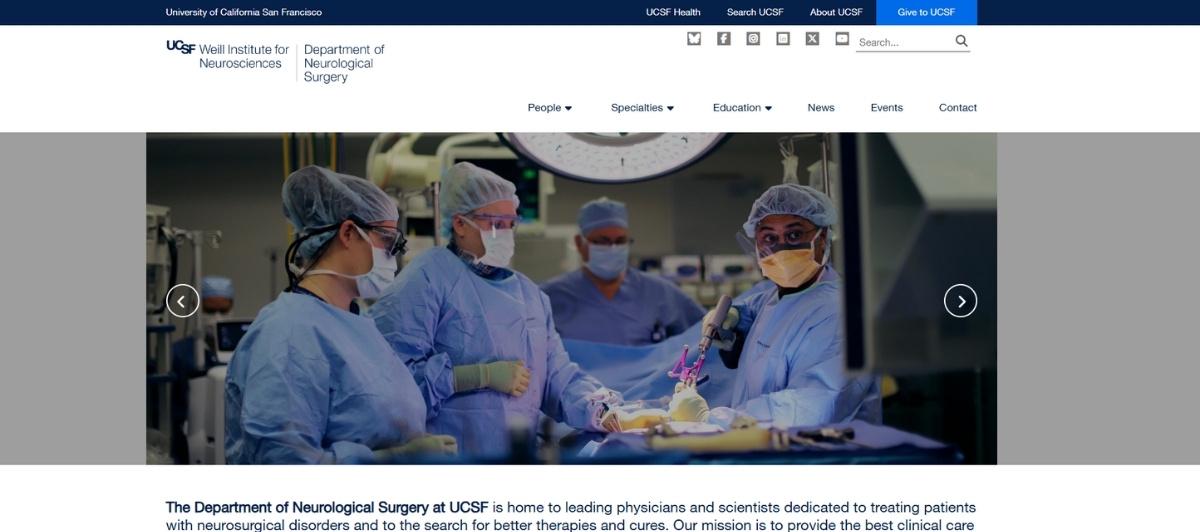
UCSF, Department of Neurological Surgery takes an academic approach to their website, which is consistent with their branding. A visitor can read the department’s story. A section for patient referrals and patient information follows.
3. Memorial Hermann, Mischer Neuroscience Institute

Memorial Hermann, Mischer Neuroscience Institute delivers their information in an academic manner. The header displays relevant information. Below, the visitor can find a doctor and information about conditions and treatments as well as contact information. Further down, there is a list of services and specialties.
4. MHealth

MHealth offers a cleanly designed website. The navigation bar is at the top and there is no header. Instead, that space is used to define neurosurgery. Below that space is a series of links to the team, location and treatment followed with a story about the department. Headers and images break up the text.
5. Rush, Department of Neurological Surgery

Rush, Department of Neurological Surgery lays out a lot of information in an organized manner that is consistent with its branding. On the left side is a menu of neurological surgery topics. On the right, an eye-catching red and yellow box guides the visitor to make an appointment, find a doctor or schedule a video visit. The department’s story is told in the middle space. Headers, links and an embedded video add visual variety.
6. Brigham and Women’s Hospital, Boston Neurosurgeons
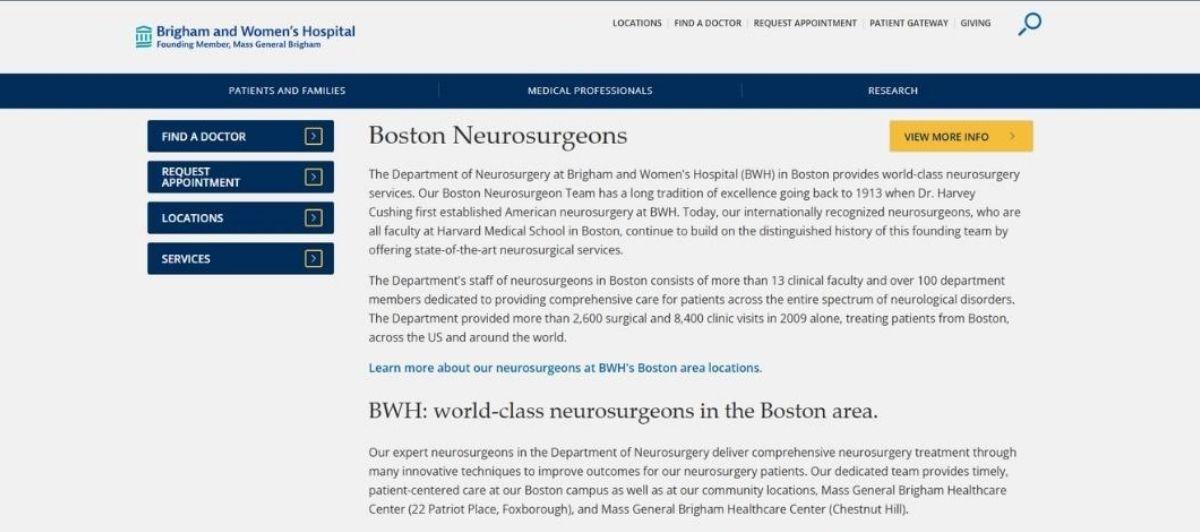
Brigham and Women’s Hospital, Boston Neurosurgeons uses a simple website template. Below the vertical navigation bar on the left are large, dark blue buttons that users can click to find a doctor, request an appointment, learn about locations or see a list of departments and services. Headers, links and bulleted lists break up the text, which delivers most of the information.
7. Miller School of Medicine, Neurological Society
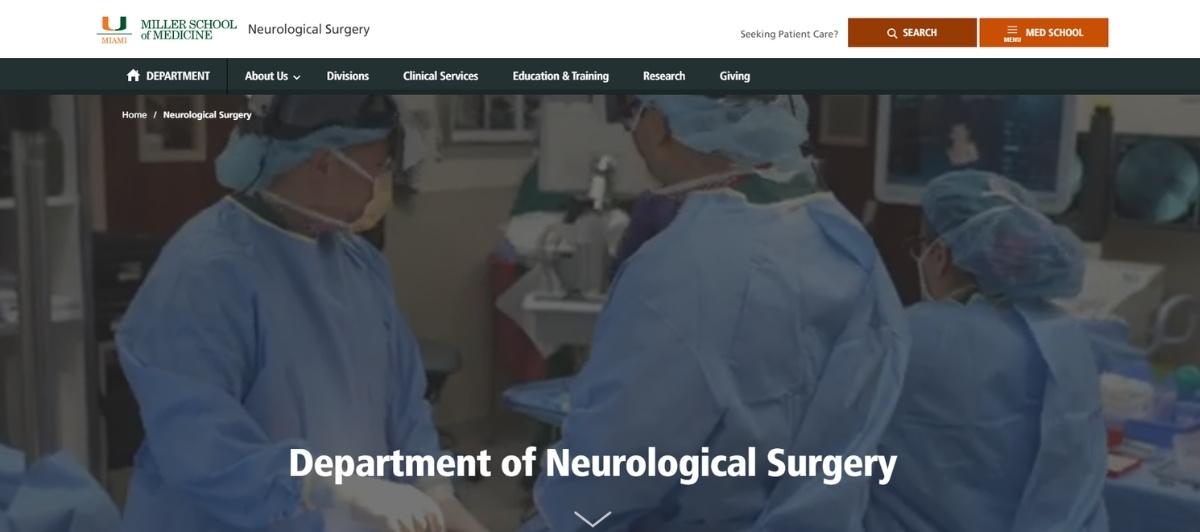
Miller School of Medicine, Neurological Society uses an innovative academic website design. The branding is consistent with that of the University of Miami. When a user clicks on an item in the horizontal navigation bar at the top, the vertical one at the left, or the menu at the right headed About Us, the corresponding information appears in the middle of the home page.
8. University of Maryland, Medical Center, Neurosurgery
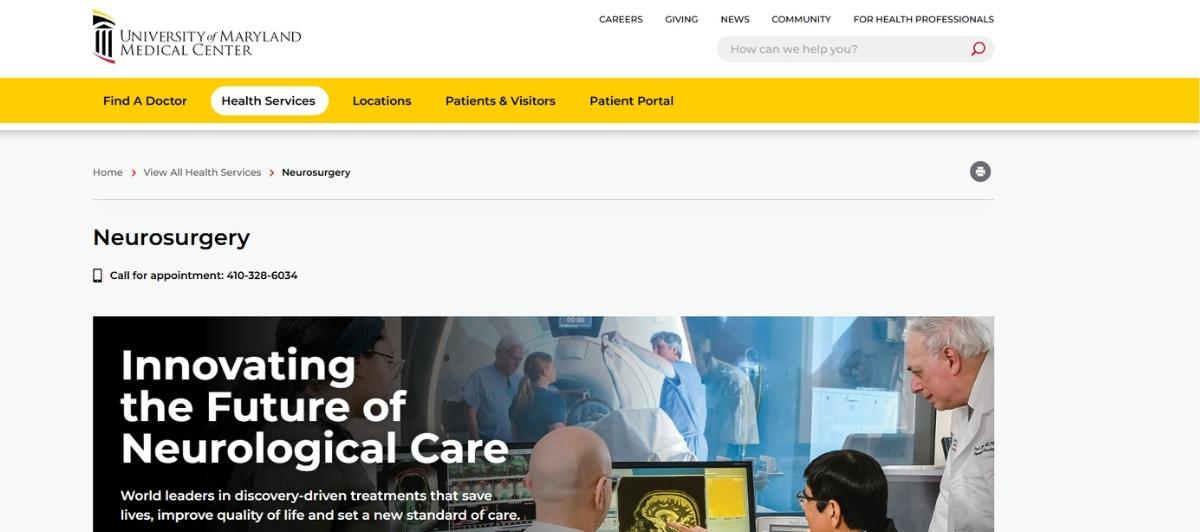
University of Maryland, Medical Center, Neurosurgery offers a navigation bar at the top of the page. It is followed by header, then links to the department’s team, conditions treated and education, as well as research and innovation. Text, links to articles and an embedded video round out the home page.
9. University of Virginia, Neurosurgery
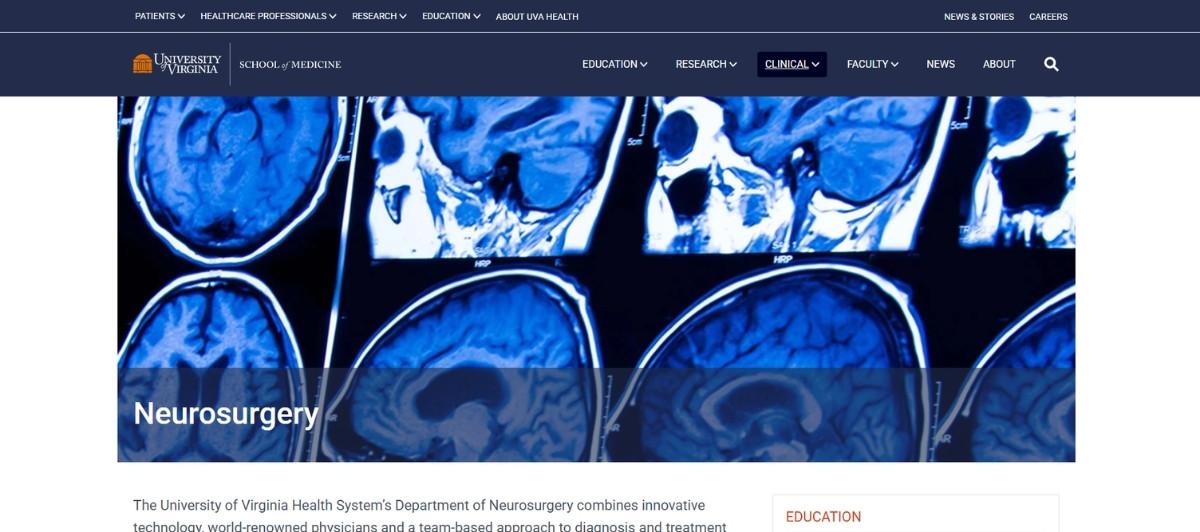
University of Virginia, Neurosurgery has a navigation bar at the top of the page. Under the header there is another navigation bar on the side and text next to it. Under the text, there are informational links that use images as thumbnails.
10. Nashville Neurosurgery Associates

Nashville Neurosurgery Associates uses a simple website design and consistent branding. A navigation bar is located at the top. It is followed by the header, with text below. When users scroll down, they can request an appointment via an online form. Further down are information about the organization and the team, plus testimonials.
11. NYU Langone, Neurosurgery

NYU Langone, Neurosurgery uses text to deliver information to its visitors. Prospective patients can find a doctor and schedule an appointment without scrolling down. When they do scroll down, they come across text and an embedded informational video. Headers, images and bulleted lists divide the text.
12. UNC School of Medicine, Department of Neurosurgery
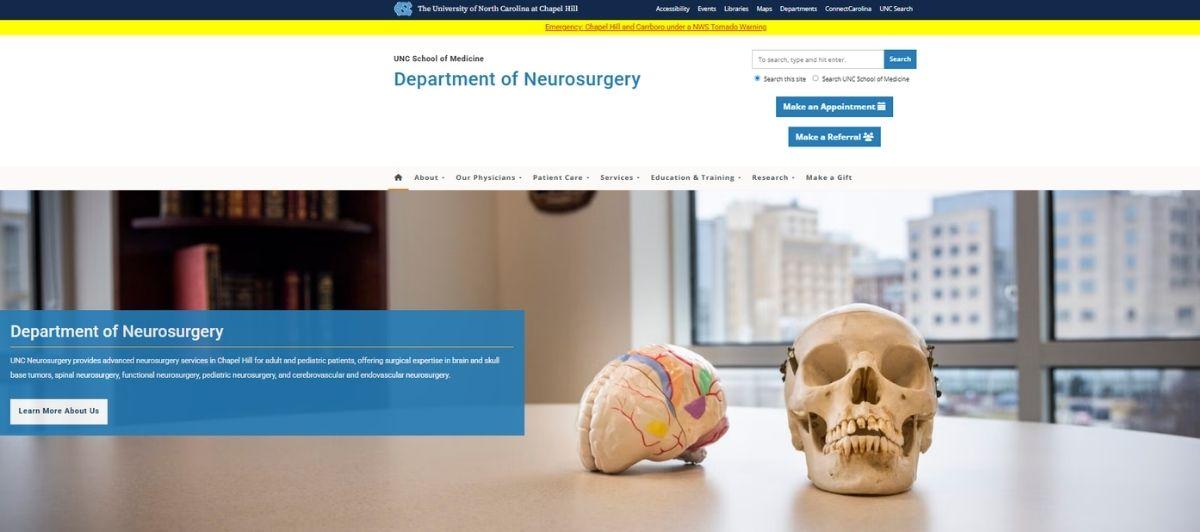
UNC School of Medicine, Department of Neurosurgery provides a website with a clean and simple design. Two large, alternating photos anchor the home page, showing a pair of doctors at work and a portrait of the sizable medical team. Under this are link boxes that allow the visitor to find a physician, make an appointment, and view clinic locations. There’s also an embedded informational video.
13. Duke Health, Neurosurgery
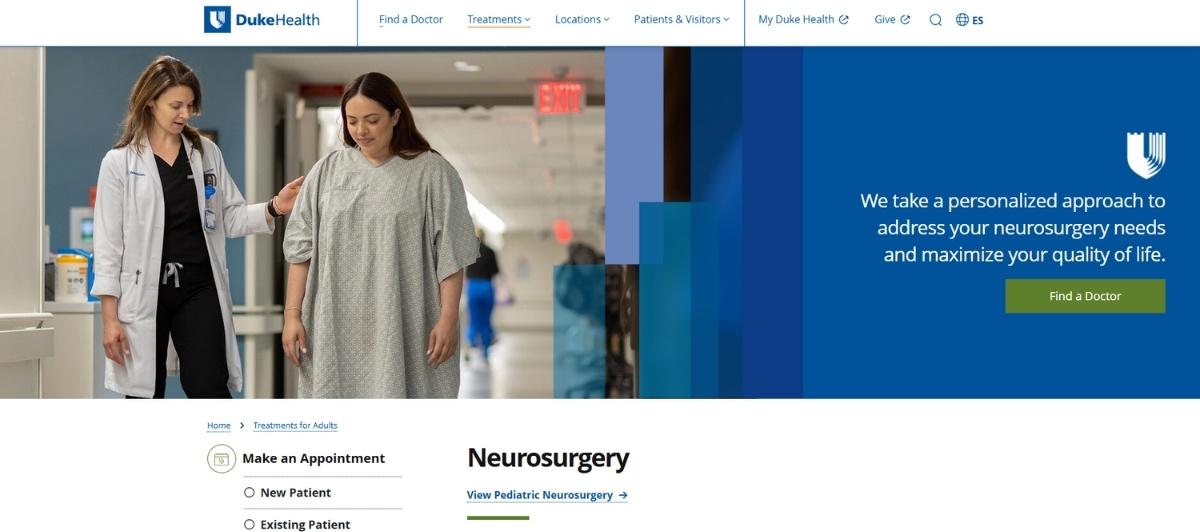
Duke Health, Neurosurgery includes a navigation bar at the top of the page and on the side. The phone number to call to schedule an appointment is clearly visible as well as the option to find a doctor. There’s a list of conditions that are treated. Reasons why visitors should pick Duke are listed in text that is broken up with headers and links.
14. Columbia University, Neurology

Columbia University, Neurology is consistent with its branding. It takes an academic approach by displaying images of teaching moments between instructors and students. There is a navigation bar followed by a header. When a visitor scrolls down, they can schedule an appointment or call the phone number listed.
15. Long Island Jewish Medical Center, Department of Neurology
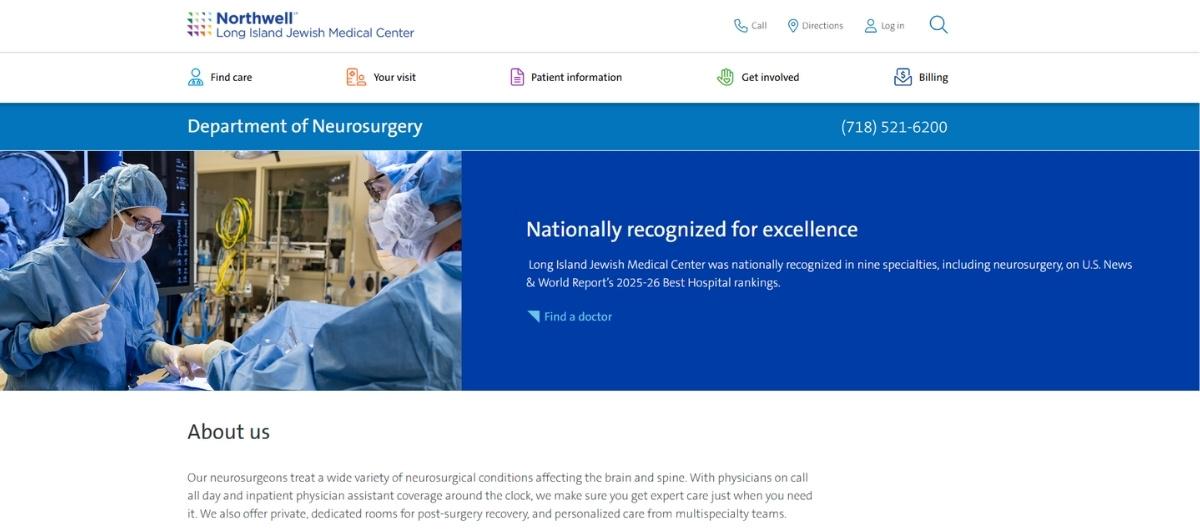
Long Island Jewish Medical Center, Department of Neurology includes consistent branding and a navigation bar at the top. The visitor can request an appointment online or call the phone number listed. The company story, clinical expertise and team information are listed with text. The text is broken up with headers and bulleted lists.
16. Stony Brook Neurosciences Institute
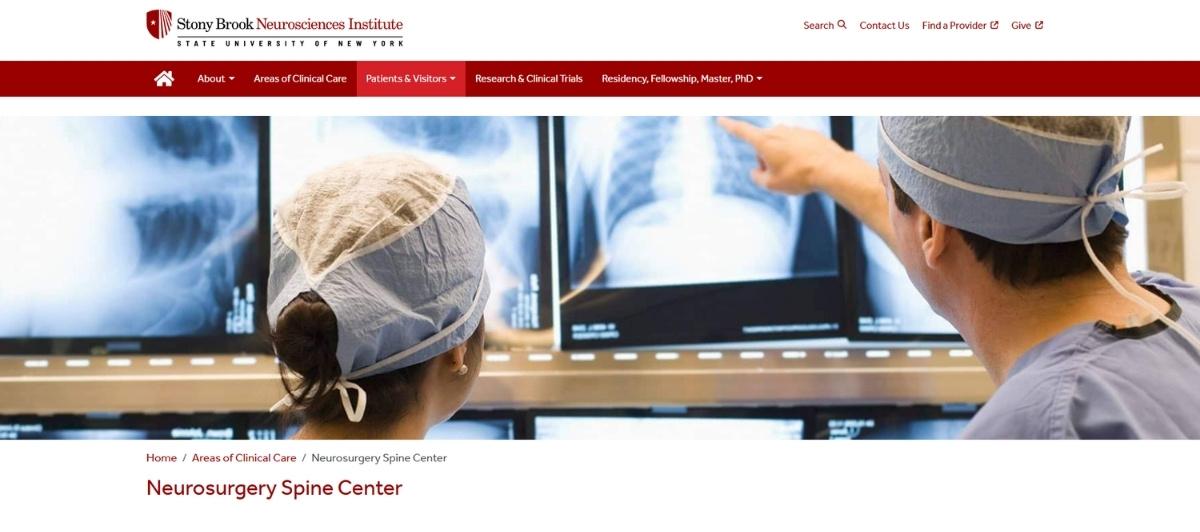
Stony Brook Neurosciences Institute consists of consistent branding. The bulk of the website is text, but it is easy to read because it is interspersed with headers, bulleted lists and an image as well as links.
17. Medstar Georgetown University Hospital, Neurosurgery
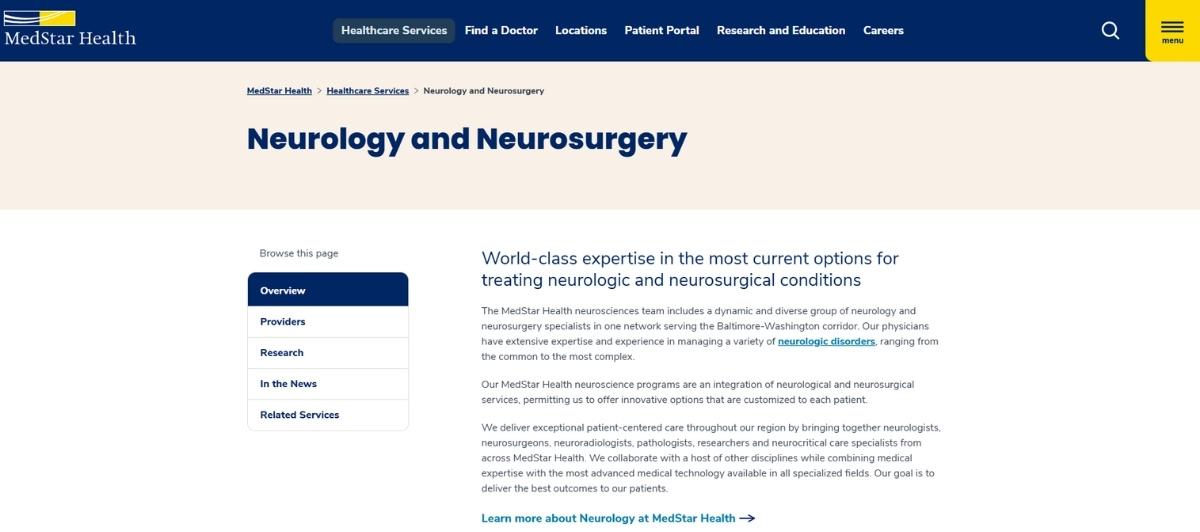
Medstar Georgetown University Hospital, Neurosurgery uses a unique website template. However, it is consistent with its branding and offers the visitor several options. They can find a doctor, video visit or call the phone number listed. When visitors scroll down, they can find more information.
18. UPMC, Neurosurgery

UPMC, Neurosurgery uses a simple website design that is consistent with its branding. The navigation bar is located on the site. The information for the visitor is presented through text, images and embedded videos.
19. The GW Medical Faculty Associates, Neurosurgery
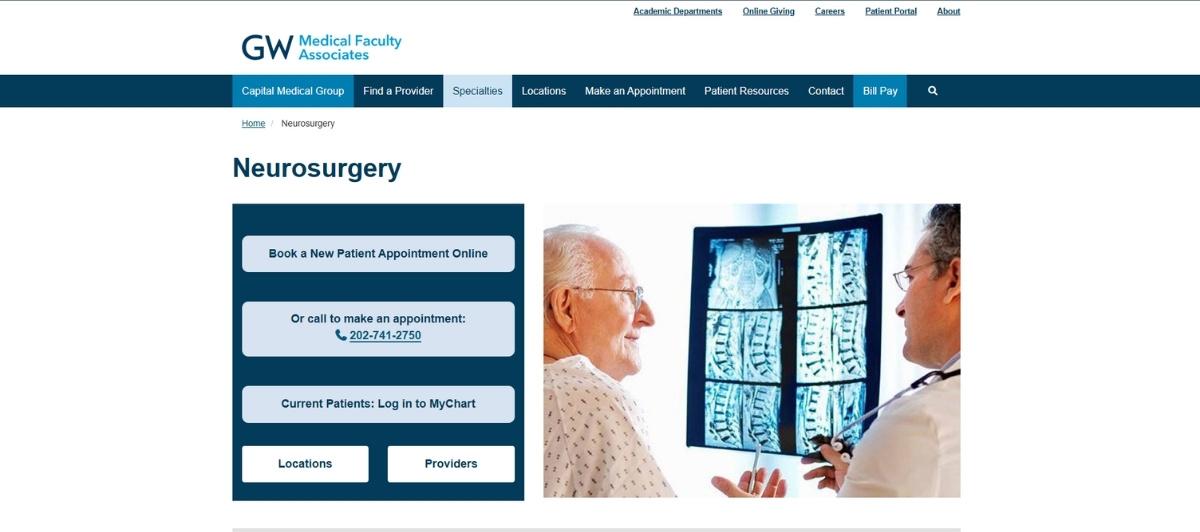
The GW Medical Faculty Associates, Neurosurgery allows a visitor to book an appointment at the top of the page. A phone number is also clearly listed for those who wish to call instead. Information is presented in text form. Headers and bulleted lists add variety to the design.
20. Penn Medicine, Department of Neurosurgery
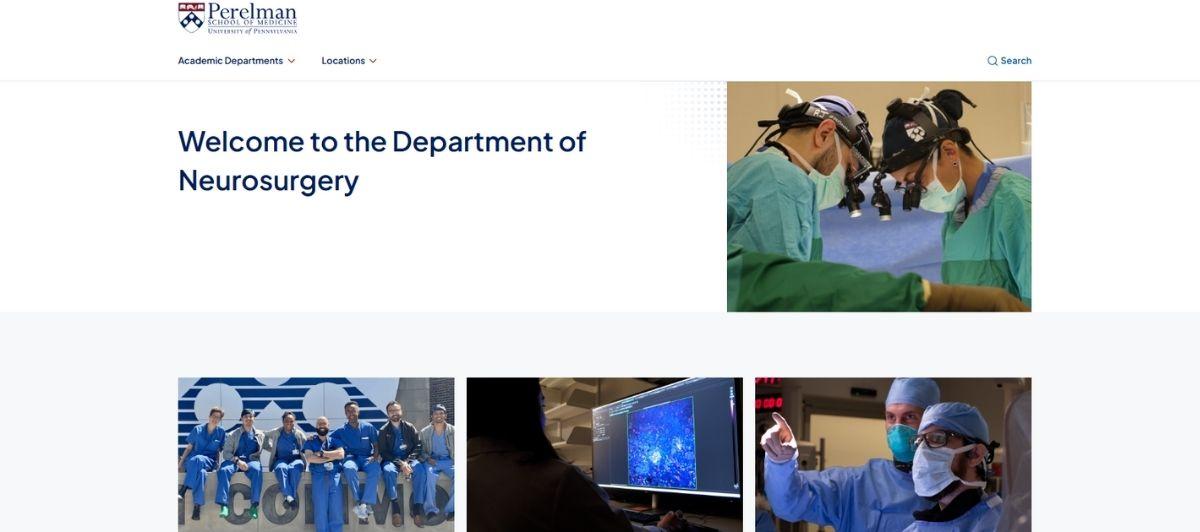
Penn Medicine, Department of Neurosurgery uses the header to present information to the visitor as a first impression. News, research and historical information are presented with text, links and images.
21. UW Medical Center, Northwest, Neurosurgery Clinic

UW Medical Center, Northwest, Neurosurgery Clinic delivers important information to visitors up-front. Immediately the contact information and clinic hours are visible. When visitors scroll down, they can see the services provided and read the organization’s story.
22. Virginia Mason, Neurosurgery
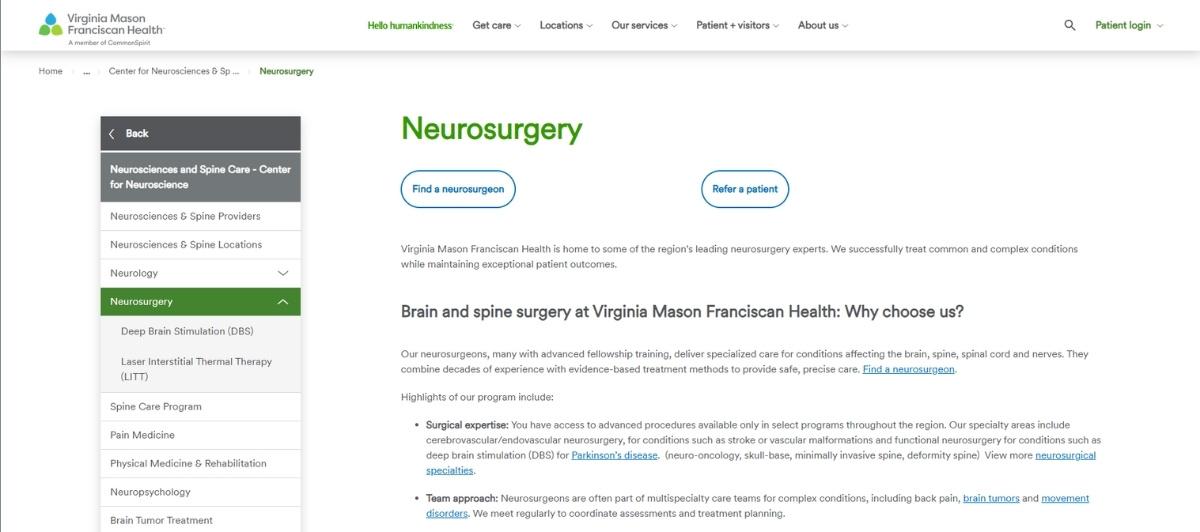
Virginia Mason, Neurosurgery allows a visitor to find a doctor immediately. Other important information is presented in an organized manner, too, such as the location, directions and department services.
23. OHSU, Department of Neurology

OHSU, Department of Neurology provides a large, lively photo of team members on the job plus a navigation bar at the top of the page. The rest of the information is presented in text form, balanced by a couple of smaller photos.
24. Neurological Medical Clinic

Neurological Medical Clinic makes their contact information visible to visitors, including their phone number and locations. Users can also pay their bills and enter the patient portal without needing to scroll down. The design is elegant, with several intriguing photos alternating near the top of the home page.
25. The Oregon Clinic
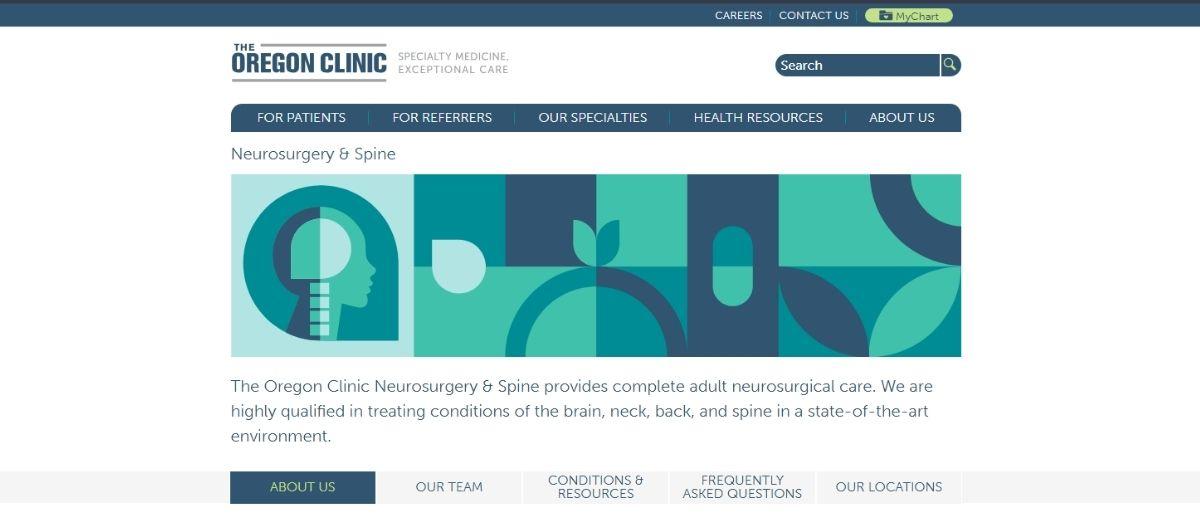
The Oregon Clinic uses consistent branding and a simple website design to deliver its most important organization information to visitors. In the navigation bar, there are sections dedicated to patients, health resources and the clinic’s specialties. There is a section for health professionals, too.
26. St. Lukes, Neurosurgery
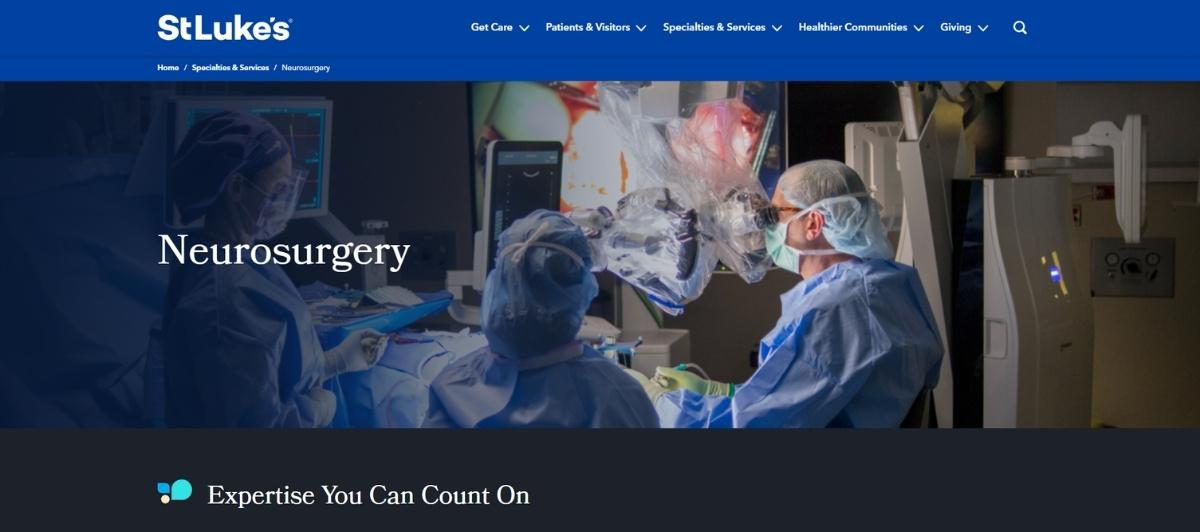
St. Lukes, Neurosurgery offers a clean website design. When visitors scroll down, they will find the organization’s contact information as well as content about providers, procedures and treatments.
27. The Spine and Brain Institute

The Spine and Brain Institute uses a modern website template that accords with its branding. As visitors scroll down, they can find educational information, the organization’s specialties and information about their team. Images help to round out the website.
28. The Iowa Clinic, Neurological and Spinal Surgery Department

The Iowa Clinic, Neurological and Spinal Surgery Department offers a simple website. The navigation bar is located on the left side of the home page. A friendly header photo welcomes the user. Under it, visitors can read the organization’s story. More text underneath highlights what makes this clinic different from the rest.
29. University of Iowa, Hospital and Clinics, Neurosurgery
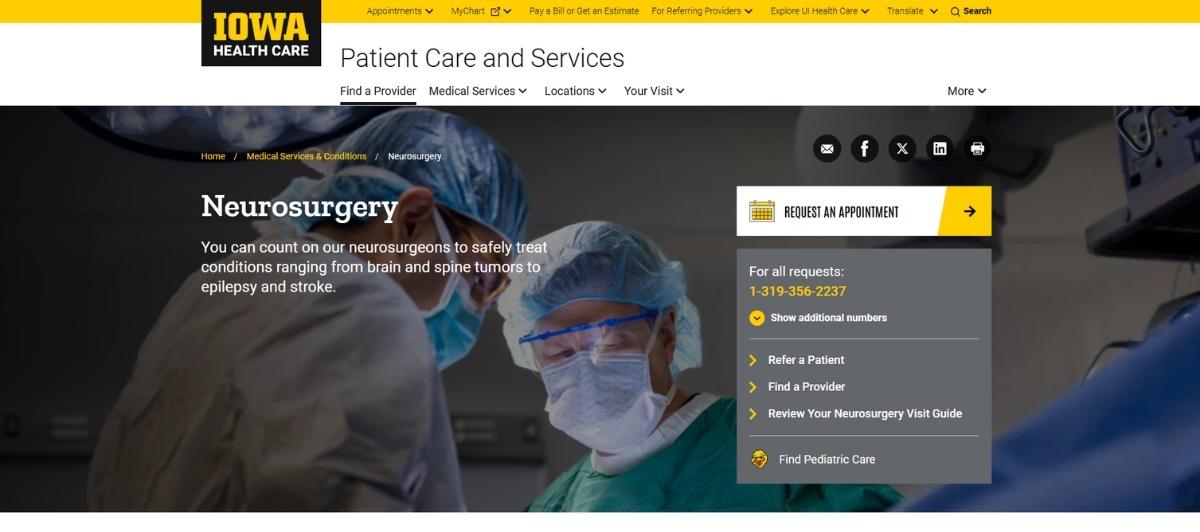
University of Iowa, Hospital and Clinics, Neurosurgery includes a sidebar with important information, such as the location, as well as patient stories. Visitors can read about the patient-focused treatment offered by this organization. A bulleted list and link enhance readability. Visitors can read about the team as they scroll further down the page.
30. University of Wisconsin-Madison, Department of Neurological Surgery
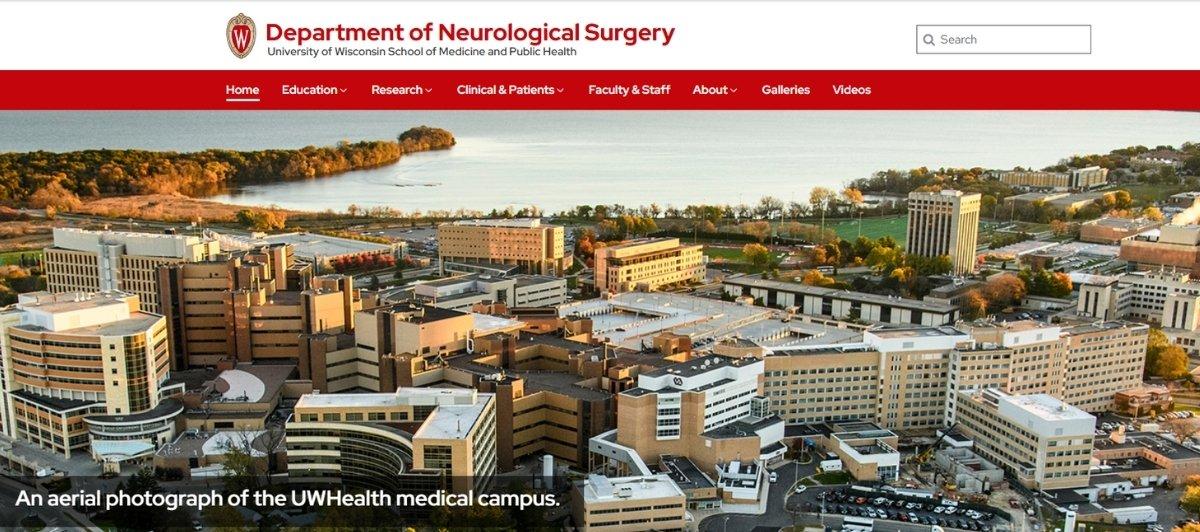
University of Wisconsin-Madison, Department of Neurological Surgery offers a lot of information to the visitor. The website has consistent branding. A visitor can browse through the navigation bar located at the top of the page. There is a category dedicated to clinical and patients as well as education, research and staff. The rest of the information is organized for ease of reading. News, events and information about the residency program can be explored.
Your neurological surgery center website provides important information to potential patients, so use best practices to help them find it easily. You may also be interested in learning about the most popular neurologist web designs.
What patients research before neurosurgery
The path to a neurosurgical consultation almost always runs through a search bar. With at least 80% of consumers searching online before paying for any service, and medical decisions receiving even closer scrutiny, a neurosurgery center’s website carries enormous weight in whether a patient requests an appointment or keeps looking.
The elements patients consistently look for include:
- Contact information presented prominently. UW Medical Center Northwest puts contact details and clinic hours right up front, and Neurological Medical Clinic surfaces its phone number, locations, patient portal, and bill pay without any scrolling.
- A clear path to book. Rush’s red and yellow action box, NYU Langone’s find-a-doctor tool above the fold, and GW’s booking button at the top of the page all remove hesitation.
- An organized layout. Dense clinical content becomes readable when headers, images, and bulleted lists break it apart, as Brigham and Women’s Hospital and Long Island Jewish Medical Center both demonstrate.
- Educational materials. Content explaining a diagnosis and its treatment options helps patients understand what they’re facing. The Spine and Brain Institute and MHealth both lead with education, MHealth even using its header space to define neurosurgery for newcomers.
- The people behind the care. Cedars Sinai invites visitors to meet the neurosurgery team, UNC anchors its home page with a portrait of its medical team, and OHSU shows staff on the job.
Consistent branding ties it together and signals institutional stability, which matters more here than in almost any other specialty. Keeping these information-dense sites fast and reliable is where managed hosting and ongoing maintenance support patient care directly.
The conditions neurological surgeons treat
Neurosurgery covers a remarkably broad range of conditions affecting the brain, spinal cord, and nerves throughout the body. Patients often arrive at a website unsure whether their diagnosis even falls within the specialty, which makes a clear, well-organized list of conditions treated one of the most useful things a center can publish. Duke Health and Memorial Hermann both do this well.
Here’s how the scope typically breaks down:
| Category | Conditions and procedures |
|---|---|
| Brain tumors | Tumor removal, pituitary disorders, stereotactic radiosurgery |
| Cerebrovascular disorders | Aneurysms, AVMs, brain hemorrhage, stroke |
| Spinal disorders | Degenerative nervous system diagnoses, neck and back injuries, spinal cord conditions |
| Functional neurosurgery | Seizures and movement disorders |
| Peripheral nerve conditions | Nerve compression and injuries outside the central nervous system |
| Pediatric neurosurgery | Available at institutions with dedicated children’s programs |
Neurosurgeons manage conditions across the central nervous system and beyond it, performing surgical treatment for everything from a brain hemorrhage to a herniated disc. Barrow Neurological Institute, for example, is particularly known for its work in brain tumors and cerebrovascular disease.
Top centers frequently have specialists focused on narrow areas such as tumor removal, and comprehensive care models increasingly rely on multidisciplinary teams that bring neurology and neurosurgery together around a single patient. Presenting that depth clearly, without burying it, is a core challenge that thoughtful WordPress development is built to solve.
How the nation’s top neurosurgery programs are ranked
Patients comparing centers inevitably encounter rankings, and understanding them helps any program frame its own credentials. Independent evaluations from U.S. News & World Report and Newsweek assess neurology and neurosurgery programs across the world, and the results carry real influence with patients and referring physicians alike.
For 2026, the leading programs included:
| Institution | Recognition |
|---|---|
| NewYork-Presbyterian Hospital Columbia | Ranked #1 worldwide for neurosurgery by Newsweek |
| NYU Langone Hospitals | Ranked #1 nationally for neurosurgery by U.S. News for 2022-23 |
| Mayo Clinic | Ranked #2 for neurosurgery by U.S. News for 2022-23 |
| Massachusetts General Hospital | Ranked #4 worldwide by Newsweek |
| Johns Hopkins Hospital | Ranked #6 worldwide by Newsweek |
| Cleveland Clinic | Ranked #7 worldwide by Newsweek |
| Rush University Medical Center | Recognized among the top hospitals for neurosurgery in 2022-23 |
The scale of these evaluations is worth noting: U.S. News assessed 1,227 neurology hospitals in 2022 to produce its list of best hospitals. Other institutions distinguish themselves in different ways. UPMC’s Department of Neurological Surgery is known for leading research funding, and UCSF Health in San Francisco has consistently ranked high for specialized neurosurgical care. Hospitals in Chicago, Boston, Miami, and beyond compete on outcomes, research, and reputation.
For a center’s website, displaying these accolades, the way the University of Iowa places its accomplishments alongside patient stories, gives prospective patients concrete evidence of quality. Making those pages findable is where strong SEO supports the mission.
Credentials, training, and institutional governance
Rankings tell part of the story, but patients and referring physicians also look for the structural markers of a serious program. Neurosurgery is among the most demanding specialties in medicine, and the credentials behind a department reflect decades of training and oversight.
Board certification and accreditation
ABNS board certification ensures rigorous training and high standards of practice for neurosurgeons, making it the single most important credential a patient can verify. Residency programs operate under the oversight of the Accreditation Council for Graduate Medical Education, which sets the standards residents must meet before entering independent practice.
The Society of Neurological Surgeons, founded in 1920, remains one of the field’s oldest governance bodies, shaping education and professional standards across the specialty.
The academic mission on display
Many of the strongest programs are teaching institutions, and their websites reflect it. Columbia University displays teaching moments between instructors and students, while the University of Wisconsin-Madison dedicates whole sections to education, research, and its residency program.
Penn Medicine highlights news, research, and departmental history. These sections serve residents, students, and referring physicians alongside patients, and they signal that a department is advancing knowledge rather than simply delivering care.
Quality metrics that build confidence
Beyond credentials, quality reporting matters. Programs increasingly publish metrics covering patient safety initiatives and infection prevention, giving patients transparent evidence of performance. Departments also highlight diversity within their faculty and residency cohorts, reflecting a broader commitment to governance and institutional culture.
Together, these elements tell a patient that a center holds itself to the highest quality standards, not just in the operating room but throughout the organization.
The technology behind modern neurosurgical care
Advances in surgical technology have transformed what neurosurgeons can accomplish, and centers that showcase their capabilities give patients real insight into the care they’ll receive. For someone facing brain surgery, learning that a less invasive option exists can change everything about how they approach treatment.
Two technologies stand out on the sites of leading programs:
- Stereotactic radiosurgery. Gamma Knife radiosurgery delivers precisely targeted radiation for noninvasive brain surgery, treating tumors and vascular malformations without an incision.
- Intraoperative imaging. NYU Langone features two operating rooms equipped with intraoperative MRI, letting surgeons image the brain mid-procedure and confirm results before closing. The program draws on more than 50 years of neurosurgery experience.
Explaining these tools in plain language, alongside the conditions they treat, helps patients understand their options and arrive at a consultation informed rather than overwhelmed. Centers that pair this technical depth with clear patient information, embedded videos, and easy access to a specialist give themselves a real advantage in a field where trust decides everything.
Build a neurosurgery website that earns patient confidence, with Freshy
The best neurological surgery center websites all do the same core things: they organize complex clinical content clearly, introduce the surgical team, prove excellence through rankings and credentials, and make booking an appointment simple.
Here are the key takeaways from this guide:
- Put contact information, appointment requests, and find-a-doctor tools where nobody has to search
- Break dense medical content with headers, images, and bulleted lists
- Publish a clear list of conditions treated across brain, spine, and peripheral nerves
- Display rankings, ABNS certification, and quality metrics to build confidence
- Highlight research, residency programs, and multidisciplinary teams
- Explain advanced technology like Gamma Knife and intraoperative MRI in plain language
Whether you lead an academic department with a residency program or a private neurosurgical practice, your website should convey the expertise patients are trusting with the most consequential decision of their lives.
Freshy builds high-performing WordPress websites for healthcare organizations nationwide, backed by dependable support and maintenance. When you’re ready to give your program a web presence that matches its standards, reach out to our team.
Frequently asked questions
What makes a great neurological surgery center website?
The best neurosurgery websites use clear navigation, responsive design, and easy-to-find contact information. They break dense clinical content with headers and images, introduce the surgical team, and make requesting an appointment straightforward.
What conditions do neurological surgeons treat?
Neurosurgeons treat brain tumors, cerebrovascular disorders like aneurysms and AVMs, brain hemorrhage, stroke, seizures, pituitary disorders, spinal disorders and injuries, and peripheral nerve conditions outside the central nervous system.
Which hospitals rank highest for neurosurgery?
NewYork-Presbyterian ranked #1 worldwide by Newsweek in 2022, with Massachusetts General at #4, Johns Hopkins at #6, and Cleveland Clinic at #7. NYU Langone ranked #1 nationally and Mayo Clinic #2 by U.S. News for 2022-23.
How do I verify a neurosurgeon’s credentials?
Look for ABNS board certification, which requires rigorous training and enforces high standards of practice. Residency programs are overseen by the Accreditation Council for Graduate Medical Education, and the Society of Neurological Surgeons sets professional standards.
What is stereotactic radiosurgery?
Stereotactic radiosurgery, including Gamma Knife, delivers precisely targeted radiation to treat brain conditions without an incision. It’s used for tumors and vascular malformations, offering a noninvasive alternative to traditional brain surgery for suitable patients.