No parent expects to end up in a NICU. When it happens, the hospital’s website becomes a lifeline, consulted at 3 a.m. from a chair beside an incubator, searched on a phone while driving to a transfer facility. For neonatal care websites, clarity is not a design preference. It is a kindness extended to families having the hardest week of their lives.
Here’s what this guide covers:
- The best neonatal care websites in 2026, reviewed
- What families need from a site during a NICU stay
- The trusted organizations providing neonatal health information
- The scope of modern newborn care and parent education
- How telehealth and simulation training are changing neonatology
Healthcare sites carry a weight most projects don’t, and building one that stays calm, fast, and easy to navigate under real stress is work our team takes seriously. The WordPress design approach behind the sites below shows what that looks like in practice.
Here are top-notch websites for those in the neonatal care industry to consider
Websites today serve more than one purpose. Coupled with search engine optimization, a website is an online lead generator. Helping a site achieve its ultimate purpose requires a few elements, such as:
- Clear call to action
- Consistent branding
- Intuitive design
These best practices assure users will have a positive experience and that they will quickly find what they are looking for.
1. Premier Health

Premier Health uses a simple website design that delivers information in a concise and organized manner. Text is broken up with headers, and the navigation bar is located on the side. Actions that can be taken are located in the right-hand corner. The site presents a lot of information, but the text is readable.
2. Sunrise Children’s Hospital

Sunrise Children’s Hospital is an information-intensive website, but the information is organized into blocks and broken up by headers. The design is simple, and the branding is consistent. Plus, there is an ER wait-time clock. This gives patients a heads-up about how long they may sit in the waiting room before they are seen.
3. Mercy Health

Mercy Health offers an example of a website that delivers a lot of information while explaining why they are the best choice for neonatal services. They allow patients to find a service location and doctor. This gives them the opportunity to get to know the staff before they arrive. Creating familiarity is worthwhile in situations that can easily become stressful.
4. Children’s Hospital of Philadelphia
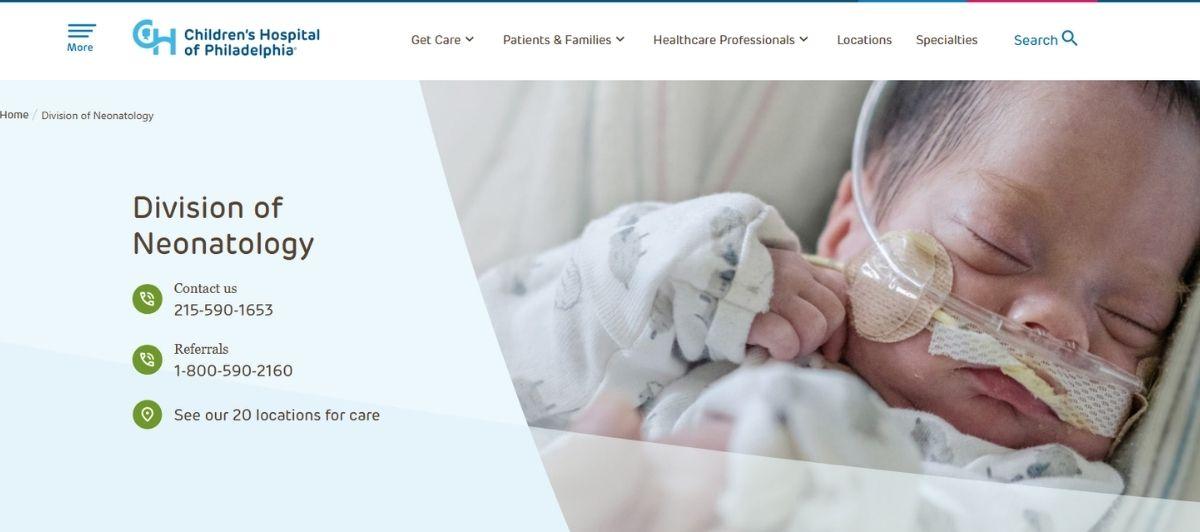
Children’s Hospital of Philadelphia maintains consistent branding while allowing patients to find a service location, information on how to contact it, and a list of services as well as programs. This is a large organization, but it does a good job personalizing a situation that is oftentimes overwhelming.
5. Nationwide Children’s
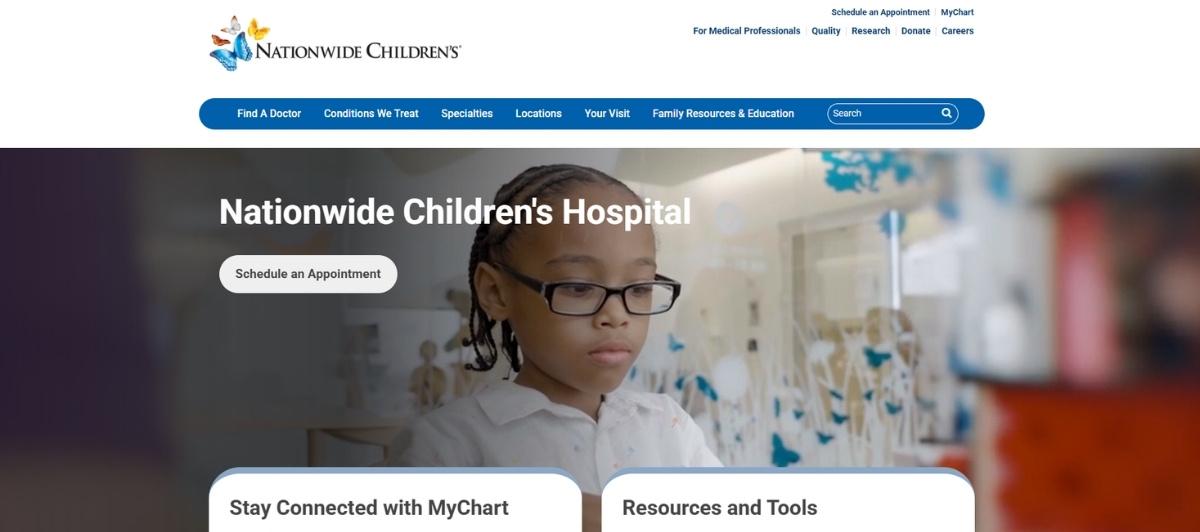
Nationwide Children’s site has a lot of information but manages to stick to its branding. Location, scope of service, and the ability to schedule an appointment are all offered to visitors. Even though there is a lot of information, it is well-organized.
6. University Hospitals
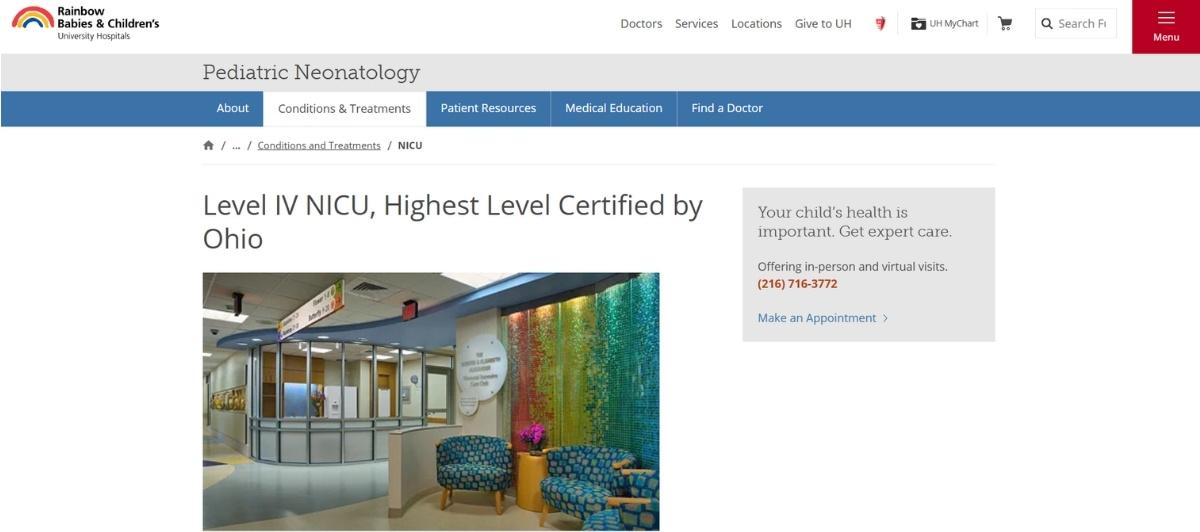
University Hospitals has consistent branding and a call to action. The text is broken up by headers, so patients can find the information they need.
7. Children’s Hospital Los Angeles

Children’s Hospital Los Angeles makes its contact information easy to find. The branding is consistent, and the information is delivered in an easy-to-read format. Headers break up the text, and an information video is embedded, too. Even though the organization is large, the design gives the site a personalized touch.
8. Mount Sinai
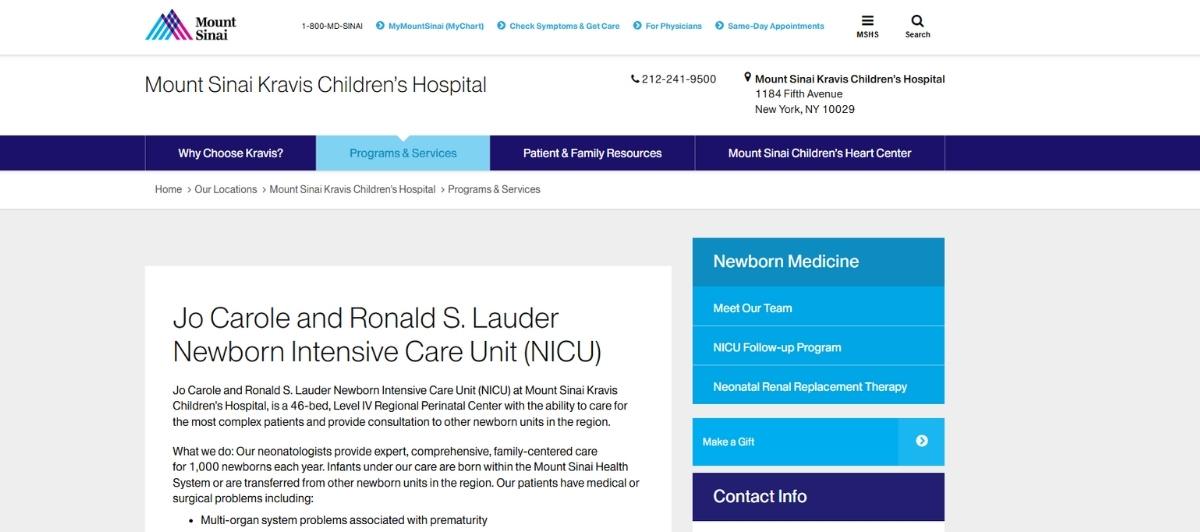
Mount Sinai places its contact information in an easy-to-find location. Visitors can get to know the team as they read the text. Headers, bullet points and images break up the text. There is also an information video embedded on the page.
9. Columbia Doctors
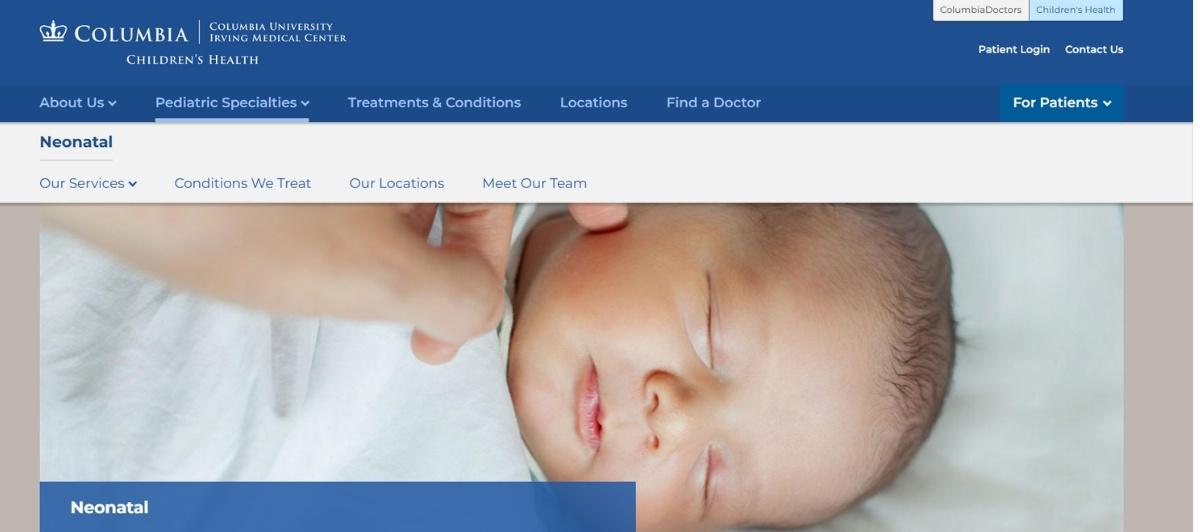
Columbia Doctors places their call to action in the middle of the home page. When visitors scroll down, they can find a navigation bar alongside informational text that is broken up by headers.
10. Weill Cornell Medicine

The Weill Cornell Medicine site includes consistent branding. It offers a chat feature and more than one call to action. A map with locations is next to the text, which is broken up by headers. Pictures of the staff and services create a welcoming environment.
11. NYU Langone Health

NYU Langone Health includes consistent branding and complementary design. A call to action is visible, an informational video is embedded and the text is broken up by headers.
12. Doernbecher Children’s Hospital
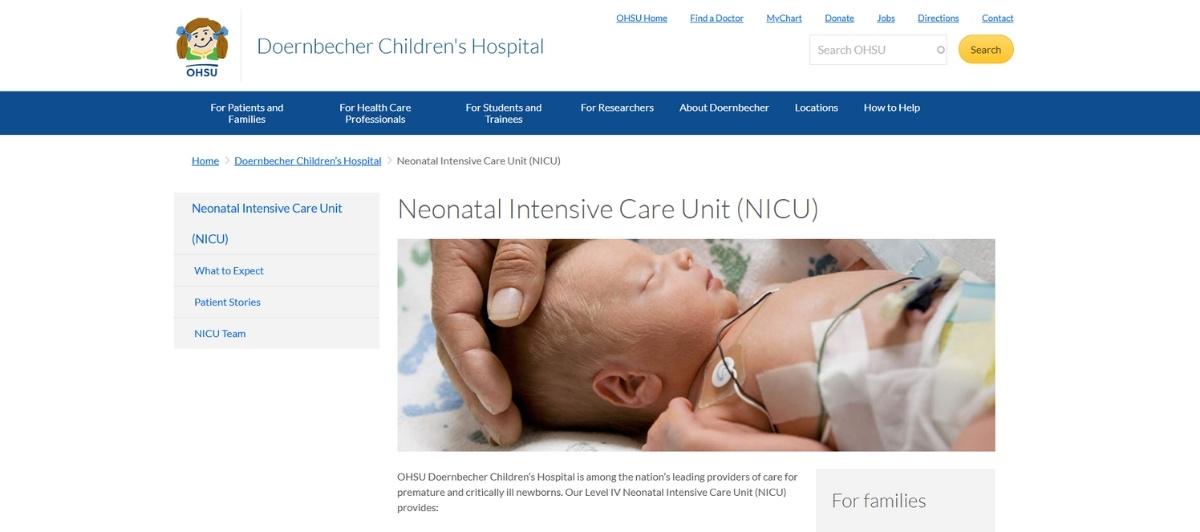
Doernbecher Children’s Hospital includes consistent branding that complements the website design. The navigation bar is located on the side, while the text is broken up by headers, bullet lists and links. Thumbnail pictures are also utilized.
13. Spectrum Health Children’s Hospital

Spectrum Health Children’s Hospital includes a company story followed by a navigation bar and an embedded informational video. The design is simple and consistent with the facility’s branding.
14. Children’s Hospital of Michigan
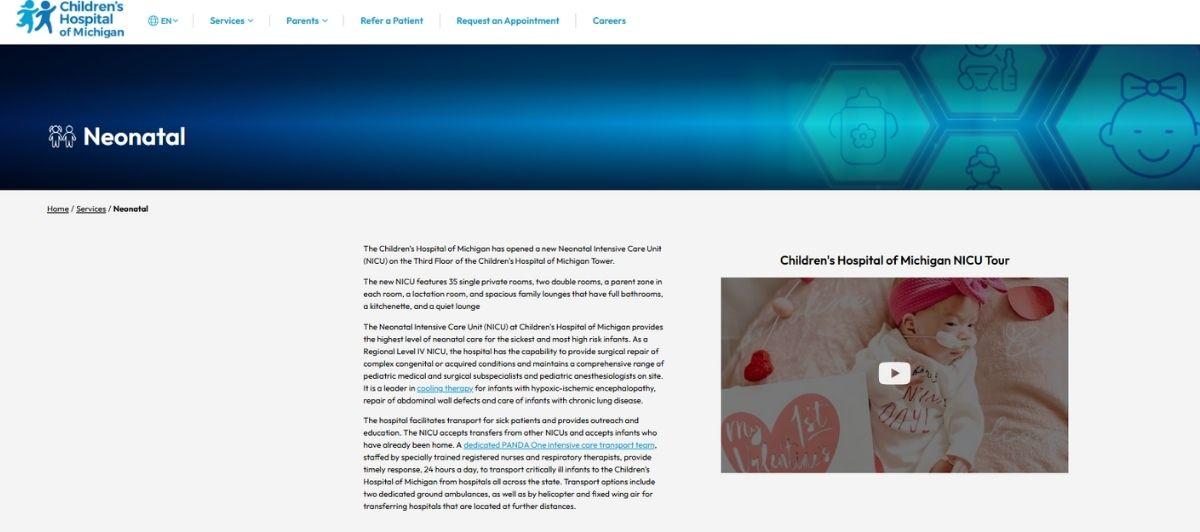
Children’s Hospital of Michigan has a simple website with consistent branding. Although there is a lot of text, it is broken up with headers. There is an embedded informational video, and a call to action appears at the bottom of the page.
15. Bronson
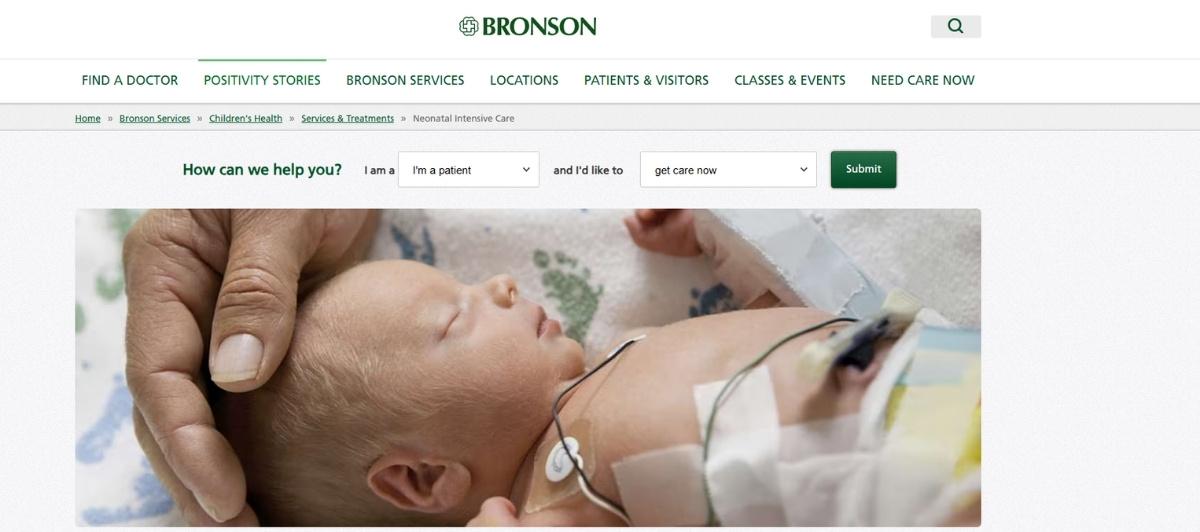
Bronson has included a color scheme that is consistent with its branding. After scrolling down on the home page, visitors will find a navigation bar on one side and several calls to action on the other. The middle consists of text that is broken up with headers, bullet lists and links.
16. Natividad

Natividad includes consistent branding and a navigation bar on the side of the text. They use SEO best practices like headers, bullet lists and links.
17. UCI Health
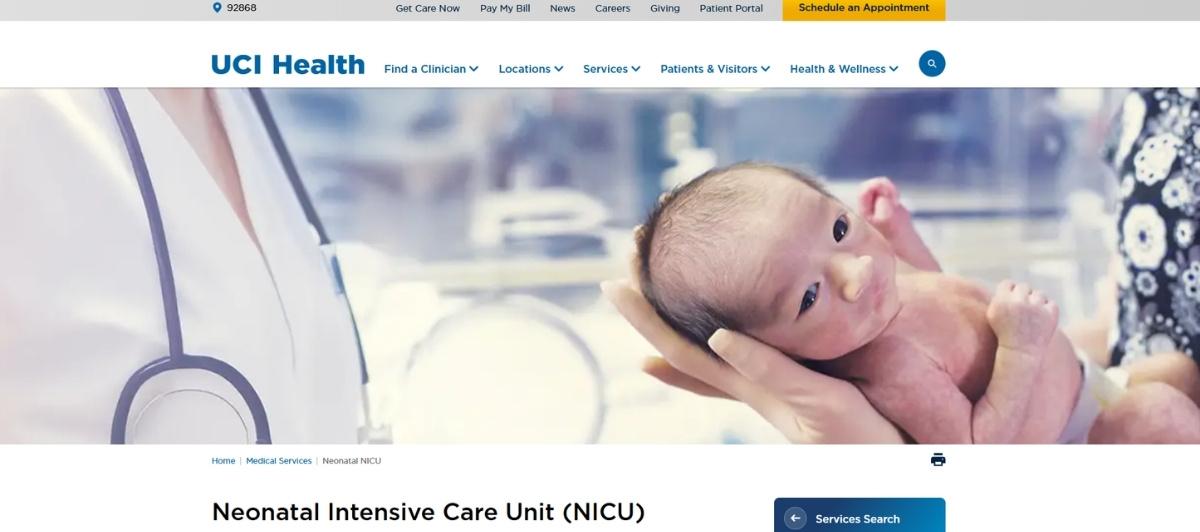
UCI Health includes a simple website design that is consistent with its branding. The call to action on the right side of the home page is followed by a menu of links to services. Text is abundant, but it is organized in a manner that makes it easy to read.
18. Memorial Care

The Memorial Care site includes consistent branding throughout. They use headers so visitors can find the information they are looking for. Specialties are highlighted, while resources are located at the bottom. There is also a find a provider button, so visitors can find a location that is close to home.
19. UC Davis

UC Davis provides an information-heavy website that manages to deliver all the necessary information without overwhelming the visitor. The site is consistent with its branding, and pictures break up the text. There is also a map of the location, and the company’s accolades appear at the bottom. The navigation bar is located on the side, where there is also a call to action. The text is further broken up by headers, bullet lists and links.
20. Sutter Health
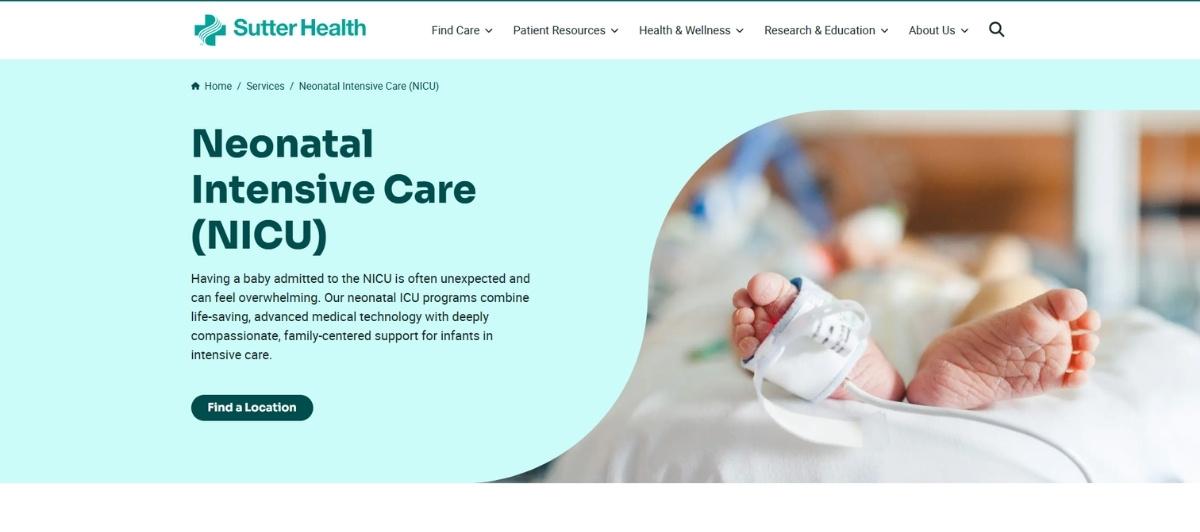
Sutter Health is a large organization that has a lot of information to provide to its visitors. The site has a simple design, which makes it easy to navigate. Text is neatly broken up into blocks, so the information is neatly organized.
21. Advent Health

Advent Health places its call to action and contact information front and center. The website design is simple and clean. It is also consistent with the branding. Text is broken up with headers, bullet lists and links, and there is an informational video embedded in the home page.
22. Winnie Palmer Hospital
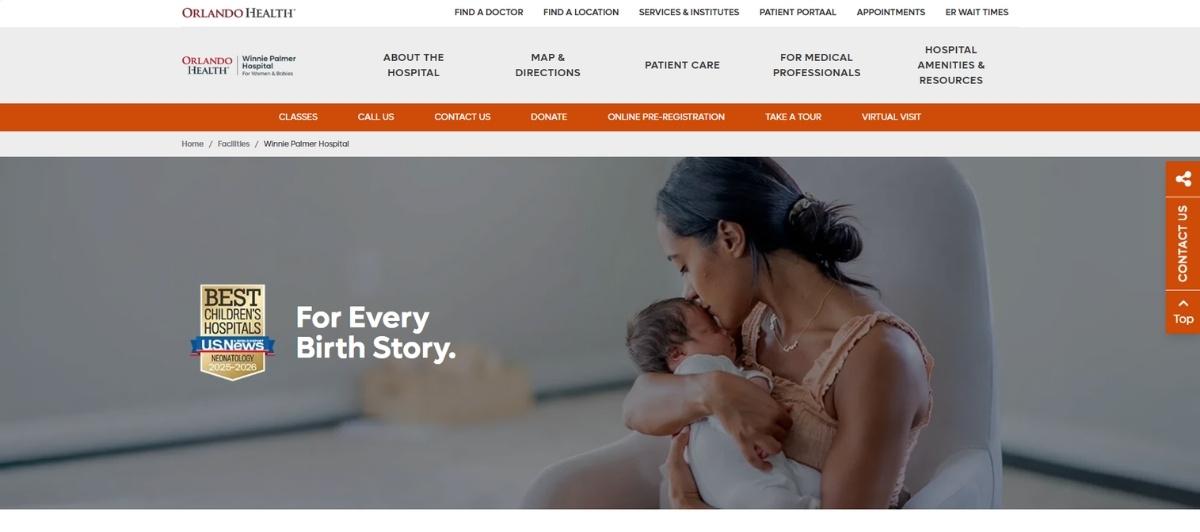
Winnie Palmer Hospital provides several calls to action without being pushy. Otherwise, the site is information-heavy, but the text is easy to read thanks to the color scheme and branding. The text is broken up by headers, bullet points and links. A chat feature is available to visitors as a sticky toward the bottom.
23. Banner Health
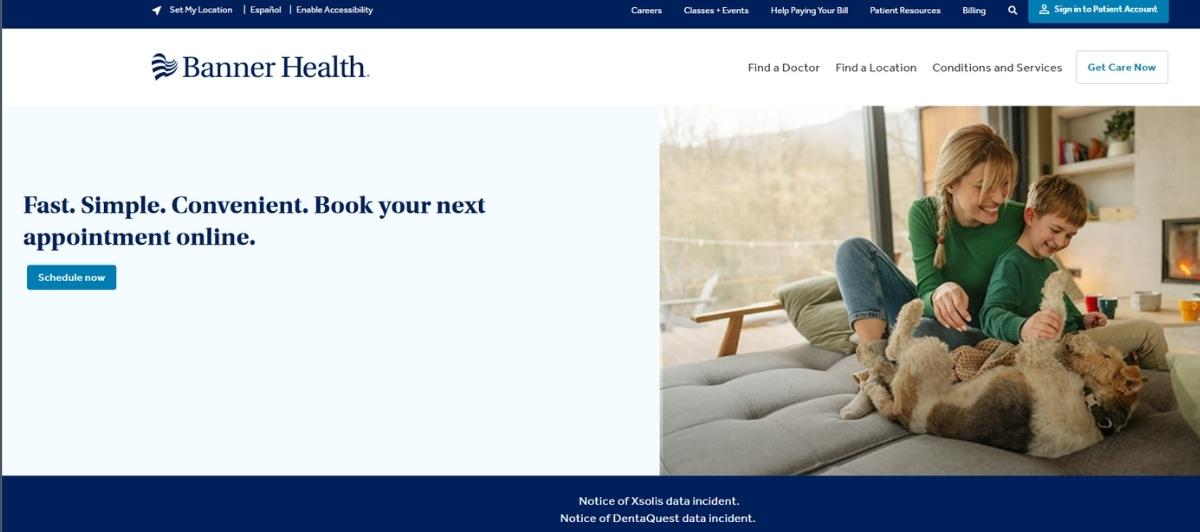
Banner Health offers visitors a couple of calls to action at the top of the home page. Contact information is prominently featured under the header image. The company story is then told in a concise manner. The benefits of turning to this organization for neonatal care are outlined. Images are used at the bottom to round out the page.
24. Nicklaus Children’s Hospital
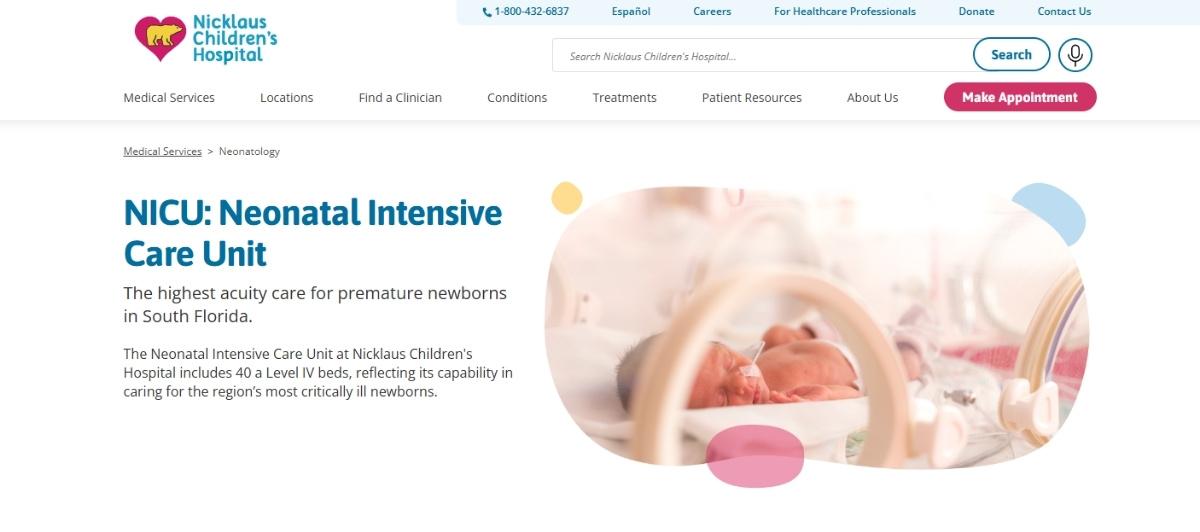
Nicklaus Children’s Hospital has an information-heavy website. Its branding is consistent, and the website design is clean. The call to action is up-front. The company’s story is located under the header image, and navigation bars appear above and to the left. An informational video is embedded on the home page for visitors to watch. The text that follows is broken up by headers, bullet lists and links.
When you’re designing your neonatal care website, look to these websites for aspects to include.
Meeting families in the hardest week of their lives
A NICU website has an audience unlike almost any other in healthcare. Parents arrive frightened, exhausted, and often without warning, searching for answers about fragile newborns they may not have expected to meet for weeks. The best neonatal care websites recognize this and design for reassurance as much as information.
Several sites on this list handle it thoughtfully:
- Familiarity before arrival. Mercy Health lets families find a location and meet a doctor in advance, easing a situation that quickly becomes stressful.
- Human faces on the team. Weill Cornell Medicine and Mount Sinai show staff photos so parents recognize the nurses and physicians who will care for their baby.
- Practical expectations. Sunrise Children’s Hospital displays an ER wait-time clock, telling families exactly how much time they might spend in the waiting room.
- Video that explains gently. Advent Health, Nicklaus Children’s Hospital, and Children’s Hospital Los Angeles each embed an informational video parents can watch to understand what to expect.
- Personalization at scale. Children’s Hospital of Philadelphia is a large organization, yet its site manages to personalize a situation that is often overwhelming.
The structural choices matter too. Headers, bullet lists, and links break dense medical text into pieces a tired parent can absorb. Clear contact information, a visible way to send an email or start a chat, and an obvious path to find a location close to home all reduce friction on a day when families have none to spare. Keeping those pages fast and dependable around the clock is where managed hosting and ongoing maintenance quietly serve patient care.
The trusted resources families and clinicians rely on
A hospital’s own site is only part of the picture. Parents researching a diagnosis at midnight, and clinicians checking evidence between rounds, turn to a small set of authoritative organizations. Knowing this landscape helps any neonatal program point families toward reliable information rather than leaving them to guess.
| Organization | What it provides |
|---|---|
| March of Dimes | Research-based information on neonatal health and prematurity |
| HealthyChildren.org | Guidance from pediatric experts, run by the American Academy of Pediatrics |
| Stanford Children’s Health | In-depth information on neonatal conditions through its NICU site |
| MedlinePlus | A trusted U.S. National Library of Medicine resource for newborn care topics |
| World Health Organization | Global guidelines on neonatal care standards |
| NICHD Neonatal Research Network | Randomized controlled trials involving high-risk newborns |
| Vermont Oxford Network | Quality improvement work across neonatal units |
These organizations serve different purposes. March of Dimes and HealthyChildren.org speak directly to parents, while the NICHD Neonatal Research Network publishes the trials and analysis that shape practice. The Vermont Oxford Network focuses on quality improvement, bringing together participants from hospitals across the country to compare outcomes and raise standards. Children’s Hospital of Philadelphia and Nationwide Children’s Hospital both offer extensive condition-specific content of their own, and Stanford’s NICU pages are widely cited for their depth.
Good online neonatal resources also provide clear guidance on when to seek professional care, which is one of the most practical things a site can offer. Linking families to these trusted sources signals a program’s commitment to informed, evidence-based patient care.
The scope of modern neonatal care and parent education
Neonatal care covers far more than the weeks a baby spends in an incubator. Programs across the country support high-risk infants through specialized care, then equip families for the transition home. Explaining that full scope helps parents understand what a NICU stay involves and what comes next.
Clinical priorities in the unit
Current guidelines emphasize evidence-based practices, and 2026 recommendations highlight several priorities in newborn care:
- Human milk nutrition, which meaningfully improves growth and outcomes in premature infants
- Infection prevention, an emerging focus across neonatal education and unit protocols
- Developmental care, protecting sleep, touch, and sensory environments for fragile newborns
- Neonatal resuscitation, guided by protocols from the American Academy of Pediatrics
Preparing families for home
Parent education is where a website earns its keep. The most useful resources give families concrete guidance they can check and revisit at any time of day:
- Safe sleep practices for reducing risk after discharge
- Breastfeeding and feeding support, including pumping and milk storage
- Recognizing warning signs and knowing when to call
- Follow-up appointments, developmental milestones, and what to expect in the first year
Memorial Care groups its resources at the bottom of the page so families can find them easily, and UC Davis manages to deliver information-heavy content without overwhelming visitors. That balance, comprehensive but calm, is what parents need most. Structuring this much content clearly is exactly the challenge thoughtful WordPress development is built to solve.
How telehealth and training are reshaping neonatology
The field is changing quickly, and websites that reflect those changes signal a program at the leading edge. Two shifts stand out for neonatal care in 2026.
Telehealth extends specialized care further
Telehealth has become a transformative tool in neonatal medicine, connecting community hospitals with neonatology specialists in real time. A newborn in a rural facility can be assessed by a specialist in San Francisco, Cleveland, or Philadelphia without waiting for transport, which can be decisive in the first hours of life.
For families, telehealth also means follow-up visits without a long drive back to the hospital. Programs that highlight virtual consultations and remote monitoring on their sites make that capability visible to the communities they serve.
Simulation and teamwork training raise the standard
Behind every good outcome is a team that practiced. Simulation-based learning is increasingly central to neonatal education, letting nurses and physicians rehearse resuscitation and emergency scenarios before facing them for real.
Clinical skills and teamwork training are now recognized as critical to quality, alongside the guidelines published by the American Academy of Pediatrics and, internationally, by bodies such as the Royal College of Paediatrics and Child Health.
For hospitals, showcasing this training, along with accolades and rankings the way UC Davis does, gives consumers real insight into quality. Families comparing programs want more than a list of services. They want evidence of expertise, and a website is where that evidence lives. Making it findable is where strong SEO supports the mission directly.
Give NICU families a website that supports them, with Freshy
The best neonatal care websites all do the same core things: they organize dense medical information clearly, introduce the team behind the care, point families to trusted resources, and stay calm under the weight of a difficult moment.
Here are the key takeaways from this guide:
- Break dense clinical content with headers, bullet lists, and links for exhausted readers
- Put contact information, locations, and a clear call to action where nobody has to hunt
- Introduce your physicians and nurses, so families arrive already knowing the team
- Provide parent education on safe sleep, breastfeeding, and when to seek care
- Link to trusted organizations like March of Dimes, the AAP, and the WHO
- Highlight telehealth access, training, and quality outcomes to demonstrate expertise
Whether you run a Level IV NICU at a children’s hospital or a regional neonatology program, your website should feel like a steady hand for families navigating an overwhelming time. Freshy builds high-performing WordPress websites for healthcare organizations nationwide, backed by dependable support and maintenance. When you’re ready to give families a better experience online, start a conversation with our team.
Frequently asked questions
What makes a great neonatal care website?
The best neonatal care websites use consistent branding, clear calls to action, and intuitive design. They break dense medical text with headers and bullet lists, introduce the care team, and make contact information and locations easy to find.
Where can parents find trusted neonatal health information?
March of Dimes offers research-based neonatal health information, HealthyChildren.org provides guidance from the American Academy of Pediatrics, MedlinePlus is a trusted National Library of Medicine resource, and Stanford Children’s Health covers neonatal conditions in depth.
What should NICU parent education cover?
Parent education should include safe sleep guidance, breastfeeding and human milk nutrition support, infection prevention, developmental care, and clear direction on when to seek professional help. Human milk nutrition notably improves outcomes for premature infants.
How is telehealth used in neonatal care?
Telehealth has become a transformative tool in neonatal medicine, letting community hospitals consult neonatology specialists in real time and allowing families to attend follow-up visits remotely, without traveling back to a distant hospital.
Which organizations set neonatal care standards?
The American Academy of Pediatrics publishes neonatal resuscitation guidelines, the World Health Organization provides global care standards, and the Vermont Oxford Network drives quality improvement. The NICHD Neonatal Research Network publishes trials on high-risk newborns.