Fashion is one of the few industries where the website is the runway. Before a customer ever touches the fabric, your site has to convey the feel of a garment, the personality of the brand, and enough trust to earn a purchase. With the e-commerce fashion market predicted to grow by over 50% by 2026, standing out online has never mattered more.
Here’s what this guide covers:
- The 8 best fashion websites of 2026, reviewed
- How great brands use storytelling and photography to sell online
- The sustainability spectrum reshaping the fashion industry
- How AI and virtual try-ons are changing online shopping
- The range from affordable fashion to high fashion, and what each does well
There’s an art to translating a clothing brand’s identity into a site that actually converts, and it’s one our team lives in daily. The WordPress design and WooCommerce work behind the stores below shows what’s possible when branding and technical craft meet.
We’ve chosen some of the best fashion sites
Take a closer look at how their branding and technical features encourage customers to stick around and convert!
1. Dior
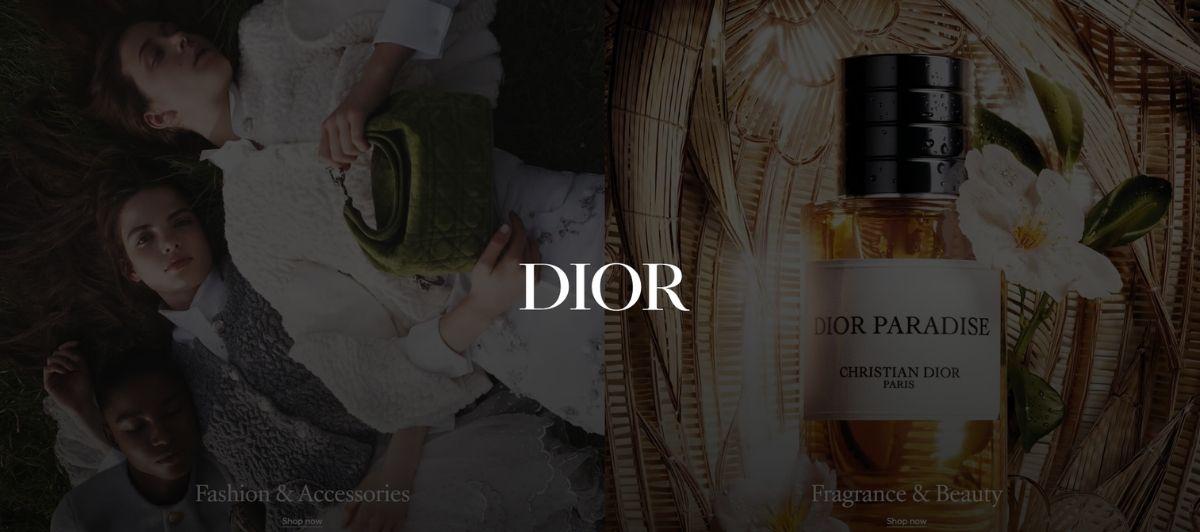
Despite being such a well-known brand, Dior‘s site is impressively minimal. With graceful fonts, they stick to a black and white color scheme with vibrant images of their models and products to make them really pop. Since they have an abundance of products for different audiences, they separate navigating their more detailed categories into six general drop-down choices that are easy to find on the header bar and even have a concise little animation.
As a luxury brand, they’re especially good at differentiating what men and women value about their products, offering golden-tinted images of pocketbooks, lipstick, and perfume for women, with black and white images advertising sporty wear and leather jackets for men.
2. Zara
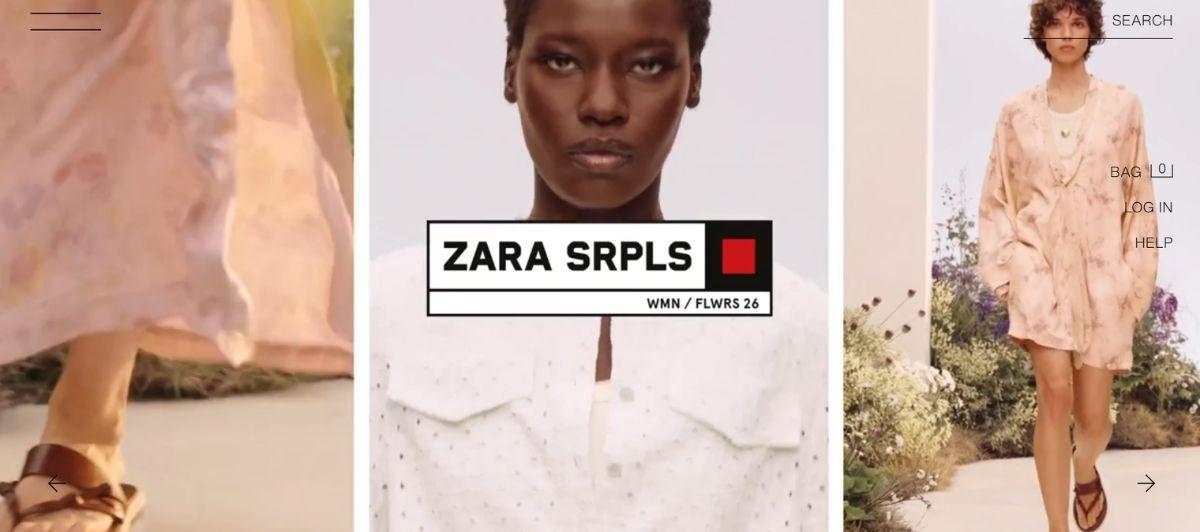
The Spanish clothing store Zara needs no introduction for many shoppers, but they have a distinct online presence that’s worth examining. The site’s homepage is surprisingly minimal, with just a few stylized banner images rotating on a center-page slider and their store icon and shopping categories keeping to the left side of the page.
This is all deliberate: the specific and uniform size of the banner images and their font choices look exactly like a magazine cover on the rack. Even their product pages are like this, presenting product categories in grid-like blocks for the consistent feeling that you’re flipping through a designer journal from years past.
Each photo is unique and shows off how they want you to feel about what’s being viewed individually rather than presenting products from exactly the same angles and distances.
3. Verge Girl
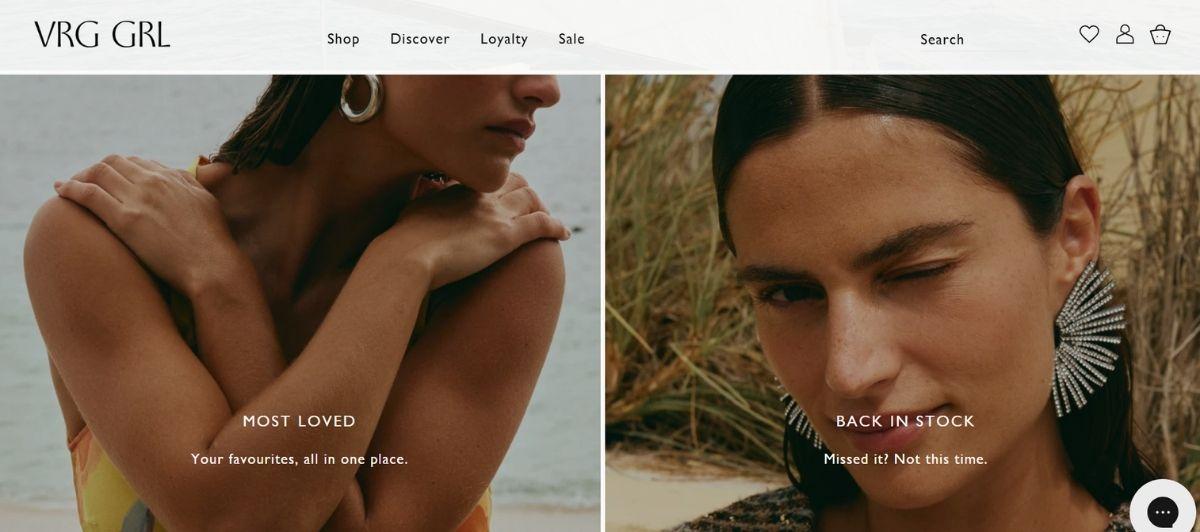
An internationally sold women’s online store, Verge Girl‘s style brings a tongue-in-cheek humor with a focus on breathable, summery clothes. With a scrapbook-like visual appearance, their homepage’s main image depicts the same models in various colors, styles, and physical expressions to give off the vibe that this is a brand about experimentation and finding just the right look for you.
Their immediate calls to action are cleverly brought up, with “Shop Our Obsession” circled as if drawn long-hand to maintain that impression of youthful playfulness and malleability in style. Each of the most popular clothing types is given a homepage advertisement just in case customers already know what they’re generally looking for.
4. Rolli Nation
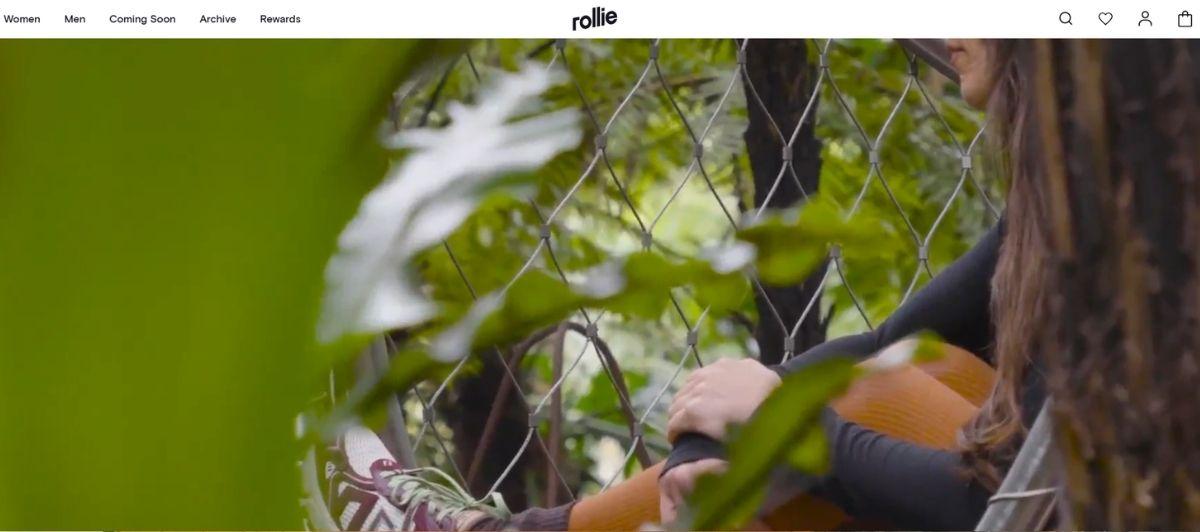
As a specialty store focused on designer travel shoes, you might think Rolli Nation‘s site would have a lot of graphics and complex actions devoted to catching your eye, but they’re all about the fundamentals. With an almost entirely blank, white background, their site’s sections are partitioned with light red and blues, with some simple and fun animations popping up to further describe product categories.
Their “Let’s Be Soulmates” slogan goes well with their bright pastel imagery, giving their brand a “no frills, but still stylish” attitude. They want the site to focus on the concrete aspects of their products’ style and let that prioritization define their brand’s open and warm approach rather than teaching you how to navigate an unfamiliar-looking site.
5. Olive Clothing
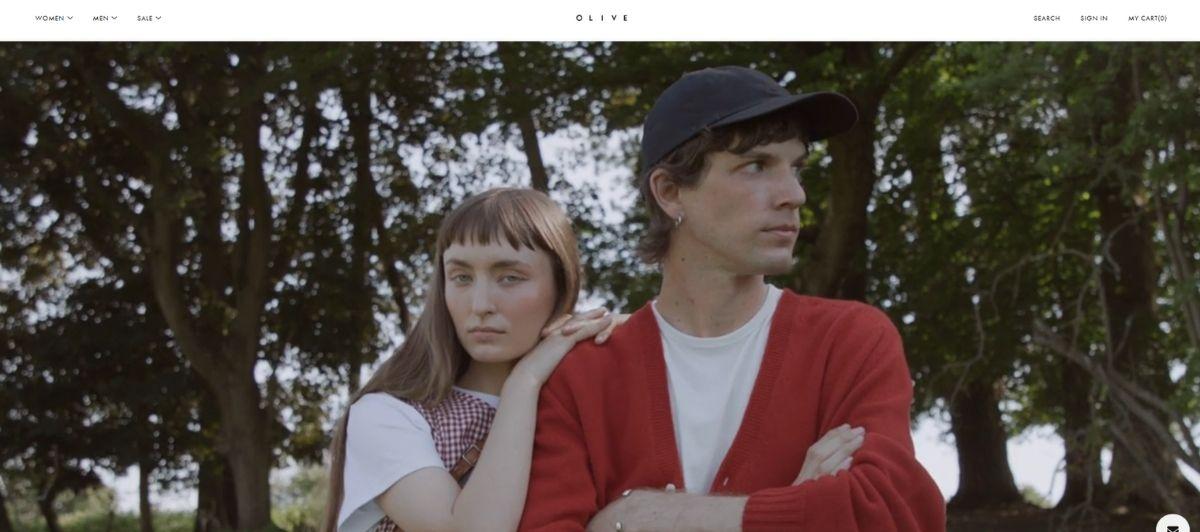
Olive Clothing is a UK-based fashion company focused on synthesizing traditional European styles with modern fashion. With very large central photos, their homepage images show serious-looking young models in autumn wear to describe what they mean by synthesis: long-sleeve, complex earth tones from the past with more contemporary material and cuts.
Most of their products are a single color or lightly patterned with another, so their site’s all-white background and heavily-spaced lettering for the font lets their images do the talking. Their actual stock pages load very quickly and come with high-definition images that look realistic and fully zoom in so you can see the material.
6. True Links Wear
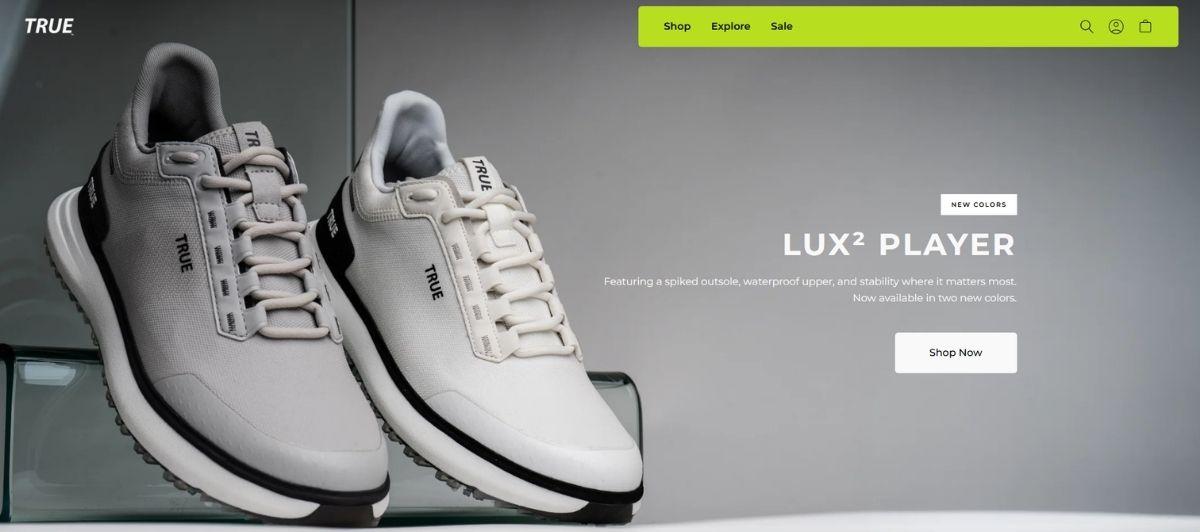
Celebrating 10 years of success, True Links Wear has a great approach to getting the essentials front-and-center. Originally a golf shoe company, their now multi-purpose shoes are supported by initial claims of free trials, same-day shipping, and 30-day trials right on their homepage header bar.
Their “Why True” section humorously describes how they research the best comfort practices for all their shoes so your foot is always in a natural-feeling position, and they display how that does and doesn’t look with a helpful graphic. They have a golf-focused, regularly updated blog with punchy writing and multi-angled product photos for everything they sell, not just the shoes!
7. Maison Labiche
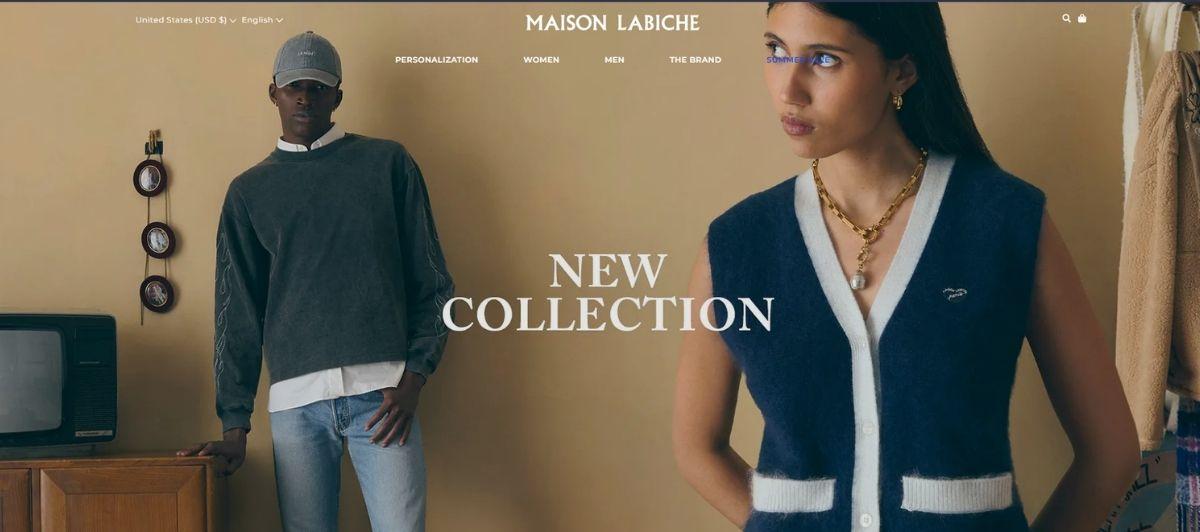
The French company Maison Labiche has an interesting focus: they design and sell embroidery products of all kinds, from t-shirts to socks to jackets. You can customize the embroidery text to be anything you want, and their site describes this with a “Do Your Own” section on the homepage.
All their models wear season-specific pieces with text like “Passion” and “French Look” in a variety of embroidery fonts, including cursive and block, to show some options for how they can make it look. They do especially good work providing very different styles on their homepage so unaware customers don’t get the impression that embroidery is only good for a single type of clothing or style.
8. The Idle Man
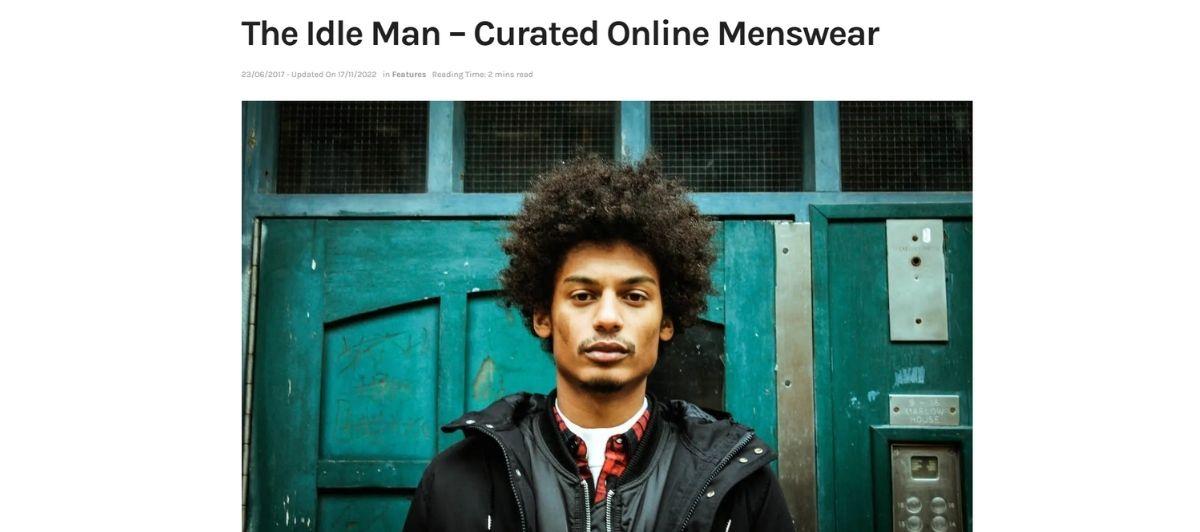
A humorously named international store that specializes in casual menswear, The Idle Man informs you about free deliveries from the header bar right away. They handpick clothes from multiple brands and have great general categories to separate different clothing types for easy shopping.
Their blog posts are noticeably more analytical than your average storefront’s, delving into fashion’s association with music and other art forms, usually in reference to a new product or an emerging fashion trend to show why their company sells what it does when it does. Each piece is well chosen and goes with almost any other on the site, and their selection images thoroughly show the finer details for customers who want a closer look.
How great fashion brands tell a story online
The eight sites above sell very different clothing, but they win for the same reason: each one translates a clear brand identity into every pixel. In a crowded fashion industry, personality is what makes a shopper stay, and curated discovery now matters more than a plain product catalog.
Here’s how the best sites build that identity:
- A distinct visual voice. Dior’s minimal black-and-white luxury and Verge Girl’s scrapbook playfulness show how color and layout instantly signal who a brand is for.
- Curated discovery over endless grids. Rather than dumping every product on one page, these sites guide shoppers toward the right look, echoing the 2026 shift toward curated discovery and personalization as a standard feature.
- Clear calls to action. Verge Girl’s hand-circled “Shop Our Obsession” and True Links Wear’s free-trial banner turn browsing into buying without feeling pushy.
- Bold, saturated color where it counts. Web design in 2026 leans into bright, saturated palettes, and brands like Rolli Nation use pastel accents to define a warm, approachable personality.
That marriage of storytelling and smooth commerce is exactly what a well-built WordPress and WooCommerce store is designed to deliver.
Why product photography makes or breaks the sale
Online, a shopper can’t touch the fabric or try on the jacket, so photography carries the entire weight of the decision. High-quality photography significantly enhances the online shopping experience, and the brands on this list treat their imagery as the product itself.
Consider how the standouts handle it:
- Olive Clothing loads high-definition images that fully zoom in, so shoppers can inspect the high-quality materials and weave before buying.
- Zara shoots each photo uniquely, styling product pages like the pages of a designer magazine rather than a uniform catalog.
- The Idle Man shows the finer details of every handpicked piece for customers who want a closer look.
- Maison Labiche displays its embroidery in multiple fonts and styles, making sure shoppers grasp the full range of customization.
Great imagery only works if it loads fast and displays flawlessly on every device. Heavy, high-resolution fashion photography can bog down a site, which is why performance-focused speed optimization and reliable managed hosting are quietly essential for any serious online shopping experience.
The sustainability spectrum reshaping fashion
Shoppers increasingly care about the environmental impact of what they wear, and sustainable fashion has moved from niche to mainstream. In 2026, there’s greater emphasis on resale and circular fashion, and transparency has become a genuine competitive advantage. The best brands now build their ethical story right into their product pages.
Here’s how leading names approach transparency and sustainability:
| Brand | Sustainability approach |
|---|---|
| Reformation | Tracks the environmental footprint of every garment sold |
| Everlane | Reveals the true cost of production for every item |
| PANGAIA | Integrates material science into product pages for transparency |
| H&M | Around 40% of its products come from its Conscious Collection |
| Patagonia-style circularity | Resale and recycled materials extend garment life |
This shift rewards brands that use recycled materials, commit to ethical production, and are honest about their supply chain. Whether a company leans into high fashion or affordable fashion, weaving sustainability into the shopping experience builds trust with a generation of shoppers who factor values into every purchase.
For up-and-coming designers and emerging brands, transparency about high quality materials and ethical production is one of the clearest ways to stand out.
How AI and virtual try-ons are changing online shopping
The technology behind fashion e-commerce is evolving as fast as the styles themselves. Fashion retailers in 2026 use AI to analyze consumer behavior, personalize recommendations, and even speed up design, while community-led commerce increasingly shapes what sells. For shoppers, the most visible change is happening right on the product page.
Virtual try-ons reduce returns
Online shopping now features augmented reality fitting rooms, and the impact is measurable: AI virtual fitting rooms reduced returns by 35% in 2025. Virtual try-ons let a shopper see how a jacket or pair of shoes looks before buying, cutting the guesswork that leads to returns and disappointment.
AI accelerates design and personalization
Speed is the other frontier. Zara’s AI-assisted design process now reduces concept-to-launch time to just 8 days, letting the brand respond to trends almost in real time. Behind the scenes, AI analyzes consumer behavior to personalize product recommendations, making each visit feel tailored to the individual’s personal style. As physical retail and digital strategies continue to merge, these tools blur the line between browsing online and shopping in person.
Building these advanced, interactive features into a storefront takes real technical depth, which is where an experienced WordPress development team makes the difference.
From affordable staples to high fashion
One of the most striking things about modern fashion e-commerce is its range. The same afternoon of shopping online can span a $15 t-shirt and an $800-designer platform, and today’s consumers, who spend about 5% of their earnings on clothing, move fluidly between the two. The best websites know exactly where they sit on that spectrum and design accordingly.
Here’s how the range breaks down across well-known names:
| Tier | Examples | What defines it |
|---|---|---|
| Affordable fashion | H&M (items $15 to $40), Uniqlo (lifetime warranty on select products) | Closet staples at a reasonable price |
| Contemporary marketplaces | ASOS (1,500+ independent designers), SSENSE (up to 70% off seasonal sales) | Emerging brands and in-house labels |
| Luxury and high fashion | Dior, Net-a-Porter (800+ designers in 2026) | Statement pieces and high-end craftsmanship |
Whether a brand sells affordable closet staples or luxury statement pieces, the winning formula is the same: know your shopper, present high quality materials honestly, and make the path from inspiration to purchase effortless. Marketplaces like ASOS and SSENSE thrive by surfacing up-and-coming designers, while luxury platforms like Net-a-Porter curate hundreds of labels into a single chic destination.
For any retailer, from a London boutique to a global label, a site that reflects its exact place in the market is what turns browsers into buyers.
Bring your fashion brand online with Freshy
The best fashion websites all do the same core things: they translate a clear brand identity into every detail, let stunning photography sell the product, and make the path to purchase effortless.
Here are the key takeaways from this guide:
- Build a distinct visual voice that signals exactly who your brand is for
- Invest in high-quality, fast-loading photography that lets shoppers inspect the details
- Weave sustainability and transparency into your product pages to build trust
- Explore AI personalization and virtual try-ons to boost conversions and cut returns
- Know your place on the affordable-to-luxury spectrum and design for that shopper
- Prioritize curated discovery and clear calls to action over endless product grids
Whether you’re an emerging designer launching your first collection or an established label refreshing your storefront, your website should feel as considered as the clothes you create.
Freshy builds high-performing WooCommerce and WordPress stores for retailers of every size, backed by ongoing support and maintenance. When you’re ready to give your fashion brand the online presence it deserves, let’s talk.
Frequently asked questions
What makes a great fashion website?
The best fashion websites pair a distinct brand identity with high-quality, fast-loading photography, curated discovery, and intuitive navigation. Clear calls to action and a smooth checkout turn browsers into buyers across every device.
How is AI changing fashion e-commerce in 2026?
AI now analyzes consumer behavior to personalize recommendations and accelerate design, with Zara reducing concept-to-launch to 8 days. AI virtual fitting rooms and augmented reality try-ons cut returns by around 35%, improving the shopping experience.
Why does sustainability matter for fashion brands?
Shoppers increasingly weigh environmental impact when buying. Brands like Reformation track each garment’s footprint, Everlane reveals true production costs, and about 40% of H&M’s products come from its Conscious Collection, making transparency a real competitive edge.
How important is product photography for online fashion stores?
It’s critical. Since shoppers can’t touch the fabric, high-quality photography carries the entire buying decision. Zoomable, high-definition images like those on Olive Clothing let customers inspect materials and details, significantly boosting the online shopping experience.
What’s the difference between fast fashion and high fashion online?
Fast and affordable fashion, like H&M or Uniqlo, offers closet staples at a reasonable price. High fashion, like Dior or Net-a-Porter, focuses on statement pieces and premium craftsmanship. Marketplaces like ASOS bridge the two with emerging designers.