A farm’s website now does the work a roadside stand and a handshake used to do. It’s where a customer decides whether your produce is worth the drive, whether your brand feels trustworthy, and whether your story is worth sharing. In an agriculture sector that’s rapidly going digital, a great website is one of the most powerful tools a farm or agribusiness can own.
Here’s what this ultimate guide covers:
- The 10 best agricultural and farming websites of 2026, reviewed
- What makes each site work and worth studying
- Design trends shaping the farming world in 2026
- Features every agricultural website needs
- Common questions farmers and agribusiness leaders ask before building
At Freshy, we’re the go-to Agriculture and Farming web design agency, building high-performing WordPress websites for farms, producers, and agribusinesses. If any of these spark an idea, we can help bring it to life.
Introducing the top agricultural and farming websites
One of the things we love about the best agricultural and farming websites online is that each one is unique. While some industries seem to have a go-to template for creating websites, the agricultural and farming world is happy to think outside of the box, reimagining the way that they can present their business to a much wider audience, including people who would have, before the internet, never even known they existed.
As more and more people realize the importance of healthy, nutritious food, and why words like “organic” really matter, agricultural and farming businesses have an opportunity to grow. Unlike in the past, this grassroots growth is allowing the farmers and business owners to dictate how they want to operate, which is one of the biggest reasons why the best websites really are so cool.
When agricultural and farming websites look great and work even better, they create an impression on their audience that starts a ripple effect into the rest of the world.
1. Floret
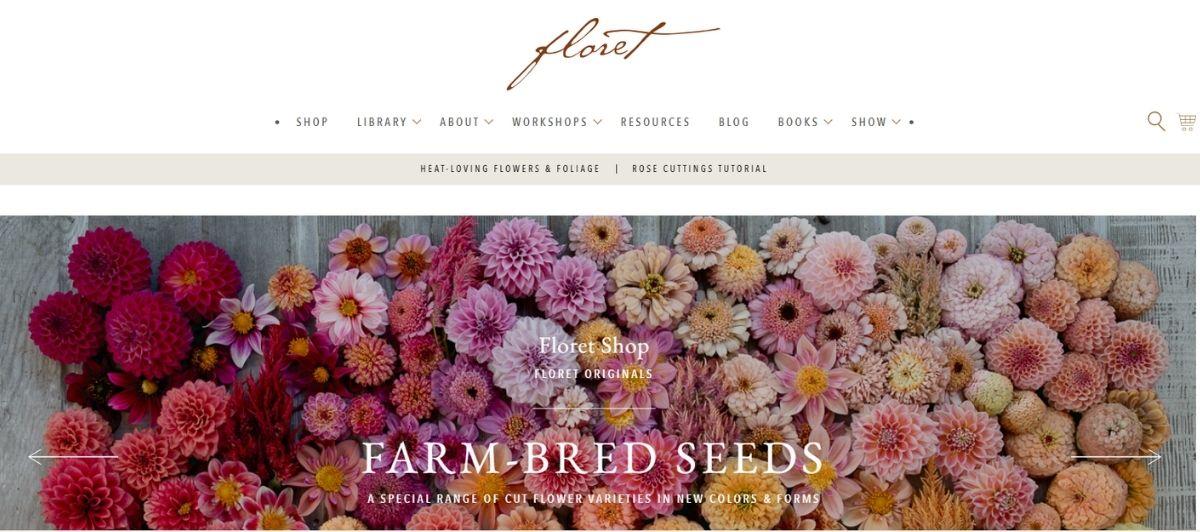
One of the best parts about great farming websites is that there are plenty of opportunities to use stunning photographs. Floret, which is a flower farm in Washington State, grows uncommon and heirloom flower varieties, selling the blooms – and their seeds – around the country. Taking full advantage of their beautiful product, the Floret website is feminine and romantic, but simultaneously able to deliver all of its content without frills (although you can’t say the same about their frilly dahlias).
Everything about the website sets a relaxed, laidback tone, including the well-spaced font and the comprehensive menu that allows you to nonchalantly dive into the farm’s content. The About section of the site is one of the most compelling because it offers you a glimpse into the family that started it all.
Another bonus? The monthly newsletter opt-in pop-up at the bottom of the page makes sure that the opportunity is seen, but, because of its neutral color scheme, seems polite and non-invasive (music to every gardener’s ears).
2. Woodstock Farm Sanctuary
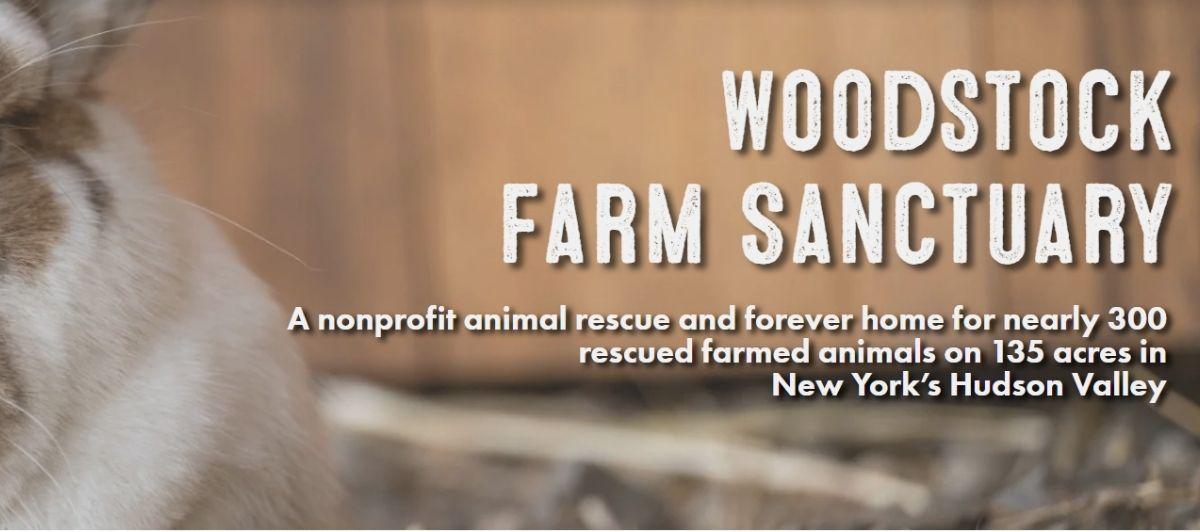
Not your typical farm and not your typical website, the Woodstock Farm Sanctuary offers a safe haven to farm animals across the country. Its website, which is filled with sweet pictures of its furry and feathered residents, also uses lighthearted animal illustrations throughout its pages. Filled with great action buttons and tons of content, the website invites you to really experience the farm virtually, making you feel like you are a part of their animal-loving community, even if you never have the opportunity to actually visit them in New York.
The website’s menu, which takes up two rows and quite a bit of space, delivers visitors with the content they want and doesn’t hesitate to introduce concepts that would otherwise be hidden in the footer, like volunteering on the farm or shopping in their online store. The prominent “Make a Donation” box on the homepage is an intelligent way to ensure that visitors understand how important this is to the farm – and how easy it is to give.
3. Holmes Brothers Farms
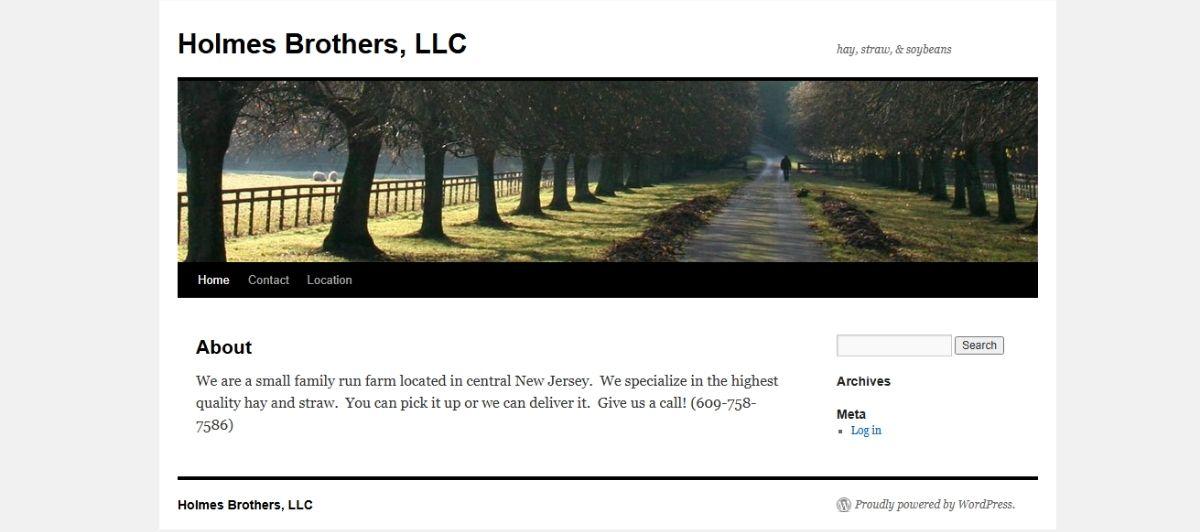
A hops farm located in North Carolina, the website for Holmes Brothers Farms looks and feels current, speaking to the predominantly younger generations of craft beer aficionados. Using one large image (a scene from their farm), rather than a moving gallery or several smaller pictures, the website conveys focus, something that any specialty farm wants its audience to understand.
As you scroll down the website’s homepage, you’ll find that the first main section is about the story behind the farm, not the product itself, which, again, speaks to an audience that really cares about who is growing their food – and why. To keep it concise, the Our Story section is condensed with a “Read More” option, ensuring that return visitors or people with a different goal can get through the website as quickly as possible.
Simple and easy to use, Holmes Brothers Farm’s website is a perfect example of how a not-too-flashy site can get the job done.
4. Wildwood Christmas Tree Farm
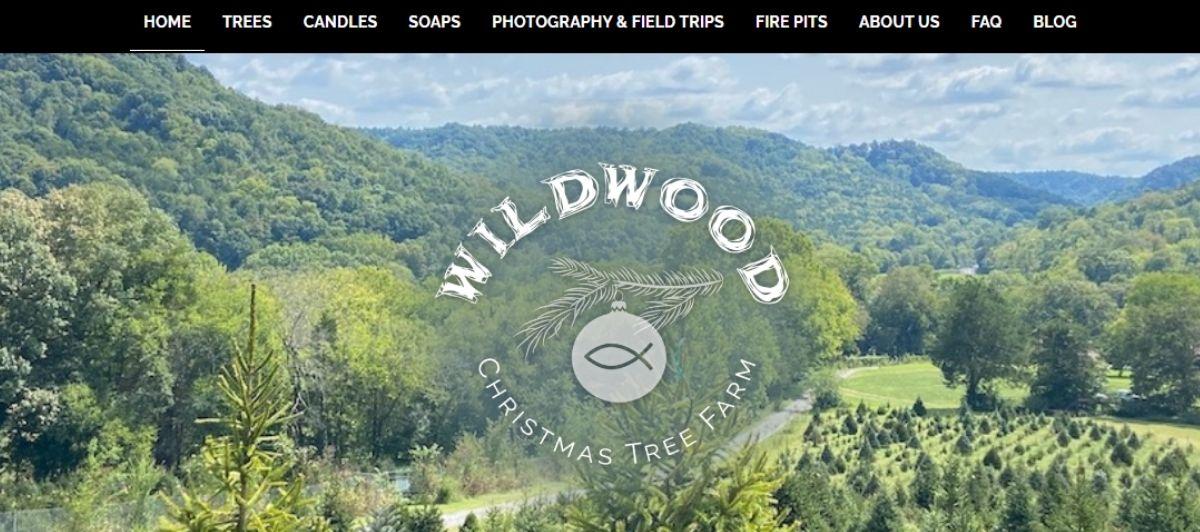
A bold menu and a wilder-than-expected main photograph instantly create personality on the Wildwood Christmas Tree Farm website. Then, as visitors view the prominently placed company logo, which uses a hand-drawn font and a symbolic tree ornament, they are welcomed into a community that shares their own beliefs and interests (a powerful tool for any business wanting to generate a loyal following).
Just below the fold, the website offers a section that reiterates the three most important features from the menu – the company’s hours, the farm’s location, and the trees that can be found on the farm. And, while it might seem redundant, the reality is that this kind of reinforcement feels reassuring to online visitors. For good measure, the family farmers add a short but compelling About Us section, featuring a great family photo.
5. Benziger Family Winery
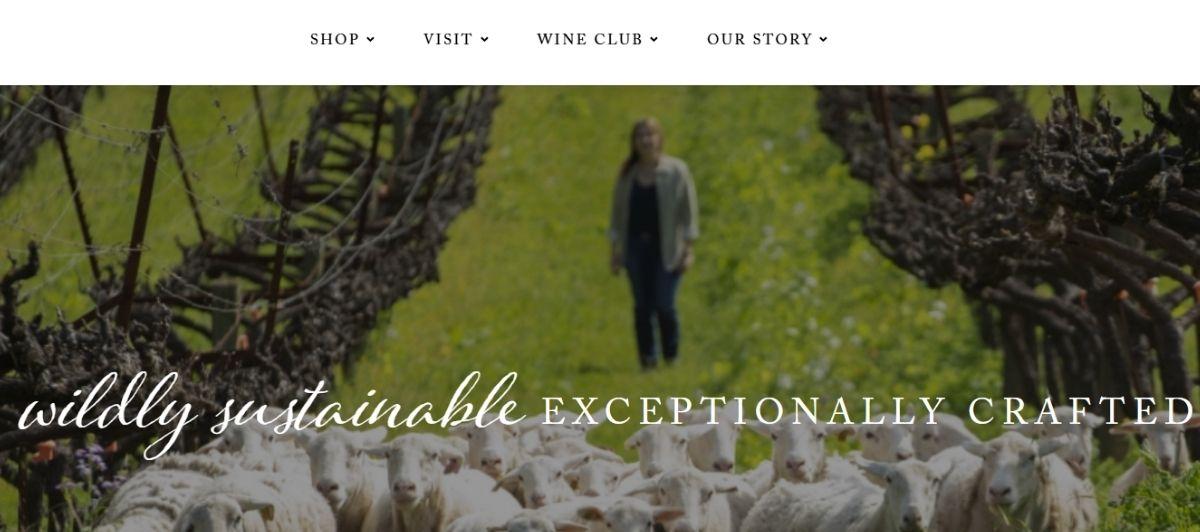
Just like a great wine is filled with subtleties, so is the Benziger website. While the overall impact of the site is visually beautiful, there are a lot of smaller, subtler features that deserve special note. For example, the small bouncing arrow just above the fold on the website’s homepage might seem unnecessary (or even annoying), it actually is extremely effective at ensuring that visitors scroll down, rather than quickly moving to another competing vineyard.
Following the arrow’s directions, visitors are invited into the “family” of wines and a bold “Shop” button. Rotating between full-screen pictures and content, the website’s overall appearance is organized and cohesive. And, as you hover your mouse over interesting sections, the animation adds to the experience, giving you just one more reason to click and continue exploring.
6. Garden Sweet

One of the most visually-pleasing farm websites we’ve seen in 2026, Garden Sweet has crafted a site that delivers its audience a whole lot without taking up much room. Like all great websites, Garden Sweet’s has an intuitive, easy-to-find menu. But, what sets it apart, is its photography (which uses pictures of the farm and its farmers) and its copy.
The website’s main headline “Know Your Farmer. Love Your Food” speaks to its audience, reminding them of the importance of buying local. The website also features an email opt-in, friendly illustrated icons, and an updates section that allows locals to quickly see what’s happening on the farm right now.
7. The Sill
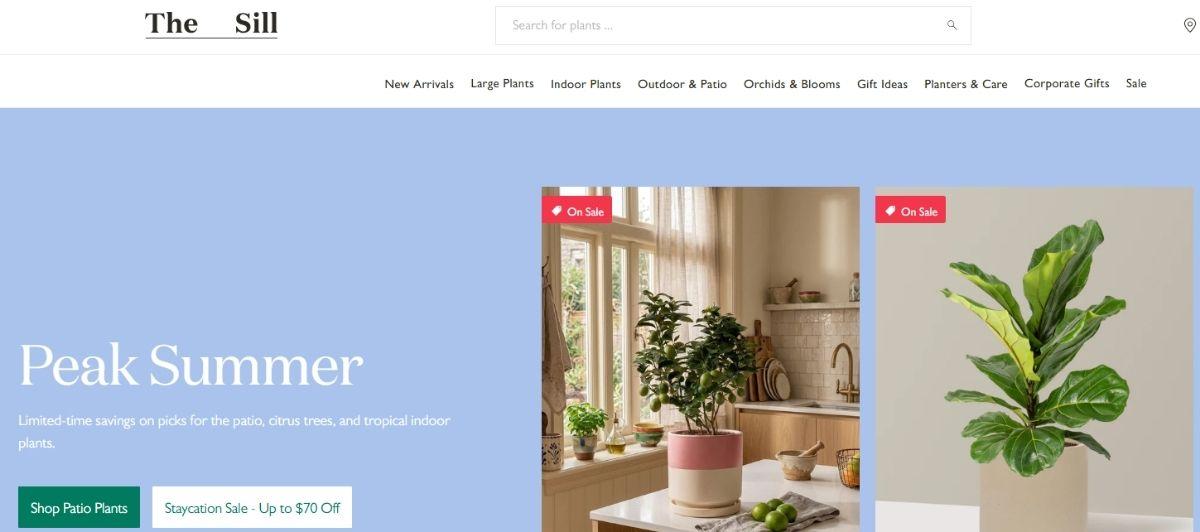
One of the trendiest plant-lover websites of 2026, The Sill is a unique online subscription service that delivers plants straight to its customers’ doors. A powerful example of just how cool farming (whether large or small scale) can be, The Sill allows its website to be a business card, a salesperson, a shop, and a plant-savvy best friend.
From its witty opt-ins (“Get the dirt”) to its informative videos and too-good-to-be-true services (you can actually schedule a video conference with a plant specialist to help you cultivate your green thumb), everything about The Sill’s website is done right.
Specifically, we love the abundance of professional photos, the subtle addition of plant art in the background, and the super organized drop-down menu.
8. Beak & Skiff
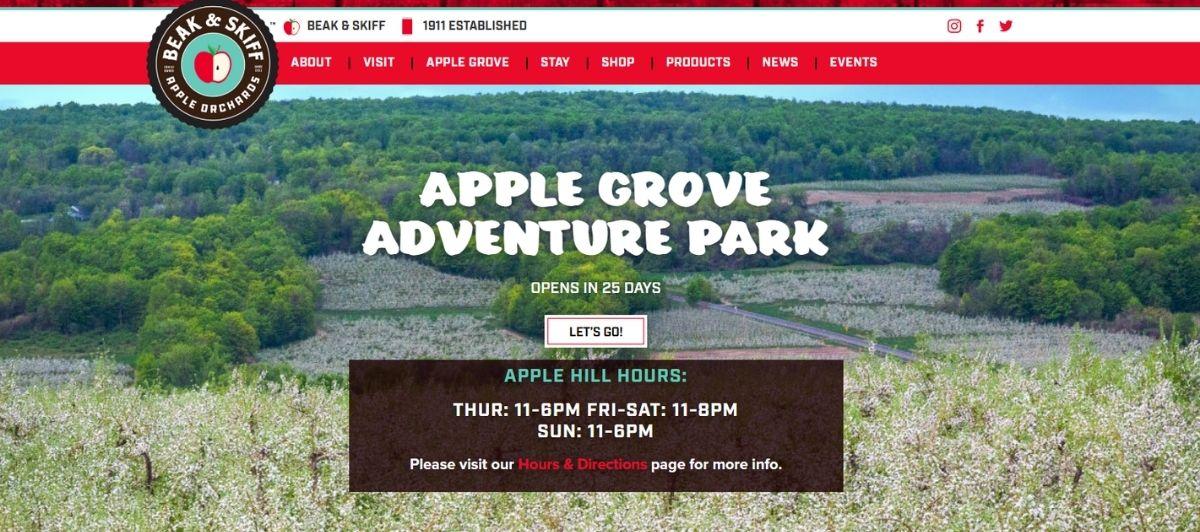
Beak & Skiff in Marietta includes a website made up of bold colors. It highlights its history on the homepage, and there is also a well-organized navigation bar.
9. R.D. Offutt Company
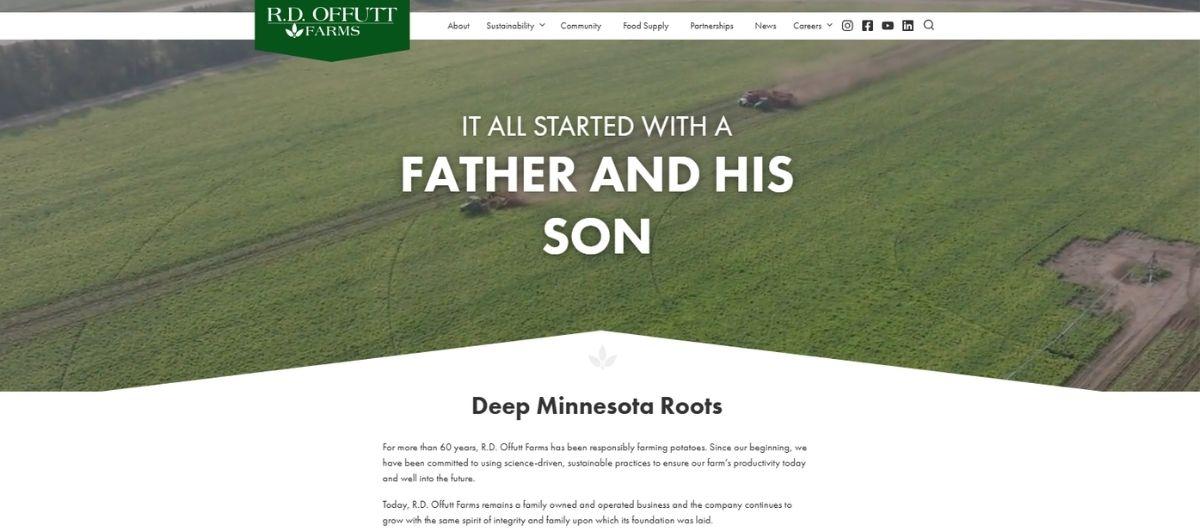
R.D. Offutt Company manages over 190,000 farm acres in Fargo, North Dakota, focused on potatoes. The most important information is available on the main page. The visitor is taken on a journey that starts with the company’s founding through text and pictures. After a short introduction, the visitor can click on a simple button for more information.
10. Simplot
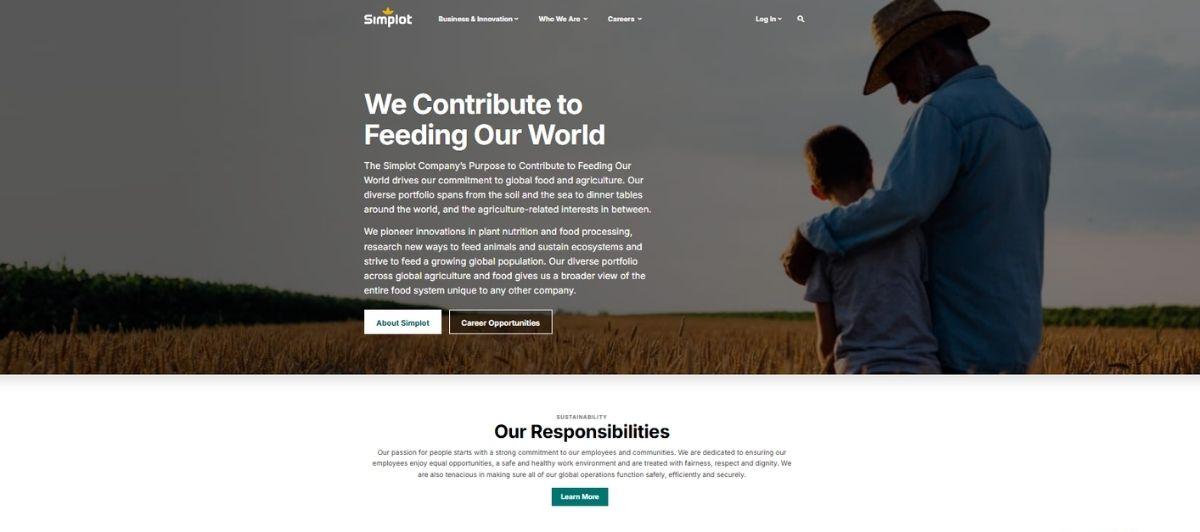
The Simplot website was designed for the J.R. Simplot Company, which is one of the largest privately held food and agribusiness companies in the United States. Information is organized in a user-friendly manner. The navigation bar features all their departments without overwhelming the visitor. The logo is simple and prominently featured. The site displays beautiful and relevant pictures, too.
For the farming and agricultural sectors, online marketing can easily lead to more sales, brand awareness and increased market share. When designing your own website, take a look at these great sites to get an idea of what you should include.
It goes without saying that the look and feel of a website can largely influence a customers view of a business’s professionalism, authenticity, and trustworthiness. Yes, this is even the case for farming and agricultural-related websites, especially when it’s direct-to-consumer or business-to-business.
What these sites get right
After studying these ten, clear patterns emerge across the best agricultural and farming websites. Whether you run a small organic farm or lead one of the country’s agribusiness giants, these are the moves worth borrowing.
They lead with story, not just product
The strongest farm sites open with human interest stories about the people behind the produce. Floret introduces the family that started it all. Holmes Brothers Farms puts its origin story ahead of the product. Consumers increasingly care who grows their food and how, so storytelling builds an emotional connection that a product grid never could.
They use photography as a selling tool
Agriculture is one of the few industries where the raw product is genuinely beautiful, and the best sites lean into it. Floret’s blooms, Garden Sweet’s farmer portraits, and The Sill’s plant photography all turn the website’s homepage into a shop window. High-quality, authentic pictures of the land, livestock, and people build trust faster than any block of copy.
They make the next step obvious
Woodstock Farm Sanctuary’s “Make a Donation” box and Benziger’s bold “Shop” button show how great farm sites guide visitors toward one clear action. Whether the goal is a sale, a subscription, or a donation, the path is never buried.
They communicate value clearly
A website that communicates value builds trust with customers. Garden Sweet’s “Know Your Farmer. Love Your Food” headline instantly tells visitors what the brand stands for. Clear, benefit-led messaging turns a casual visitor into a loyal customer.
Here’s a quick summary of the standout strengths:
| Site | Standout strength |
|---|---|
| Floret | Product photography and family storytelling |
| Woodstock Farm Sanctuary | Community building and clear donation CTA |
| Holmes Brothers Farms | Story-first homepage with focused messaging |
| Garden Sweet | Benefit-led copy and local-first branding |
| The Sill | Ecommerce, video, and expert access |
| Simplot | Clean navigation for a large agribusiness |
Agricultural web design trends for 2026
The farming world’s digital standards are climbing fast. What impressed visitors three years ago now feels dated, and the agriculture sector’s biggest brands are moving toward technology-forward, data-rich experiences. These are the trends shaping the best agricultural websites in 2026.
AI and precision technology take center stage
Agricultural websites in 2026 increasingly focus on artificial intelligence and precision technology. AI integration is moving toward predictive analytics and automated pest detection, and the top sites now offer actionable insights on AI-driven management tools and market reports. Technological advancements like AI, robotics, and IoT are becoming core parts of how agribusiness leaders present their solutions and expertise online.
Real-time market data and transparency
The best agricultural websites provide real-time data on market volatility, market prices, and regenerative practices. Supply chain transparency is now essential for tracking market trends, and top sites offer high-quality localized data for farm management. Digital tools should include features such as field management and market tracking, giving farmers actionable insights rather than static articles.
Sustainability and compliance front and center
Agricultural websites in 2026 highlight biological fertilizers, land stewardship, and sustainability reporting tools. Sustainability and compliance information is critical for long-term viability in agriculture, and the sites that surface it clearly earn trust with both consumers and business partners. This matters as much for crop protection products and fertilizers as it does for organic farming brands.
Mobile-first, expert-backed content
User experience on top agriculture websites includes intuitive, mobile-friendly interfaces. Mobile responsiveness is important because so many farmers and producers access agricultural sites from the field on mobile devices. Websites should also prioritize accurate, trustworthy content backed by experts, since a deep understanding of the industry is what separates a credible resource from noise.
Freshy’s WordPress development team can build these features into a fast, mobile-responsive foundation, from market-data integrations to sustainability dashboards.
Features every agricultural website needs
Whether you’re a family farm or an agribusiness leader, these are the features that separate great agricultural websites from forgettable ones. Effective agricultural websites combine practical tools with expert knowledge.
| Feature | Why it matters |
|---|---|
| High-quality photography | Showcases produce, livestock, and land to build trust |
| Story-driven About page | Human interest stories create emotional connection |
| Clear calls to action | Guides visitors toward a sale, subscription, or donation |
| Mobile-responsive design | Farmers and consumers browse from mobile devices |
| Real-time market data | Delivers actionable insights on market prices and trends |
| Sustainability reporting | Signals land stewardship and long-term viability |
| Expert-backed content | Builds credibility with a deep understanding of the industry |
| Ecommerce or subscription | Turns website traffic into direct sales |
| Fast load times | Keeps visitors engaged and improves search rankings |
| SEO foundation | Helps rural communities and buyers actually find the site |
A great website influences customer perception of professionalism, and effective website design can lead directly to increased sales for agricultural businesses. For farms that want the technical side handled, Freshy’s SEO services and WordPress maintenance keep the site fast, findable, and current long after launch.
Where farmers turn for agricultural resources
Beyond individual farm sites, a whole ecosystem of agricultural resources helps farmers run smarter, more profitable operations. These platforms show what happens when practical tools meet expert knowledge, and they’re worth studying for any agribusiness building its own digital presence.
News and market intelligence
For market data, market trends, and food production news, several established platforms lead the field:
- Farmers Weekly is a multimedia information service that delivers news, market prices, and practical guidance to the farming community.
- The Western Producer has served Canadian farmers since 1923, offering deep coverage of the agriculture sector.
- Successful Farming is a comprehensive resource for agriculture news, market data, and farm management insights.
Financial platforms in agriculture should also offer expert commentary on crop insurance and farm financing, since profitability depends on more than yield alone.
Digital marketplaces and farm services
A new generation of platforms connects farmers directly to markets and inputs:
- Farmers Trend, a leading agricultural website in Kenya, connects farmers to resources and market access, integrating learning and sourcing in one platform.
- Mkulima Online allows farmers to sell produce directly to buyers, cutting out the middleman.
- DigiFarm provides input loans and micro insurance via mobile, expanding access for rural communities.
- KALRO Digital Platforms provide validated technical bulletins, giving farmers research-backed guidance.
Farmers can now access certified seeds, financing, and expert knowledge through online platforms that simply didn’t exist a decade ago. This is the same shift every farm website can tap into: turning a static page into a powerful tool for growth, productivity, and profitability.
Grow your farm’s digital presence with Freshy
The best agricultural and farming websites all do the same core things: they tell a genuine story, show the beauty of the land and its produce, and make the next step easy.
Here are the key takeaways from this ultimate guide:
- Lead with human interest stories that connect consumers to the people behind the food
- Use high-quality photography of your farm, livestock, and produce as a selling tool
- Build mobile-first, with fast load times and intuitive navigation
- Surface real-time market data, sustainability reporting, and actionable insights
- Back your content with genuine expertise and a deep understanding of the industry
- Make your calls to action obvious, whether that’s a sale, subscription, or donation
Freshy is the go-to Agriculture and Farming web design agency, building high-performing WordPress websites for farms and agribusinesses across the country. If your farm’s site is ready to grow, get in touch.
Frequently asked questions
What makes a great agricultural or farming website in 2026?
Great agricultural websites combine authentic storytelling, high-quality photography, mobile-first design, and real-time market data. The best ones pair practical tools with genuine expert knowledge to build trust.
Why is storytelling important for farming websites?
Storytelling creates an emotional connection between agricultural brands and consumers. Human interest stories about the farmers behind the produce build trust and loyalty far better than product listings alone.
How does website design affect an agricultural business?
A great website influences customer perception of professionalism and trustworthiness. Effective design with clear navigation and strong visuals can lead directly to increased sales for agricultural businesses.
What features should an agricultural website include?
Essential features include high-quality photography, a story-driven About page, mobile responsiveness, real-time market data, sustainability reporting, expert-backed content, and clear calls to action for sales or subscriptions.
Do farming websites need to be mobile-friendly?
Yes. Mobile responsiveness is critical because many farmers, producers, and consumers access agricultural sites from mobile devices, often directly from the field. A mobile-first design keeps them engaged.