

A cancer diagnosis changes everything. The first thing many patients and their families do afterward is search online for guidance, treatment options, and a physician they can trust. A cancer diagnosis can be overwhelming, and choosing the right oncologist is one of the most critical decisions a patient can make. The website a cancer center presents in that moment carries enormous weight.
This article breaks down 15 of the best oncologist websites and what makes each one serve patients with clarity, compassion, and confidence.
Here’s what we cover:
- What makes an oncologist’s website genuinely useful for cancer patients and their families
- 15 of the best oncologist websites, reviewed and linked
- The design and content choices that build trust at the most critical moment
- What every cancer care website needs to support new patients effectively
- How to build a site that serves both patients and the health care team
We’ve built websites for healthcare providers and medical practices across the US, and the team here understands what it takes to design a site that earns trust when it matters most. Take a look at our healthcare web design work to see what’s possible.
What a cancer care website must get right
An oncologist website operates under different expectations than almost any other type of site. Visitors are not browsing casually. They are cancer patients, caregivers, family members, and health professionals searching with purpose, often under significant emotional strain. The website has one job: to help them feel they have found the right place, and to make the next step as clear and accessible as possible.
Here is what the best oncologist websites consistently get right:
- They communicate expertise without being cold. Treatment centers that lead with credentials, accreditations, affiliations with organizations like the National Cancer Institute or the American College of Surgeons, and clinical oncology specialties signal competence. But the best sites pair that authority with warm imagery and language that helps patients feel comfortable from the first visit.
- They make information easy to find and navigate. Patients arriving after a cancer diagnosis need to access specific information quickly, from the different types of cancer treated to available treatment options, clinical trials, support services, and financial assistance resources. A site that requires three clicks to find a phone number or appointment request form creates friction at the worst possible time.
- They acknowledge the full picture of cancer care. The best oncologist websites go beyond listing treatments. They provide information about support services for families, guidance on what to expect during treatment, resources for caregivers, and details on financial assistance, including Medicare and medicaid coverage. Cancer care is not just clinical. The best sites reflect that.
- They provide a clear path to an appointment. Every page should make it simple to request a consultation, schedule an appointment, or talk to a member of the health care team. For new patients, especially, that first step needs to feel accessible and low-pressure.
| What weakens a cancer care site | What earns patient trust |
|---|---|
| No credentials or affiliations displayed | National Cancer Institute or accreditation links visible |
| Difficult navigation | Clear links to treatments, clinical trials, and support services |
| Generic photography | Real physician photos and patient success stories |
| No financial guidance | Medicare, Medicaid, and financial assistance information is accessible |
| No appointment CTA | Prominent “Request an Appointment” button on every page |
15 best oncologist websites of 2026
Most people don’t want to go just anywhere for their cancer treatments. They’re looking for a safe, professional facility with state-of-the-art technology. To earn new patients, you’ll need a website that displays your commitment to professionalism and staying on top of the latest breakthroughs. A good website makes patients feel like they’ve made the right decision when they sign up for an appointment.
1. Next Oncology

Next Oncology uses a clean white layout to communicate professionalism immediately. The home page leads with technology breakthroughs, signaling that patients will have access to the most current cancer treatment options available. For new patients searching for an oncologist at the forefront of clinical oncology, this positioning is highly effective.
2. Arizona Oncology
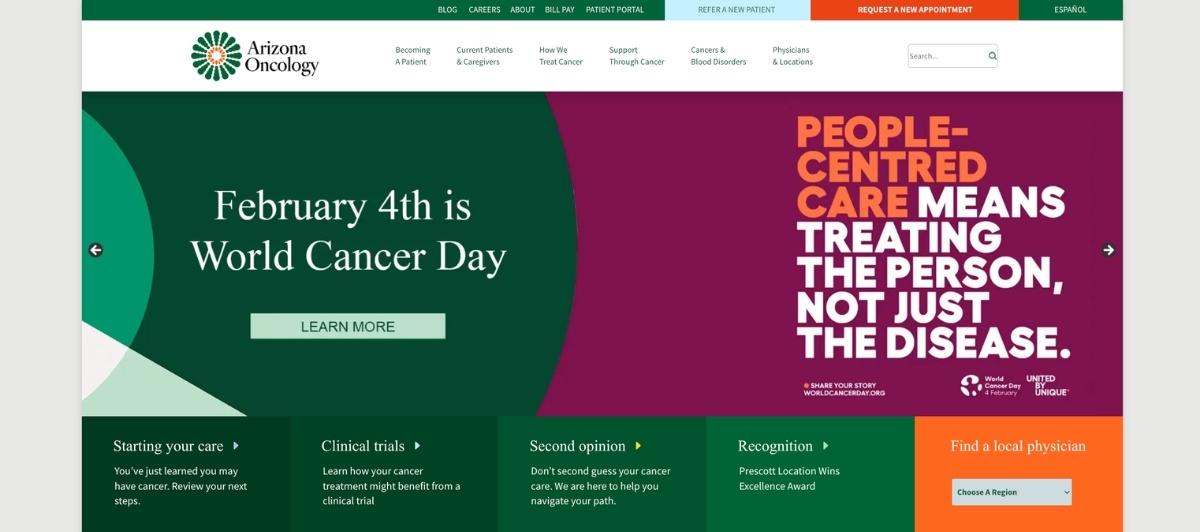
Arizona Oncology uses soft pastels to create a calm, safe atmosphere for cancer patients arriving under stress. A smiling patient in the header image immediately signals a positive, supportive environment. A full list of cancer types treated helps patients quickly confirm they have found the right specialist for their diagnosis.
3. Cancer Specialists of North Florida

Cancer Specialists of North Florida opens with a video of a physician speaking directly with a patient, giving visitors an immediate sense of what the care experience looks and feels like. A clearly organized treatment options section follows, giving patients a structured overview of the different types of cancer services the center provides.
4. New York Oncology
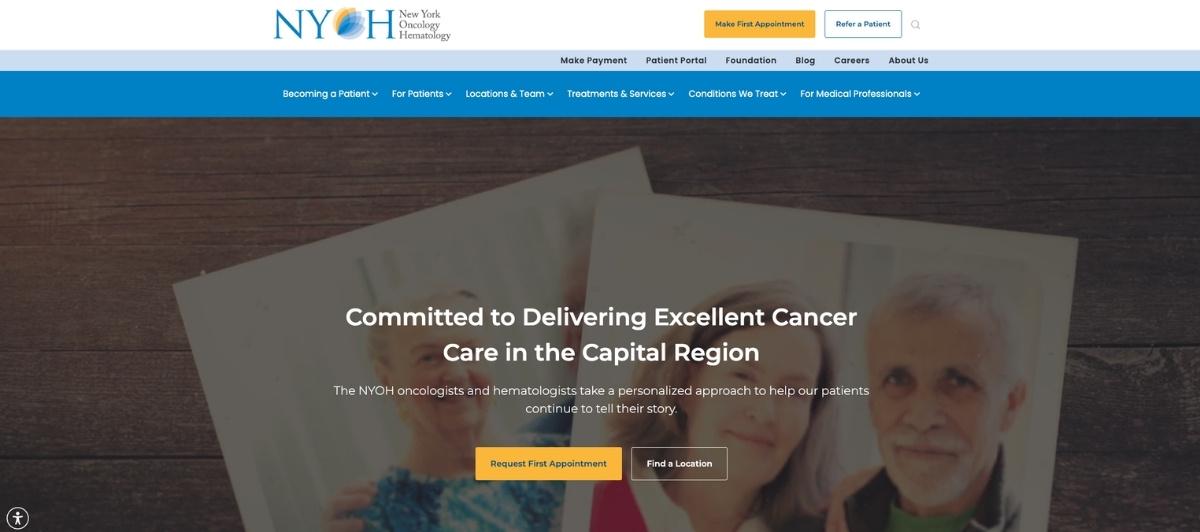
New York Oncology uses bold primary colors to anchor its brand clearly in a competitive region. Informational videos educate visitors about cancer treatments and related medical topics, while patient testimonials provide the social proof that helps new patients feel confident taking the next step toward scheduling a consultation.
5. Mountain Blue Cancer Care Center

Mountain Blue Cancer Care Center places physician photos and short biographies prominently, helping patients understand who they would be working with before their first visit. A contact form on the front page and a location map at the bottom address both the emotional and practical needs of cancer patients searching for a center in their region.
6. Hematology Oncology of Indiana

Hematology Oncology of Indiana organizes key links in a prominent header with drop-down navigation that makes it easy to explore the full range of services without confusion. An accessibility customization feature in the bottom corner ensures the site is usable for patients across different ability levels, reflecting a commitment to inclusive patient care.
7. Golden Gate Cancer Center

Golden Gate Cancer Center uses white text on a dark teal background to create an immediately distinctive identity. Futuristic design elements suggest the center works at the cutting edge of cancer treatment, while office photos on the home page help patients visualize the environment before their first in-person visit.
8. Rocky Mountain Cancer Centers
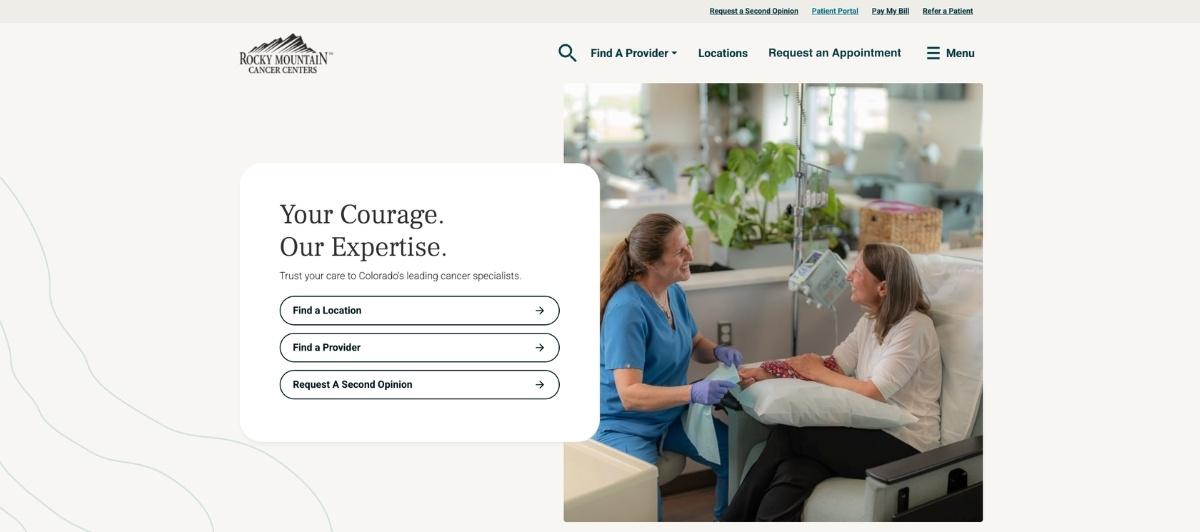
Rocky Mountain Cancer Centers uses an outdoor photography approach, featuring a couple hiking, to convey a message of health, longevity, and life after treatment. Informational blog posts on clinical oncology topics and clearly organized service sections make this site both emotionally resonant and practically useful for cancer patients and their families.
9. Affiliated Oncologists

Affiliated Oncologists uses large, bold text to maximize readability for patients who may be navigating health concerns while browsing. Prominent links beneath the header image allow quick access to the most visited pages. Patient reviews at the bottom of the home page provide the kind of peer reassurance that supports a confident appointment decision.
10. Beverly Hills Cancer Center
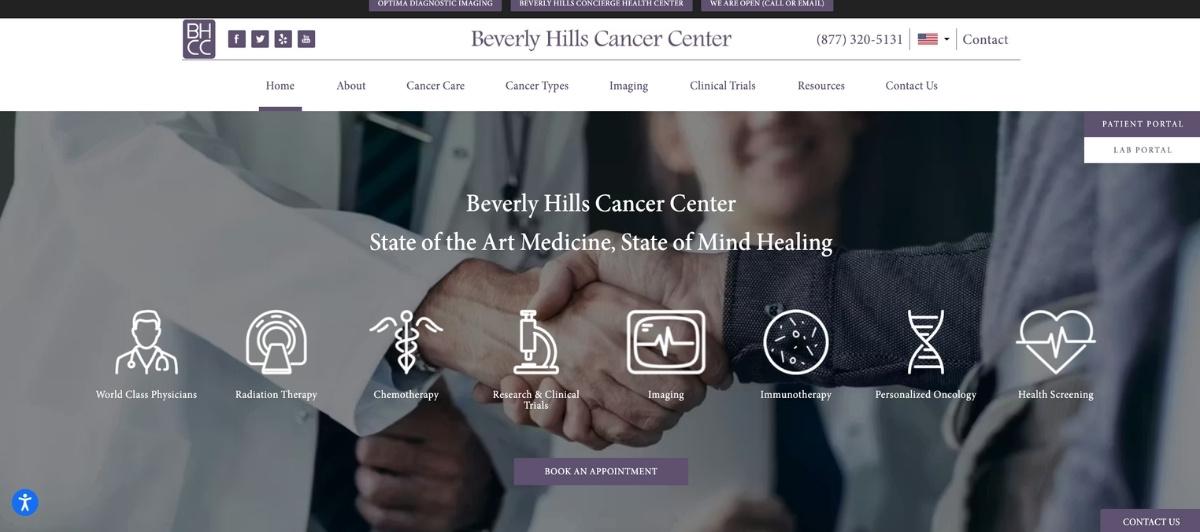
Beverly Hills Cancer Center uses a white background with dark green accents to project calm professionalism. Informational icons on the home page give patients a clear entry point for exploring the different types of services offered. A list of the center’s strengths and benefits helps patients feel confident they have found the right place for their cancer care.
11. Oncology San Antonio

Oncology San Antonio displays contact information, including multiple phone numbers and an email address, in the top bar for immediate access. A patient portal button is prominently available for current patients to access their records and care information. Patient reviews near the bottom of the home page provide social proof for those still in the decision-making stage.
12. Texas Health Care Breast Surgical Oncology

Texas Health Care Breast Surgical Oncology uses a clean, clinical white layout that communicates precision and professionalism. Office hours, addresses, and phone numbers are all displayed on the home page, making the practical details of accessing care immediately visible. Patient portal sign-up links are prominently featured for current patients managing their care online.
13. Greater Houston Radiation Oncology
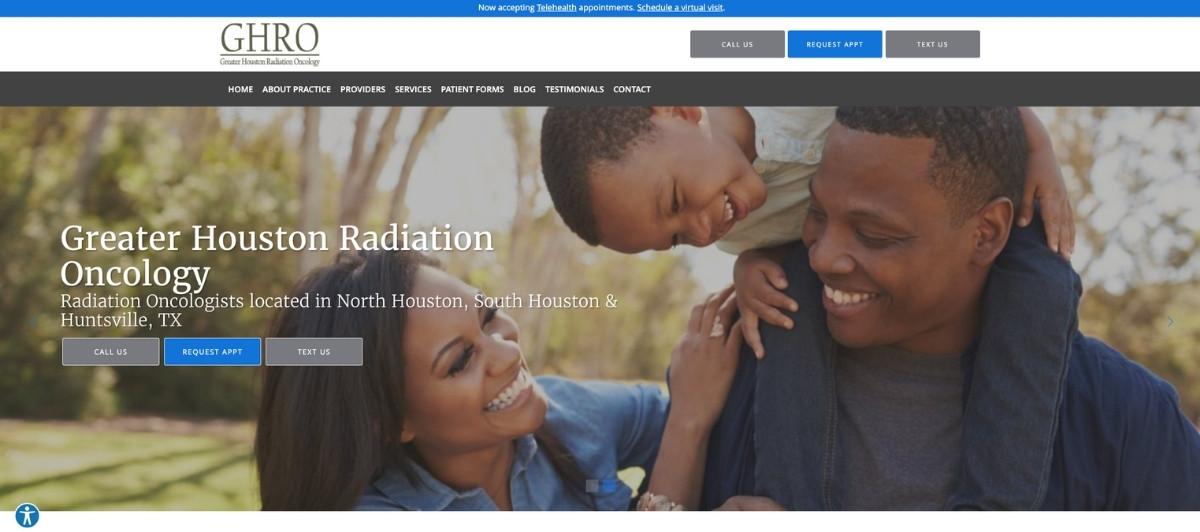
Greater Houston Radiation Oncology uses a prominent blue “Request Appt” button to direct patients toward scheduling immediately. Location maps with accompanying phone numbers for each office location appear near the bottom of the page, making it straightforward for patients across the region to find and access the center closest to them.
14. Cancer Surgeons of San Antonio
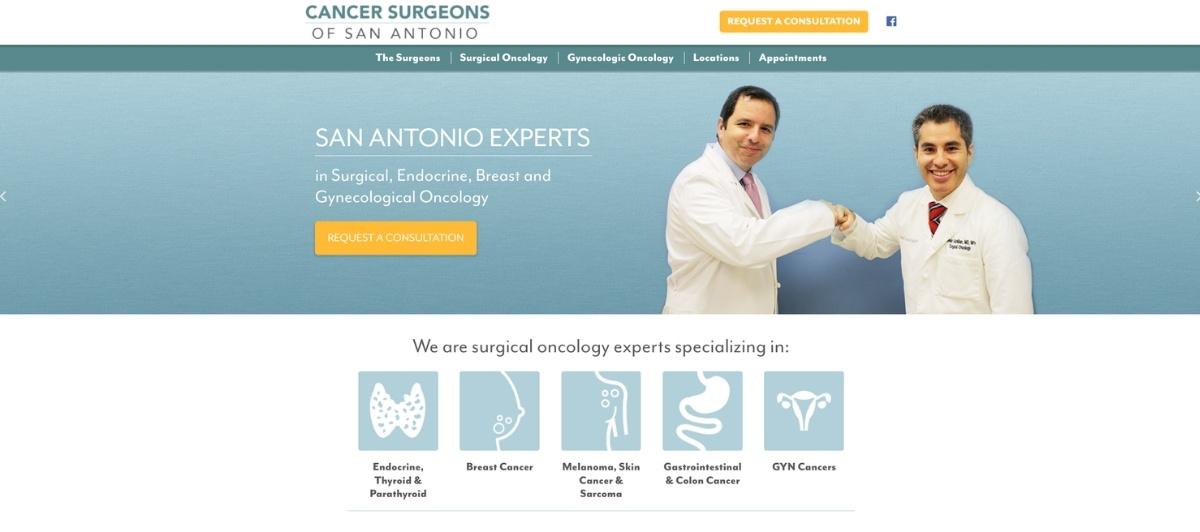
Cancer Surgeons of San Antonio opens with a warm photo of the physician team, immediately communicating the human side of cancer care alongside clinical expertise. A “Request a Consultation” button in a standout yellow shade makes the next step visually clear. For patients who need surgeons they can feel confident in, this site delivers that reassurance from the first scroll.
15. Ackerman Cancer Center
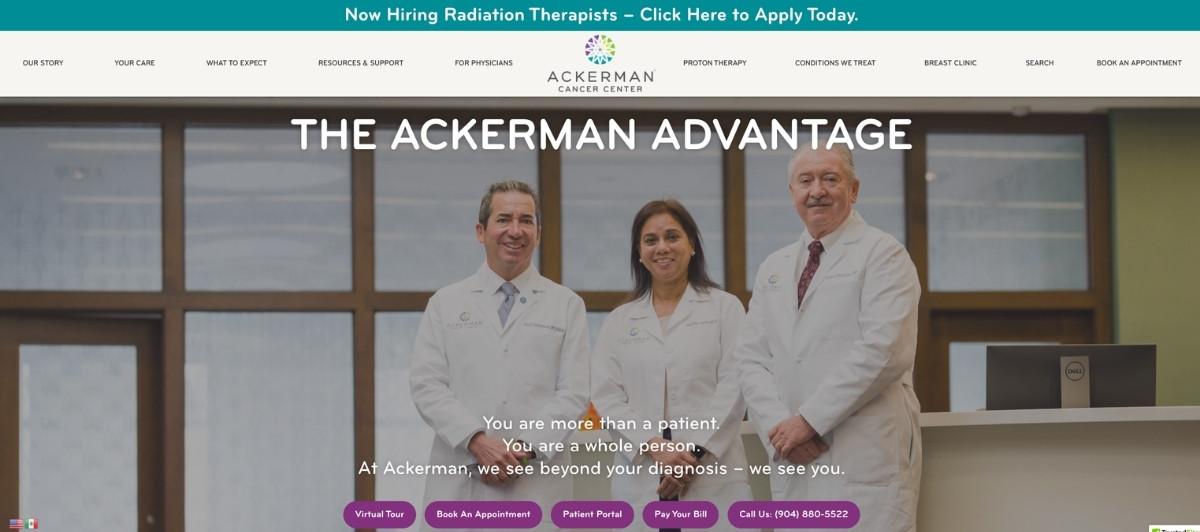
Ackerman Cancer Center uses bulleted lists to communicate key information quickly without requiring patients to read through lengthy paragraphs. A contact form on the home page makes reaching out straightforward. Social media links in the footer provide additional ways for patients and families to stay connected with the center’s updates and patient resources.
What every oncologist’s website must provide
Whether your practice is a single-physician office or a large accredited treatment center, these are the elements every oncologist’s website should have in place to serve cancer patients and their families with the care and clarity they deserve.
- A clear, specific list of cancers treated. Patients searching after a diagnosis need to know immediately whether your practice specializes in their type of cancer. A dedicated page listing the different types of cancer treated, with links to information about each, is one of the most important pages any cancer care website can have.
- Physician and specialist profiles. Detailed doctor bios that highlight credentials, specialties, and personal approaches help patients find physicians they will connect with. People choose doctors they trust and like. For oncologists, especially, this trust is built long before the first appointment. Physician photos, educational backgrounds, clinical interests, and a brief personal note all contribute to a patient feeling confident about who they will discuss their care with.
- Clinical trials information. Patients can spot studies worth discussing with their oncologist through clinical trial resources, but they cannot determine on their own whether a trial fits their cancer biology, prior treatment history, or goals of care. A dedicated clinical trials page, linked clearly from the main navigation, gives patients and caregivers a starting point for informed conversations with the health care team.
- Support services and financial assistance details. Cancer care involves far more than medical treatment. The best oncologist websites provide information on support services for patients and families, guidance on navigating Medicare and medicaid coverage, financial assistance programs, and resources for caregivers. Making this information accessible early reduces stress for families managing the practical challenges of a cancer diagnosis alongside the emotional ones.
- An accessible appointment request system. A “Request an Appointment” or “Request a Consultation” button should appear on every page, in the header if possible. For new patients, especially, the ability to take the first step toward care without a phone call can be the difference between acting today or waiting another week.
- Patient portal access, prominently displayed. Current patients managing their care across multiple visits and health professionals need quick, reliable access to their records, test results, and communication tools. A patient portal link should appear at the top of every page, not buried in a footer. Our WordPress web design team builds healthcare sites with this kind of patient-first structure from the ground up.
- ADA-compliant, mobile-first design. Cancer patients include people of all ages and ability levels. High-contrast text, screen-reader compatibility, tappable buttons on mobile, and fast load speeds ensure every patient can access the information and care they need, regardless of the device they use. Our WordPress ADA compliance services help medical practices meet these standards without compromising design quality.
Building an oncologist website that serves patients at every stage
The best oncologist websites function as more than digital business cards. They serve as a patient’s first point of guidance after a cancer diagnosis, a resource for families navigating an unfamiliar healthcare landscape, and a trust-building platform that makes the first appointment feel like the right decision before it’s ever scheduled.
Here’s how to build one that fulfills all of those roles.
- Invest in professional healthcare web design. A template-built site may communicate basic information, but it rarely conveys the level of expertise, compassion, and credibility that cancer patients need to feel before they commit to a treatment center. A professionally designed WordPress website built around your specific specialties, patient population, and care philosophy performs on an entirely different level.
- Build content around what patients actually search for. Cancer patients and their families search for specific, detailed information: the difference between different types of cancer treatment, what clinical trials involve, how to access financial assistance, and what early detection looks like for specific cancer types. Blog posts and resource pages built around these real questions attract organic traffic, build authority, and position your practice as a trusted educational resource during one of the most difficult periods in a patient’s life. Our SEO services are built around exactly this kind of content-driven strategy for healthcare providers.
- Reference trusted organizations where appropriate. Displaying affiliations with the National Cancer Institute, the American College of Surgeons’ Commission on Cancer, or other recognized bodies in clinical oncology adds a layer of credibility that patients and caregivers immediately recognize. These links signal that your practice is accredited, current, and operating within the highest standards of cancer care.
- Keep the site secure, fast, and current. A healthcare website that goes down, loads slowly, or displays outdated physician information loses patient trust at the worst possible moment. Our WordPress maintenance services protect your site with regular security updates, performance monitoring, and content checks so your online presence reflects the same standard of care your team delivers in the office every day.
- Use your site to reduce patient anxiety, not just communicate information. The most effective oncologist websites balance clinical authority with human warmth. Real patient stories. Warm, professional photography. Clear language that explains complex treatment options without jargon. A site that makes a scared patient feel comfortable and confident is doing something far more valuable than ranking well in search. It’s doing what good medicine does: it’s meeting the patient where they are and guiding them toward care.
If your current oncologist’s website isn’t doing that, get a quote and let’s talk about building one that does.
When patients need answers, your website should be ready — Freshy makes that possible
The best oncologist websites share one quality: they meet cancer patients and their families at an incredibly difficult moment and make the path forward feel clear, accessible, and hopeful. Every design decision, from the physician bio to the appointment button to the financial assistance page, should serve that single purpose.
Key takeaways:
- Physician profiles with credentials, specialties, and personal notes build trust before the first appointment
- Clinical trials information and support services pages serve patients beyond the clinical visit
- Medicare, Medicaid, and financial assistance details reduce practical stress for families
- An appointment request button on every page removes barriers for new patients ready to act
- ADA compliance ensures every patient can access the site regardless of ability or device
- Content built around real patient questions earns organic visibility and positions the practice as a trusted resource
We’ve helped healthcare providers and medical practices across the US build WordPress websites that serve patients with clarity and earn practice growth over time. Whether you’re starting fresh or need a full redesign, get a quote and let’s build an oncologist website that reflects the quality of care your team delivers every day. You can also explore our portfolio to see what’s possible.
FAQs
What should an oncologist website include?
The best oncologist websites list cancer types treated, physician credentials, treatment options, clinical trials information, support services, financial assistance details, and a prominent appointment request button accessible on every page.
How important is website design for cancer treatment centers?
Extremely important. Cancer patients make critical decisions based on first impressions online. A professional, compassionate, and easy-to-navigate site builds the confidence patients need to take the first step toward care.
Should oncologist websites include patient resources?
Yes. Beyond treatment information, cancer patients and caregivers need access to support services, financial assistance guidance, Medicare and medicaid information, and educational resources about different types of cancer and early detection.
Do oncology practices need ADA-compliant websites?
Absolutely. Cancer patients span every age group and ability level. ADA-compliant design ensures every patient can access care information regardless of visual, motor, or cognitive challenges, and it is a legal requirement for healthcare providers.
How can an oncologist website attract new patients?
The most effective oncologist websites combine local SEO, detailed physician profiles, clinical trial listings, patient testimonials, and a clear appointment request system to convert visitors searching after a cancer diagnosis into scheduled consultations.




)