When a pet owner searches for a new veterinarian, they’re not just looking for credentials. They’re looking for a practice that will treat their animals the way they treat their family. 83% of pet owners consider a practice’s website important in their selection process, and among pet owners under 35, 88% always or often check reviews before selecting a clinic. A veterinary website that fails to communicate warmth, expertise, and easy appointment booking loses those pet parents to a competitor who does.
This article reviews the best veterinary websites of 2026 and what sets each one apart.
Here’s what we cover:
- What makes a veterinary website earn pet owner trust before the first visit
- The best veterinary websites reviewed and linked
- Design and content choices worth applying to any veterinary practice
- What every animal hospital and veterinary clinic website needs to convert visitors
- How to build a site that becomes your practice’s most effective digital front door
We’ve built healthcare and professional service websites that turn site visits into scheduled appointments. Our healthcare web design work shows exactly what that looks like in practice.
What makes a veterinary website earn pet owner trust
A well-designed vet clinic website converts visitors into booked appointments. It answers questions pet owners have at 2 AM when their dog won’t stop scratching. Veterinary websites serve a uniquely emotional audience. Pet parents arrive carrying real anxiety about their animals’ health, and the website is often the first thing that tells them whether this practice is one they can trust.
A great custom veterinary website design in 2026 does four things at once: converts pet owners, builds trust, answers real questions, and holds up technically. Miss one cluster and the site leaks traffic, appointments, or both.
Here’s what the best veterinary websites consistently get right:
- They create an inviting atmosphere before a word is read. Soft blues signal trust and medical competence, while muted greens feel natural and reassuring. Authentic photography of your real team, exam rooms, and patients tells a more credible story than stock libraries. Pet owners can distinguish genuine warmth from performed warmth almost instantly, and the best veterinary websites communicate the real personality of the practice through every visual choice.
- They make appointment booking the primary CTA. Online booking tools that let pet owners pick a provider and time slot from the homepage, click-to-call phone numbers locked into the top navigation, and sticky “Book an Appointment” CTAs that follow the scroll all serve the pet parent who is ready to act. Hiding the booking option behind navigation layers costs practices appointments every day.
- They communicate clear information about services, team, and urgent care. Pet owners evaluating a new veterinary clinic want to know what species are treated, what services are available, whether urgent care is offered, and who will be caring for their animals. The best veterinary websites answer all of these questions within a single scroll of the homepage.
- They show the veterinary team as real people. Clear descriptions of services and team bios with professional photography create trust and professionalism. A team page with headshots, credentials, and brief personal notes about each veterinarian makes the practice feel like a community of people rather than a clinical service provider.
| What loses pet owners | What earns their trust |
|---|---|
| Generic stock photos of anonymous vets | Real team photography with names and bios |
| No online booking above the fold | Prominent appointment booking on every page |
| Services buried in navigation | Clear service list with individual pages per specialty |
| No emergency or urgent care contact | Always-visible emergency contact information |
| No accreditation or credentials displayed | AAHA, Fear Free, and other badges near the hero |
The best veterinary websites of 2026
Since pets are an important addition to many families, caring for their health is paramount is every owner’s mind. A veterinary business may have expert staff and the best medical equipment in the world, but without online communication about their services, few people are likely to choose it over the competition.
Great veterinary websites get across their technical expertise without losing a personal touch to attract customers. The more personalizing elements of a veterinary practice’s website layout and content will change depending on the brand goals, region, and the particular services offered.
1. River City Veterinary Hospital
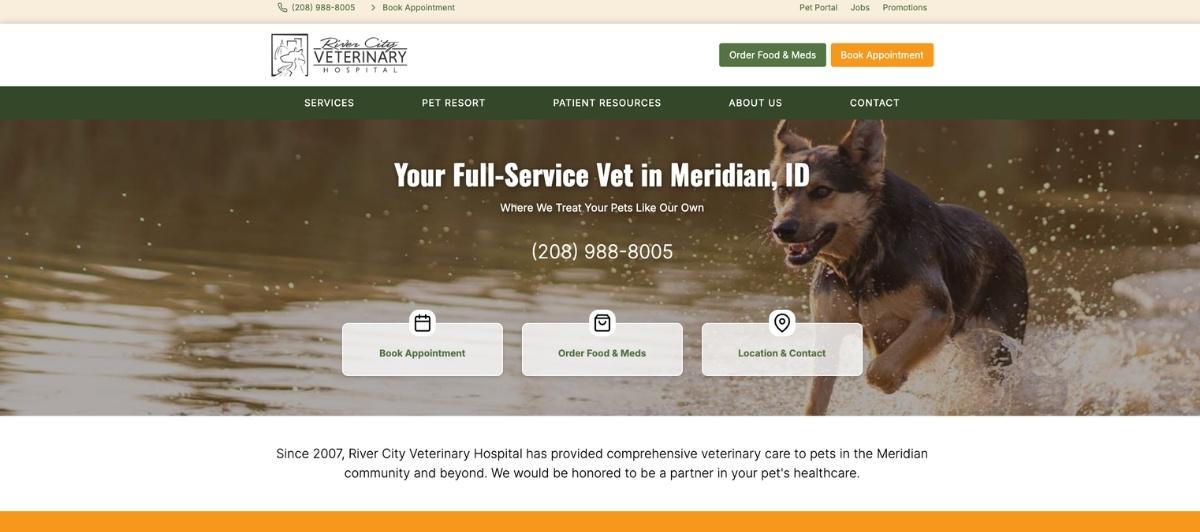
River City Veterinary Hospital creates an immersive first impression through close-up images of real pets receiving care from their veterinary team, immediately communicating the warmth and hands-on nature of the practice. The homepage’s primary CTA offers both a phone number and an online scheduler, recognizing that many pet owners prefer to speak directly with a medical professional before booking.
The standout design feature is the service section, where treatment areas, including dental, bathing, nutritional care, and behavioral care, are each paired with photos of actual patients from the hospital and linked to detailed individual pages, making clear communication a structural priority rather than an afterthought.
2. Burr Ridge Veterinary Clinic
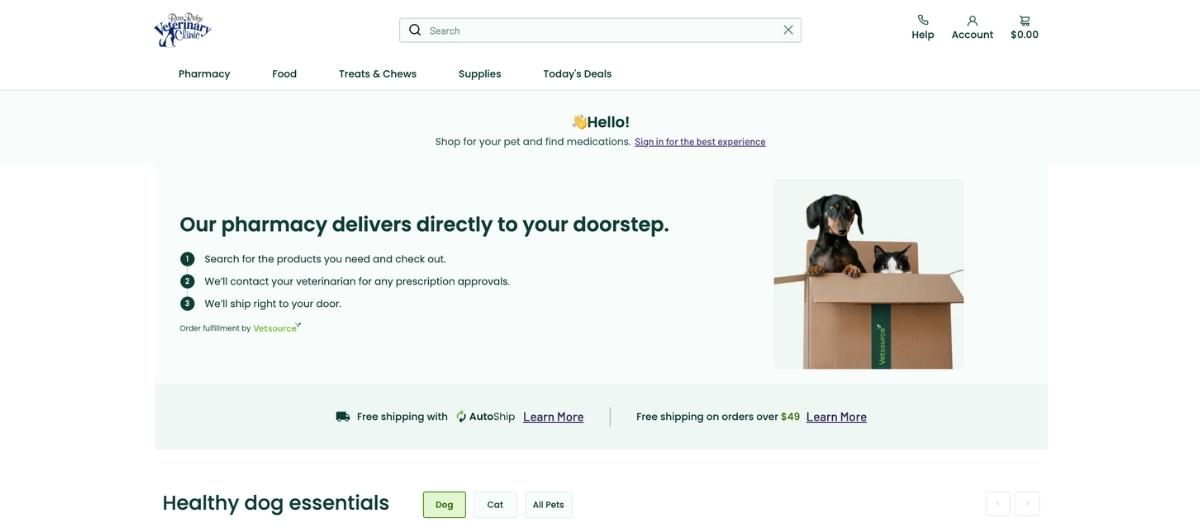
Burr Ridge Veterinary Clinic demonstrates that a minimalist structure can still feel distinctive and warm through deliberate font choices and brand personality. A playful mix of cursive and custom fonts gives the site a personalized, attentive feel that mirrors the close-contact nature of veterinary medicine.
The homepage service descriptions expand on click, keeping the layout clean while making detailed information accessible. The most notable feature is a direct header link to the online pharmacy, which allows pet owners to order specialized food and select medications straight from the site, putting real control in the hands of pet parents without requiring a call or in-person visit.
3. Middlehope Veterinary Hospital

Middlehope Veterinary Hospital opens with a welcoming message that invites pet owners to feel like part of the family, and the site’s design backs that claim up throughout. AAHA accreditation is displayed prominently to reassure pet parents evaluating the clinic’s standards of veterinary medicine, and a free first exam offer for new clients appears in the header bar, where it can’t be missed.
An active Instagram page linked from the site extends the community into social media, giving pet parents a way to connect with the practice and see other pet owners from the area engaging with the clinic between visits.
4. Adobe Veterinary Center
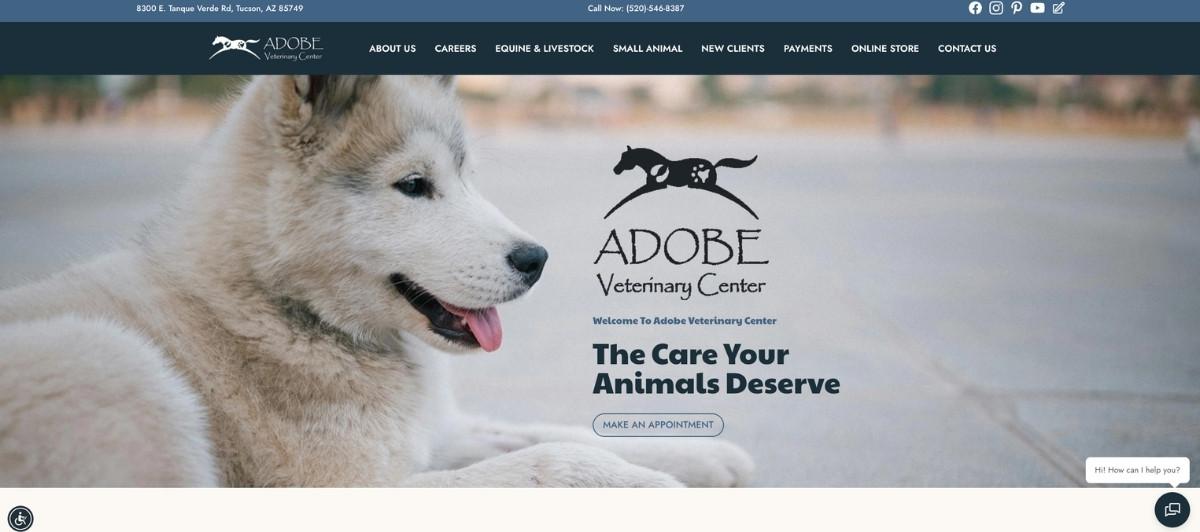
Adobe Veterinary Center distinguishes itself immediately by treating livestock and horses alongside more traditional companion animals, and the homepage design reflects that unusual breadth. A cycling photo slider showcases the diversity of patients and their smiling owners, communicating the practice’s range at the very first scroll.
The navigation bar makes a clear distinction between large and small animal services, each with its own dedicated page for species-specific information. A separate page for the Adobe Pet Resort, a premium boarding service, adds a lifestyle dimension to the practice’s online presence that many veterinary hospital websites never explore.
5. Especially Cats

Especially Cats in San Francisco is built entirely around feline health, and the site communicates that singular focus with clarity and personality from the first image. The San Francisco skyline, bordering a homepage photo of two nuzzling cats, anchors the practice in its community without stating it explicitly.
The site’s explanation of why cats receive less medical attention on average than dogs is both educational and a compelling argument for the practice’s existence. A concise list of feline-specific medical services and descriptions of how cats signal health difficulties differently than other pets makes this one of the most genuinely informative veterinary clinic websites on this list.
6. Lakewood Animal Hospital

Lakewood Animal Hospital leads with strong compassionate care messaging and a prominent appointment request button that makes the first interaction with the practice feel immediate and low-friction.
The site’s color palette draws from warm earth tones that create an inviting atmosphere distinct from the cold clinical aesthetic common to many veterinary hospital websites. A dedicated urgent care section with clearly displayed contact information and hours ensures that pet owners in an emergency know exactly how to reach the practice without searching through navigation menus.
7. VCA Animal Hospitals
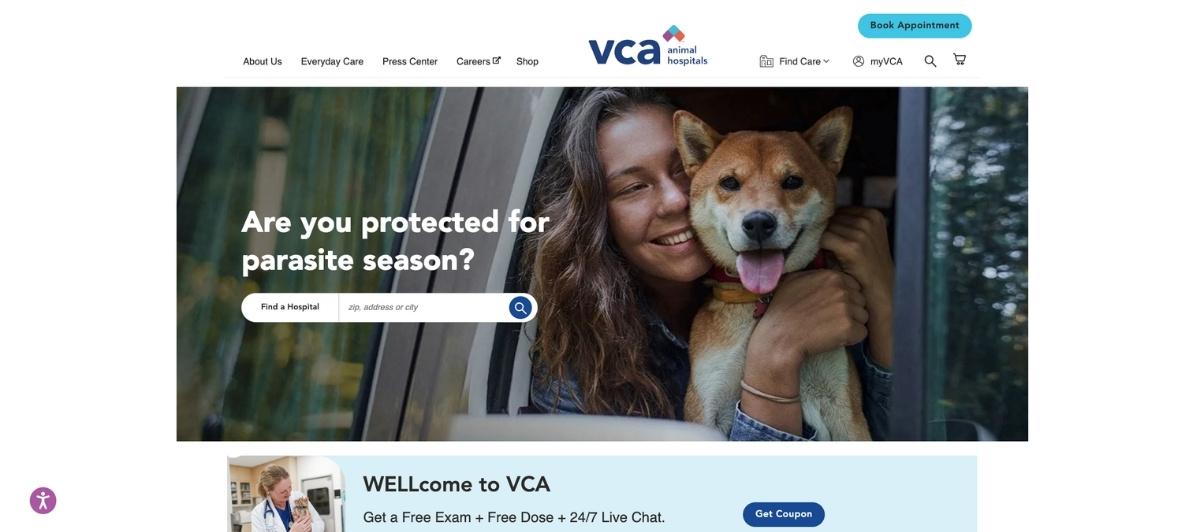
VCA Animal Hospitals is one of the most complete veterinary hospital websites in terms of feature depth. A location finder, online appointment booking, a pet health library with hundreds of articles, an online pharmacy, and a client portal for existing patients all coexist within a clean, organized navigation structure that serves every type of pet owner from first-time visitors to longtime clients managing ongoing care. For veterinary practices considering how to scale their digital presence, VCA demonstrates what a comprehensive veterinary website can accomplish when every feature serves a specific pet parent need.
8. Banfield Pet Hospital

Banfield Pet Hospital builds its entire homepage around the Optimum Wellness Plan concept, which reframes veterinary care from a reactive expense into a proactive investment in pet health. This positioning is reinforced throughout the site’s design: the messaging consistently speaks to pet parents who want to manage their animals’ medical care rather than simply respond to illness.
An online client portal, appointment booking, and a location finder serve returning clients efficiently, while the wellness plan calculator serves as a unique engagement tool for prospective pet owners evaluating the practice.
9. BluePearl Pet Hospital

BluePearl Pet Hospital serves a distinct audience: pet parents seeking specialty and emergency veterinary medicine that goes beyond what a general practice can offer. The site’s design reflects this higher-stakes environment with clear, immediate emergency contact information accessible from every page, a specialty services finder organized by condition type, and a referral portal for veterinarians who need to refer patients to specialty care. The visual design is calm and authoritative without feeling cold, which is the right balance for pet owners arriving after receiving difficult news from their primary veterinary clinic.
10. Northgate Veterinary Clinic

Northgate Veterinary Clinic uses a warm, photography-led homepage that immediately communicates the culture of the practice through real images of the veterinary team with real patients. An appointment booking button appears above the fold alongside a phone number, giving pet owners two immediate paths to contact.
The team page features individual headshots and brief personal bios for each veterinarian, which helps pet parents feel connected to the people caring for their animals before they ever walk through the door. This kind of personal visibility is one of the most underused trust signals on veterinary websites.
Design choices worth applying to any veterinary practice site
Looking across the best veterinary websites above, specific design and content decisions consistently appear on the sites that build the strongest pet owner communities. Here’s what’s worth applying to any veterinary clinic or animal hospital website.
Make appointment booking the persistent primary CTA
A sticky “Book an Appointment” CTA that follows the scroll removes the most common friction point between a pet parent’s interest and their first booked visit. Every veterinary website should make appointment booking accessible at every point in the browsing experience, not just on the contact page. For practices offering both in-person and urgent care appointments, present both options with equal visibility.
Build a team page that feels like an introduction
Pet owners choose veterinarians the way they choose any healthcare provider: based on whether they trust the person who will be in the room with their animal. A team page with genuine headshots, educational backgrounds, areas of focus in veterinary medicine, and a sentence or two about each person’s connection to animals does more trust-building work than any credential list. River City and Northgate Veterinary Clinic both demonstrate this effectively.
Display accreditations and certifications prominently
AAHA accreditation, Fear Free Certified Professional status, Cat Friendly Practice recognition, and other industry certifications are trust signals that many pet owners actively look for. These should appear near the hero section of the homepage, not buried in an About page.
Middlehope Veterinary Hospital’s approach of featuring AAHA accreditation prominently in the header demonstrates the right instinct. Our WordPress web design team builds veterinary sites with these signals integrated into the design from the start.
Create dedicated service pages for each specialty
General service lists communicate breadth. Individual pages for dental care, surgical services, wellness exams, urgent care, behavioral medicine, and any subspecialties communicate depth and attract organic search traffic from pet owners searching for specific veterinary services in your area.
Dedicated service pages with pricing, what-to-expect content, and local paragraphs serve both the pet parent’s research needs and the practice’s local SEO performance. Our SEO services help veterinary practices build exactly this kind of service-specific content structure.
Use authentic photography throughout
Stock photos of smiling vets with perfect teeth and identical dogs are out. Pet owners can spot them instantly, and so can Google. Authentic photography of your real team, exam rooms, and patients tells a more credible story, improves engagement time, and gives your site a look that stock libraries cannot match. For veterinary practices planning a website investment, professional photography of the real team and real patients is among the highest-return components of that investment.
What every veterinary website needs
Whether your practice is a solo veterinarian, a multi-doctor animal hospital, or a specialty referral center, these are the elements every veterinary website should have in place to serve pet owners and grow the practice.
- Online appointment booking, prominently placed. Difficulty getting appointments is one of the biggest drivers of pet owners switching to a new clinic. A booking tool accessible from every page, ideally synced directly with the practice calendar, removes this barrier and serves the many pet owners who prefer to book outside of office hours.
- Emergency and urgent care contact, always visible. Pet parents searching for emergency veterinary care in a crisis don’t have time to navigate menus. An always-visible emergency phone number or urgent care CTA in a persistent banner or header serves those visitors when it matters most and communicates that the practice takes pet health emergencies seriously.
- A client portal for existing patients. Access to medical records, prescription refills, appointment history, and vaccination records through a secure client portal serves ongoing pet care relationships and reduces administrative burden on the veterinary team. Banfield and VCA both demonstrate how effectively this feature can be integrated into the broader site experience.
- Pet health resources and blog content. Many pet owners search for information about symptoms, preventive care, nutrition, and behavioral issues before they ever contact a veterinary clinic. A regularly updated blog covering pet health topics builds organic search visibility, positions the practice as a trusted resource, and gives pet parents a reason to engage with the practice between appointments. Our SEO services help veterinary practices build and maintain exactly this kind of content-driven visibility over time.
- Mobile-first design and fast load speeds. Most pet owners search for veterinary care on their phones, often in moments of anxiety about a pet’s well-being. A mobile-friendly veterinary website that loads fast, displays well on small screens, and allows booking with minimal friction serves those urgent moments rather than creating additional stress. Our WordPress speed optimization service ensures veterinary sites perform well across every device and connection speed.
- ADA compliance for all visitors. Pet owners include people of every age and ability level. ADA-compliant design with proper contrast ratios, alt text, and keyboard navigation ensures every pet parent can access the information and services your practice offers. Our WordPress ADA compliance services help veterinary practices meet these standards without compromising their visual identity.
Your practice cares for every patient like family — your website should show that — Freshy makes it happen
The best veterinary websites share one quality: they make pet owners feel, before a single appointment is booked, that their animals will be in genuinely compassionate and capable hands. Every design decision, from the team photography to the appointment booking tool to the urgent care contact information, should serve that moment of trust-building.
Key takeaways:
- 83% of pet owners consider a practice’s website important in their selection process, making the veterinary website a critical business development asset
- Appointment booking should be a persistent, prominent CTA accessible from every page
- Authentic team photography and personal bios build more trust than any credential list
- AAHA accreditation and other certifications should appear near the homepage hero, not on an About page
- Emergency and urgent care contact information must be immediately visible at all times
- Dedicated service pages for each veterinary specialty serve both pet owners and local search performance
Your veterinary practice has spent years building a reputation for compassionate care. Your website should communicate that from the first second a pet owner lands on it. If it doesn’t yet, start a conversation with our team and let’s build something that does. You can also browse our portfolio to see the kind of work we bring to healthcare and professional service businesses.
FAQs
What makes a veterinary website effective?
When every element of your website is built with intent, it helps your clinic stand out, establishes trust with pet owners, and drives measurable growth for your vet practice. Effective veterinary websites combine authentic photography, prominent appointment booking, clear service information, team bios, and mobile-first design.
How important is online booking for a veterinary website?
Critical. Difficulty getting appointments is one of the biggest drivers of pet owners switching to a new clinic. Online appointment booking accessible from every page, ideally synced directly with the practice calendar, reduces friction and serves pet parents who prefer to schedule outside of office hours.
What content should a veterinary website include?
At minimum: team bios with headshots, a service list with individual pages per specialty, appointment booking, urgent care contact information, accreditation badges, client portal access for existing patients, and a pet health blog that serves both pet owners and local search visibility.
Should veterinary websites use stock photography?
No. Authentic photography of your real team, exam rooms, and patients tells a more credible story, improves engagement time, and gives your site a look that stock libraries cannot match. Pet owners identify stock photography immediately, and it undermines the personal trust that veterinary practices depend on to attract and retain clients.
How much does a veterinary website cost?
A professionally built veterinary website typically costs $3,000 to $10,000, depending on the number of service pages, team bios, patient portal integration, online booking tools, and whether local SEO structure and ADA compliance are included from the start of the project.