

The best healthcare websites do three things well: they put patients first, they translate medical complexity into plain language, and they earn trust inside the first ten seconds of a visit. Most medical practice websites do none of those things well. They’re cluttered, hard to navigate on mobile devices, and make prospective patients work far too hard to find a phone number or book appointments.
This article breaks down 14 of the best medical practice websites and exactly what each one gets right.
Here’s what we cover:
- What makes a well-designed medical practice website genuinely work for patients
- 14 of the best medical practice websites, reviewed and linked
- The design elements and content choices worth applying to your own site
- What every healthcare website needs to serve its full range of patients
- How to build a site that reflects your practice’s commitment to exceptional care
We’ve helped healthcare organizations and medical practices across the US build WordPress websites that serve patients and support practice growth. Take a look at our healthcare web design work to see what’s possible.
What separates good medical websites from great ones
Medical practice websites serve a uniquely broad target audience. Patients young and old, healthcare professionals seeking referral information, caregivers managing care for family members, and prospective patients comparing providers all arrive with different needs and different levels of medical literacy. A well-designed website has to serve all of them without overwhelming any of them.
Creating effective healthcare websites requires balancing clinical credibility and regulatory compliance with warm, human experiences that build trust with anxious patients.
Here’s what the best medical practice websites consistently get right:
- They use a simple layout with clear navigation. Whether booking appointments, finding doctors, accessing patient portals, or getting directions, every key action should be obvious and require minimal clicks. A patient who lands on a medical website from a mobile device should be able to find contact details, book appointments, and access important medical information without scrolling through irrelevant content.
- They communicate the practice’s commitment to patient care immediately. The home page should reflect the values of the practice: whether that is family medicine, specialty care, or public health. Warm photography of real physicians and real patients communicates more than any credential block can.
- They make patient education accessible. The best medical websites go beyond listing services. They provide educational content on disease information, treatment options, and drug information in a language patients can actually understand, helping them make informed decisions before and after their appointment.
- They work flawlessly on mobile devices. If a patient has to phone during office hours to book an appointment, you are losing bookings to the competitor who lets them book at 11 pm on their phone. Mobile responsiveness is not a nice-to-have for healthcare websites. It is a patient care issue.
| Weak medical practice site | Strong medical practice site |
|---|---|
| Confusing navigation with too many options | Simple layout with clear, labeled menus |
| Generic stock photography | Real physician and patient imagery |
| No mobile design consideration | Fully responsive across all screen sizes |
| Buried contact details | Phone number and appointment button on every page |
| No patient education content | Disease information, treatment options, and blog posts |
14 best medical practice websites of 2026
Medical practice websites are one type of website that has the potential to host every kind of user. People, young and old, flock to medical practice websites in order to find the best doctor for their care, view information regarding their health, pay medical bills, and so much more. Therefore, medical practice websites need to be uniquely designed so that anyone and everyone can use them.
Some of the most desired features of medical practice websites are simple navigation, clean design, and ease of access to information for patients. The websites included in this list of medical practice websites have been rated on those factors.
Ready to take a look at what makes a medical practice website so great? Let’s get started.
1. Northwestern Medicine

Northwestern Medicine is a medical group serving many suburban communities across Northwest Illinois via multiple hospitals and a network of dedicated physicians. Given the scale of care it provides, the website faces a genuine challenge: communicating an enormous amount of information without overwhelming visitors.
Easy-to-use call-to-action icons on the home page let patients quickly find a doctor, request an appointment, or access any other medical information they need. Simple navigation and a clean design make this one of the most user-friendly medical websites reviewed here, regardless of the visitor’s age or digital experience.
2. Ann and Robert H. Lurie Children’s Hospital of Chicago

Ann and Robert H. Lurie Children’s Hospital of Chicago is one of the most respected children’s hospitals in the country, and its medical website reflects that standing without feeling cold or institutional. The home page opens with patient photography that communicates the hospital’s values before a single word is read.
A clean navigation menu and a patient portal accessible to families round out a site that serves both the emotional and practical needs of every visitor, from caregivers to healthcare professionals seeking clinical information.
3. Anna Family Healthcare
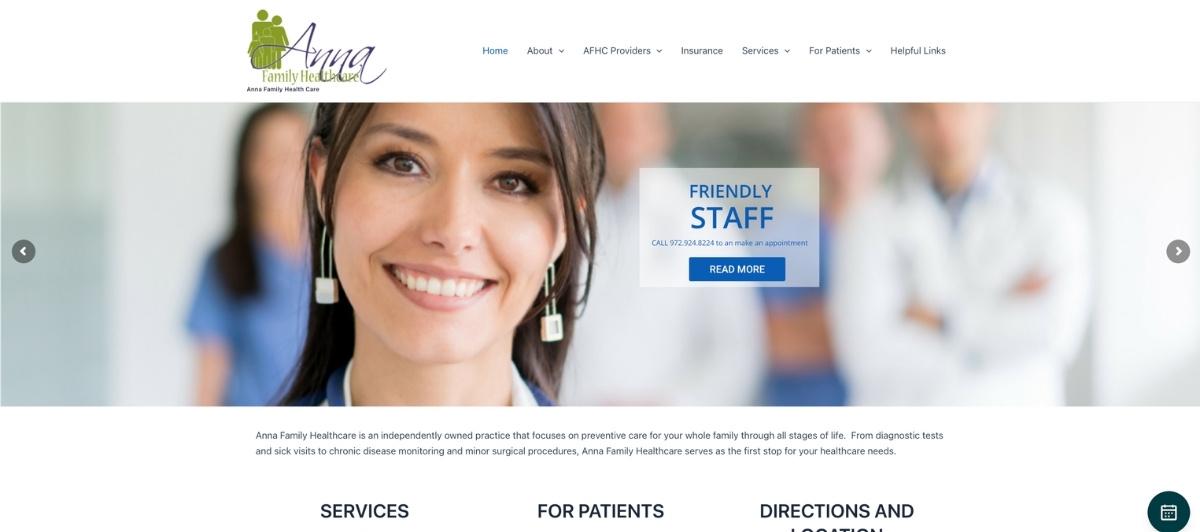
Anna Family Healthcare is a standout example of healthcare website design for a private practice. Navigation links at the top of the homepage give existing patients quick access to care information, practice updates, and downloadable forms for upcoming appointments.
The site is aesthetically clean without sacrificing functionality, making it one of the best medical practice websites for smaller family medicine operations looking to serve their community with clarity and warmth.
4. Mayo Clinic

Mayo Clinic is one of the most recognized healthcare organizations in the world, and its website delivers on that reputation. Easy-to-use navigation buttons and a calming color scheme guide visitors to exactly what they need without requiring multiple clicks or extensive searching.
The site’s depth of medical literature, disease information, drug information, and patient education resources makes it a reference point not just for patients but for healthcare professionals staying up to date on the latest clinical guidance.
5. Lanham Neuro Psychology

Lanham Neuro Psychology tackles one of the harder challenges in healthcare website design: making a complex, unfamiliar medical specialty feel approachable and human. Translucent imagery and thoughtfully written narratives weave through the homepage, informing visitors about the services offered while making the practice feel warm and accessible. It earns its place among the best medical practice websites by making a subject that can feel intimidating feel inviting instead.
6. Rush University Medical Center
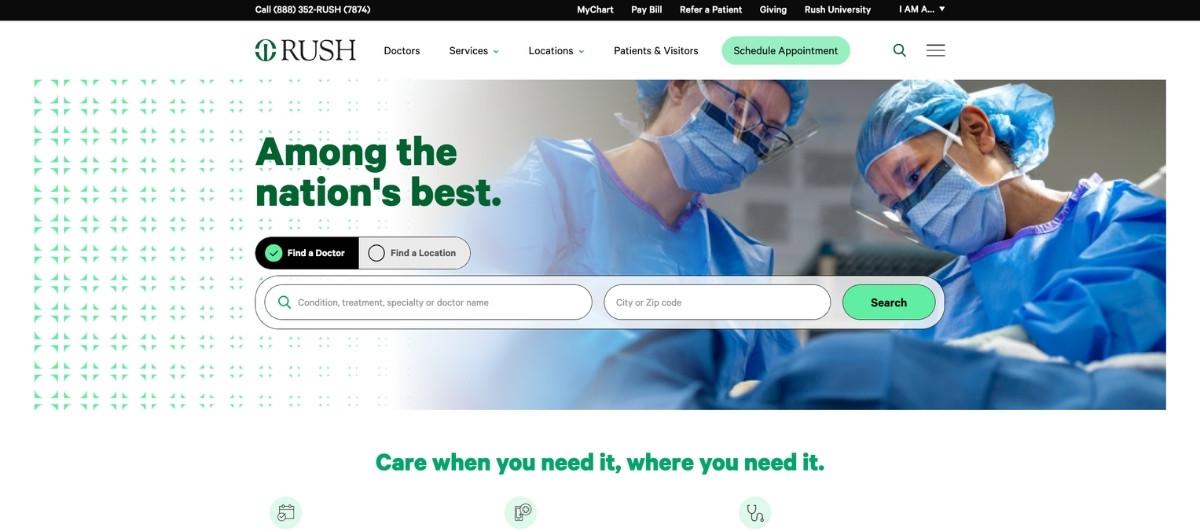
Rush University Medical Center is built around two actions from the moment a visitor lands: request an appointment or find a doctor. That clarity of purpose is what makes this site exceptional. For a large hospital network serving a broad community, the ability to deliver a simple, direct experience for patients of all ages across all screen sizes is an achievement worth studying. The site’s mobile responsiveness and clean navigation make it one of the most accessible healthcare websites on this list.
7. St. Clair Dental

St. Clair Dental uses bold, modern design to stand out in a specialty often associated with patient anxiety. Brightly colored sliders on the home page and illustrated service icons create an engaging visual experience that makes prospective patients feel positive about booking an appointment. Every smile in the photography reinforces the practice’s core promise, turning a well-designed website into one of the most effective patient acquisition tools in the dental category.
8. Weber Facial Plastic Surgery

Weber Facial Plastic Surgery prioritizes functionality over visual novelty, and the result is a site that genuinely serves its patients well. Blog content drives engagement and patient education. Service information is clearly organized.
A patient portal gives existing patients access to their care details and upcoming appointment information. The standout feature is a before-and-after photo gallery that helps potential patients make informed decisions about whether facial plastic surgery is the right treatment option for them.
9. Bates Dental

Bates Dental uses a full interior photograph of the practice on the home page to immediately create a sense of place and comfort for visitors who may be nervous about visiting a dental office. The site’s most effective design choice is making appointment booking and payment options immediately visible and simple to use, removing friction at the exact moment a patient is ready to act.
10. Nudge Psychology
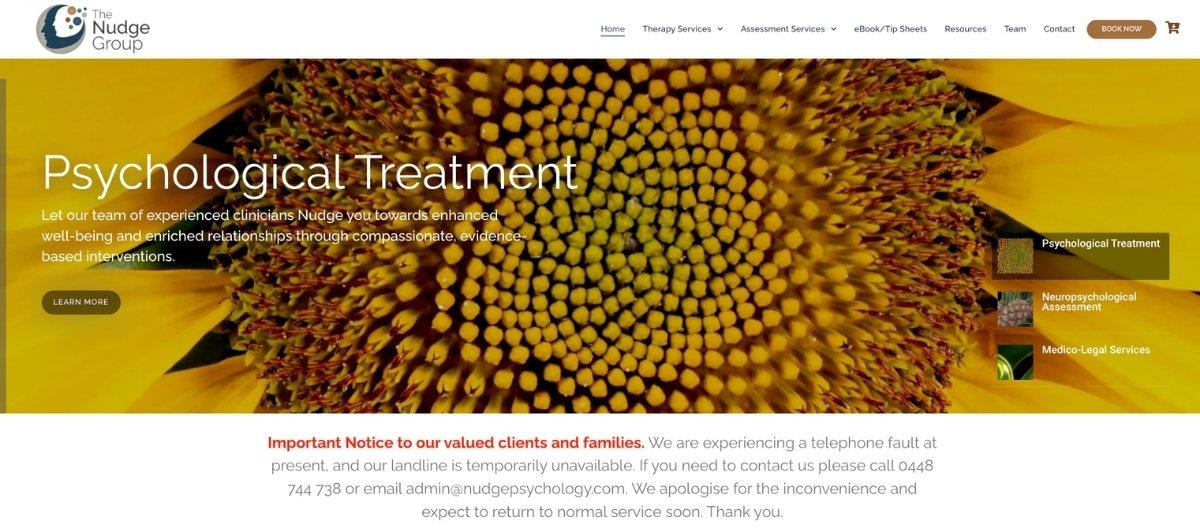
Nudge Psychology is a well-designed website that demonstrates what thoughtful web design can do for a mental health practice. Clever copywriting and an ever-changing scenic background create a welcoming, non-clinical atmosphere that respects the sensitivity of the services offered. A simple navigation menu at the top outlines service categories clearly, while the scroll-down layout allows visitors to access all relevant information without hunting through multiple pages.
11. Johns Hopkins Medical Center
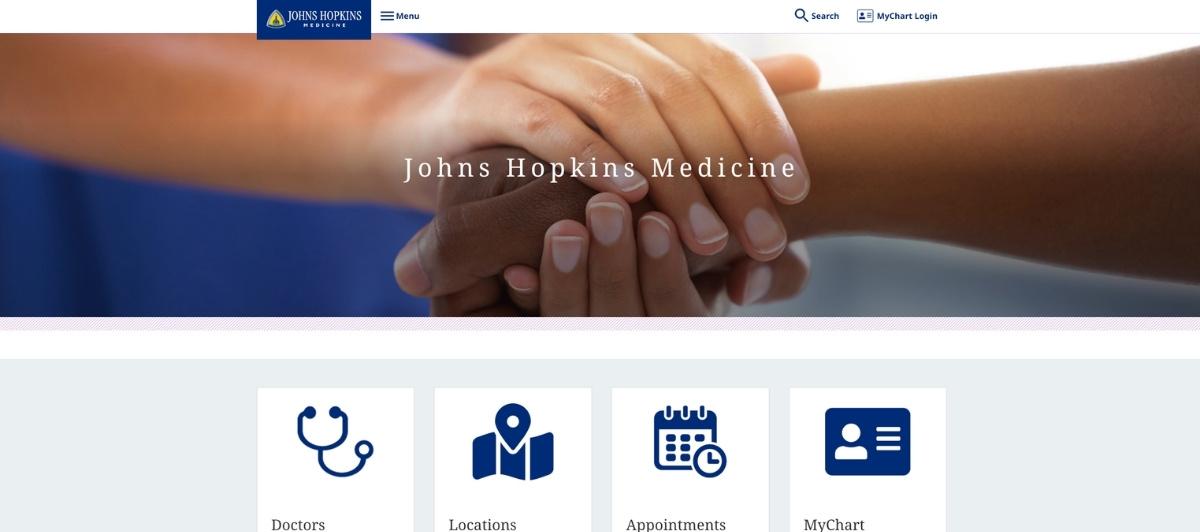
Johns Hopkins Medical Center is the top-ranked medical center in the US, and its website reflects both the breadth of its services and the depth of its research. The home page gives immediate access to patient care information, a patient portal, and a dedicated research news section that keeps healthcare professionals and the broader public informed about clinical trials and medical breakthroughs. This dual-audience approach, serving patients and the healthcare community simultaneously, sets the site apart from most medical websites.
12. Memorial Sloan Kettering Cancer Center
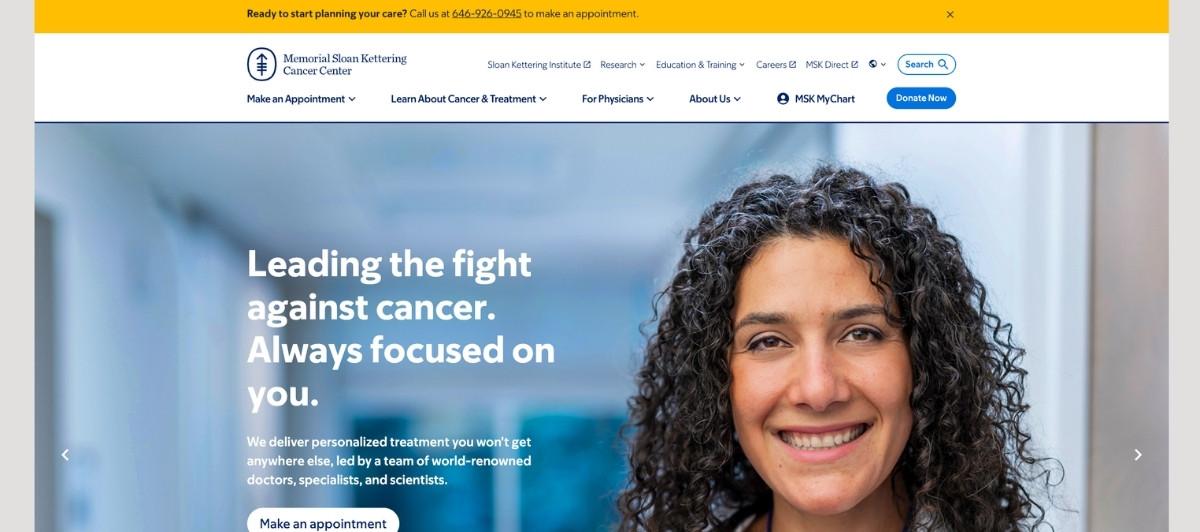
Memorial Sloan Kettering Cancer Center distills its homepage down to three primary calls to action: Make an Appointment, Find a Doctor, and Donate. This discipline in prioritizing patient needs over institutional promotion makes the site immediately useful for visitors navigating one of the most stressful health situations they will ever face. A search feature allowing users to navigate by cancer type or treatment options helps prospective patients quickly find relevant medical information without wading through unrelated content.
13. Hope Therapy Center

Hope Therapy Center serves patients seeking individual, teen, and couples therapy in Valencia, California, and its website reflects the warmth of its Southern California setting. Airy design, clear navigation, and an active blog provide both prospective patients and existing clients with a consistently useful experience. Patient education content covering therapy approaches and the types of individuals the practice serves helps visitors make informed decisions before they ever request an appointment.
14. Integrated Podiatry Clinic

Integrated Podiatry Clinic does something genuinely difficult: it makes an often-overlooked medical specialty feel both professional and approachable. The website’s tagline, “Put your feet in good hands,” sets the tone for a site that combines warm visual storytelling with thoughtfully organized service descriptions. Clear navigation, well-written copy, and a layout that allows patients of any age to find the information they need quickly make this a strong example of effective healthcare website design for a specialty private practice.
What every medical practice website must get right
Whether your practice is a single-physician family medicine office or a large multi-location healthcare organization, these are the non-negotiable elements every medical website should have in place before any marketing investment is made.
- Clear navigation organized around patient needs. The navigation menu should reflect how patients think, not how the practice is organized internally. “Find a Doctor,” “Book an Appointment,” “Patient Portal,” and “Services” are the categories patients look for first. Everything else is secondary. Allowing users to reach their destination in two clicks or fewer is the standard to aim for across all screen sizes.
- A visible, functional patient portal. Existing patients managing ongoing medical care need rapid access to their records, upcoming appointment details, and communication tools. The patient portal should appear in the main navigation and in the header of every page, never buried in a footer link. Our WordPress web design team builds healthcare sites with this patient-first structure from the first wireframe.
- Mobile responsiveness across all screen sizes. The best healthcare websites integrate mobile responsiveness as a non-negotiable design principle, meeting patients where they are. Most prospective patients research practices on their phones. A site that breaks on mobile, loads slowly, or requires pinching to read text loses those patients before they ever see the practice’s credentials. Our WordPress speed optimization service and ADA compliance services address both performance and accessibility across all devices.
- Educational content written in plain language. Medical information does not need to be translated into clinical jargon to appear credible. Blog posts, condition guides, and treatment explainers written in clear, patient-friendly language serve prospective patients researching their options while also building the search visibility that brings them to the site in the first place. Our SEO services help medical practices build exactly this kind of content-driven organic presence over time.
- Patient testimonials and social proof are strategically placed. Patient testimonials near appointment CTAs, physician profile pages, and service descriptions provide the social proof that helps undecided visitors commit to booking. For private practices competing in a crowded local healthcare market, peer validation often makes the difference between a site visitor and a scheduled appointment.
- Contact details on every page. Phone number, address, and office hours should appear in the header or at the top of every page without exception. Prospective patients who have to navigate to a separate contact page to find a phone number will often give up and search for the next provider instead.
- HIPAA compliance and data security. Any form, portal, or communication tool on a medical practice website must handle patient data securely and in compliance with HIPAA requirements. This is both a legal obligation and a trust signal. Our WordPress security services and WordPress compliance services help medical practices maintain the security standards their patients expect and deserve.
Building a medical website that serves every patient
The best medical practice websites are not just well-designed. They are built around a clear understanding of who the patients are, what they need when they arrive, and what will move them from browsing to booking. Here’s how to build one that achieves all of that.
- Design for the most anxious visitor. Medical websites serve patients who are often worried, in pain, or searching under pressure. A site that feels calm, organized, and warm performs better in this environment than one that leads with credentials and clinical terminology. Warm photography, accessible language, and a simple layout reduce anxiety and build the kind of trust that leads to a scheduled appointment.
- Make patient education a core content strategy. Practices that regularly publish medical information, disease information, and treatment guidance position themselves as trusted healthcare resources in their community. This content attracts prospective patients through organic search, keeps existing patients engaged between appointments, and demonstrates the practice’s commitment to public health beyond the walls of the clinic. Our healthcare web design and SEO services are built to support this kind of long-term content strategy from day one.
- Keep the site secure and up to date. Medical websites handle sensitive patient data and carry a level of public trust that few other site types do. A site that goes down, loads slowly, or displays outdated physician information damages that trust immediately. Our WordPress maintenance services protect your site with regular security updates, uptime monitoring, and performance optimization so your online presence stays as reliable as the care your team delivers.
- Build with growth in mind. A medical practice website built on a rigid template quickly becomes a liability as the practice evolves, adds physicians, expands services, or moves into new locations. A professionally built WordPress website grows with the practice, allowing new pages, services, and features to be added without requiring a complete rebuild.
If your current medical practice website isn’t serving your patients and your practice growth as well as it should, get a quote and let’s talk about building one that does.
Patients judge your practice online first — Freshy helps you make that count
The best medical practice websites share one quality: they meet every visitor, whether a new patient researching options, a caregiver managing care for a loved one, or a healthcare professional seeking referral information, with clarity, warmth, and exactly the information they need to take the next step.
Key takeaways:
- Simple navigation organized around patient needs outperforms complex menus every time
- Mobile responsiveness is a patient care issue, not just a design consideration
- Patient portals should appear in the main navigation of every page, not buried in a footer
- Educational content in plain language serves patients and builds long-term organic search visibility
- Patient testimonials placed near CTAs convert undecided visitors into booked appointments
- HIPAA compliance and data security are both legal requirements and patient trust signals
We’ve helped healthcare organizations and medical practices across the US build WordPress websites that serve patients well and support practice growth over time. Whether you are starting fresh or updating an outdated site, get a quote and let’s build something that reflects the care your practice delivers every day. You can also explore our portfolio to see what’s possible.
FAQs
What should a medical practice website include?
The best medical practice websites feature clear navigation, a patient portal, a mobile-friendly design, contact details on every page, patient education content, and an easy online booking option. Case studies and physician expertise sections are also essential for building credibility with prospective patients.
How important is mobile design for medical websites?
Essential. Most visitors, including prospective patients and medical professionals researching referrals, browse on mobile devices. A site that is not mobile-friendly loses patients to competitors before they ever see the practice’s credentials, services, or physician expertise.
Should private practices provide information on continuing medical education?
Yes. Medical professionals and colleagues searching for up-to-date clinical guidance appreciate practices that provide information on continuing medical education, clinical trials, and treatment developments. It builds credibility and positions the practice as a reliable resource beyond standard patient care.
What are the most important elements of a healthcare website?
The most important elements include clear navigation, mobile-friendly design, contact details on every page, patient testimonials, case studies, and educational content. These elements help both prospective patients and medical colleagues evaluate the practice’s expertise before making contact.
How do medical websites build patient trust?
Effective medical websites combine real physician photography, patient testimonials, case studies, and transparent medical services information. It is also essential to provide information that allows visitors to make informed decisions, helping prospective patients feel confident before their first appointment.
How much does a medical practice website cost?
A professionally designed healthcare website typically costs $3,000 to $12,000. Essential features like HIPAA-compliant forms, patient portals, mobile-friendly layouts, and continuing medical education resources all influence the final investment for medical professionals building a credible online presence.




)