Most WordPress agencies are built on project-based work. A client needs a new website, you build it, they pay, the engagement ends. This model generates income, but it creates a business that a buyer has to restart from scratch every month. That’s not an asset. That’s a job.
Recurring revenue transforms a WordPress agency from a collection of one-time sales into a predictable, scalable business. And buyers pay significantly more for predictable businesses than for unpredictable ones. Recurring revenue businesses can achieve 3x to 5x valuation multiples, compared to the lower multiples applied to agencies dependent on project revenue.
Here’s what we cover:
- Why recurring revenue makes your agency more valuable to buyers
- The six main ways recurring revenue increases your agency’s valuation
- The most common recurring revenue streams for WordPress agencies
- How to build and increase recurring revenue before a sale
- What buyers will specifically ask about your recurring revenue during negotiations
If you’re thinking about selling your WordPress agency and want to understand how your current revenue model affects your valuation, start a conversation with Freshy. We acquire agencies at every stage and can give you an honest picture of where you stand.
How recurring revenue increases your WordPress agency’s valuation
There are six distinct mechanisms by which recurring revenue drives up what a buyer is willing to pay for your agency. Understanding each one helps you make the case during negotiations.
1. It demonstrates strong, durable client relationships
Long-term client relationships are among the most valuable assets in any WordPress agency acquisition. When a client has been paying your agency a monthly fee for two, three, or five years, that relationship demonstrates something that a portfolio of completed projects cannot: clients stay.
Clients spend 67% more when they are returning customers, which means your existing client base is not just stable, it’s also a growth asset. A buyer who acquires an agency with strong long-term client relationships inherits revenue that doesn’t require re-selling each month and clients who are already familiar with the agency’s quality, communication style, and process.
High customer lifetime value is a direct consequence of strong client relationships, and customer lifetime value is one of the metrics buyers analyze most closely during due diligence. A five-year client relationship with a monthly retainer demonstrates a customer lifetime value that project-based engagements cannot replicate.
2. It offers predictability that buyers can model
The most fundamental advantage of recurring revenue for buyers is predictability. Monthly recurring revenue provides a baseline that buyers can model confidently when projecting post-acquisition performance. Annual recurring revenue from long-term contracts extends that visibility further, reducing the uncertainty that buyers always price into their risk assessment.
Agencies that rely on project-based work face a common problem: income spikes when projects complete and drops when the pipeline is thin. Buyers evaluating these agencies have no reliable basis for projecting future income because past project revenue provides no guarantee of future project revenue.
Recurring revenue eliminates this problem. A consistent income stream that has been running for twelve, twenty-four, or thirty-six months tells a buyer not just what the agency earned last year, but what it will earn next month. Predictable income from recurring revenue eases financing for buyers, which means agencies with strong recurring revenue attract a wider pool of qualified buyers with more financing options.
3. It is increasingly preferred by clients
50% of global consumers subscribed to services in 2022 due to their convenience. The subscription economy has normalized the idea of paying a monthly fee for ongoing access to services, and WordPress clients are no exception.
Website maintenance packages, monthly support agreements, ongoing consulting calls, and social media management retainers all map onto the subscription model that clients are already comfortable with from other areas of their business. The predictable monthly fee makes budgeting simple. The automated payment removes the need to actively reauthorize spending each period. The ongoing relationship means clients don’t need to restart the briefing process every time they need something done.
This client-side preference for recurring services creates a natural fit that makes selling recurring arrangements easier than many agency owners expect. Clients who have already experienced the convenience of a monthly retainer with your agency are far more likely to continue than clients who have only engaged on a per-project basis.
4. It reduces the volatility associated with the acquisition
Buying a WordPress agency is a significant financial commitment. Every factor that reduces the buyer’s risk makes the acquisition more attractive and justifies a higher offer.
Recurring revenue reduces the volatility associated with the acquisition in several compounding ways. It provides a baseline of income that continues regardless of whether new projects are won in the first few months after the sale. It demonstrates a business model that’s less exposed to market fluctuations and competitive pressure than one dependent on winning new work continuously. And it gives the buyer a buffer period in which to understand the agency’s operations without the immediate pressure of generating new project revenue.
Lenders financing an acquisition also respond more favorably to recurring revenue businesses because the income visibility reduces the credit risk they’re taking on. This allows buyers to access better financing terms, which makes the total transaction easier to close.
5. It enhances profitability and customer lifetime value
Recurring revenue businesses enjoy higher profit margins than those dependent on one-time sales for several reasons. Once the initial client relationship is established, delivery costs typically decrease as the team becomes familiar with the client’s systems, preferences, and requirements. Recurring services often have exceptionally high gross margins because the setup costs are amortized across months or years of delivery.
Customer acquisition costs are also significantly lower in a recurring revenue model. In a project-based agency, marketing and sales efforts go into winning every engagement from scratch. With recurring services, that investment happens once per client, and the relationship then generates ongoing income without additional acquisition costs.
Increasing customer lifetime value is one of the clearest ways to improve your agency’s financial profile before a sale, and recurring revenue is the most direct lever for achieving it. A client paying a $500 monthly maintenance fee for three years has a customer lifetime value of $18,000 from a single acquisition investment.
6. It simplifies operational integration for the buyer
Agencies with established recurring revenue streams have typically built the operational infrastructure to support consistent, repeatable service delivery. Payroll systems are stable, team responsibilities are defined, client expectations are managed, and delivery processes are documented. This makes integration significantly smoother for a new owner than stepping into a project-based agency where every engagement is different.
Buyers who acquire recurring revenue businesses can focus their energy on growth rather than stabilization. The steady income stream provides a foundation from which to make strategic decisions about new clients, new services, or new markets without the pressure of immediate revenue replacement. Recurring revenue reduces the pressure to sell new projects constantly, which is one of the most operationally significant benefits a buyer inherits.
Common recurring revenue streams for WordPress agencies
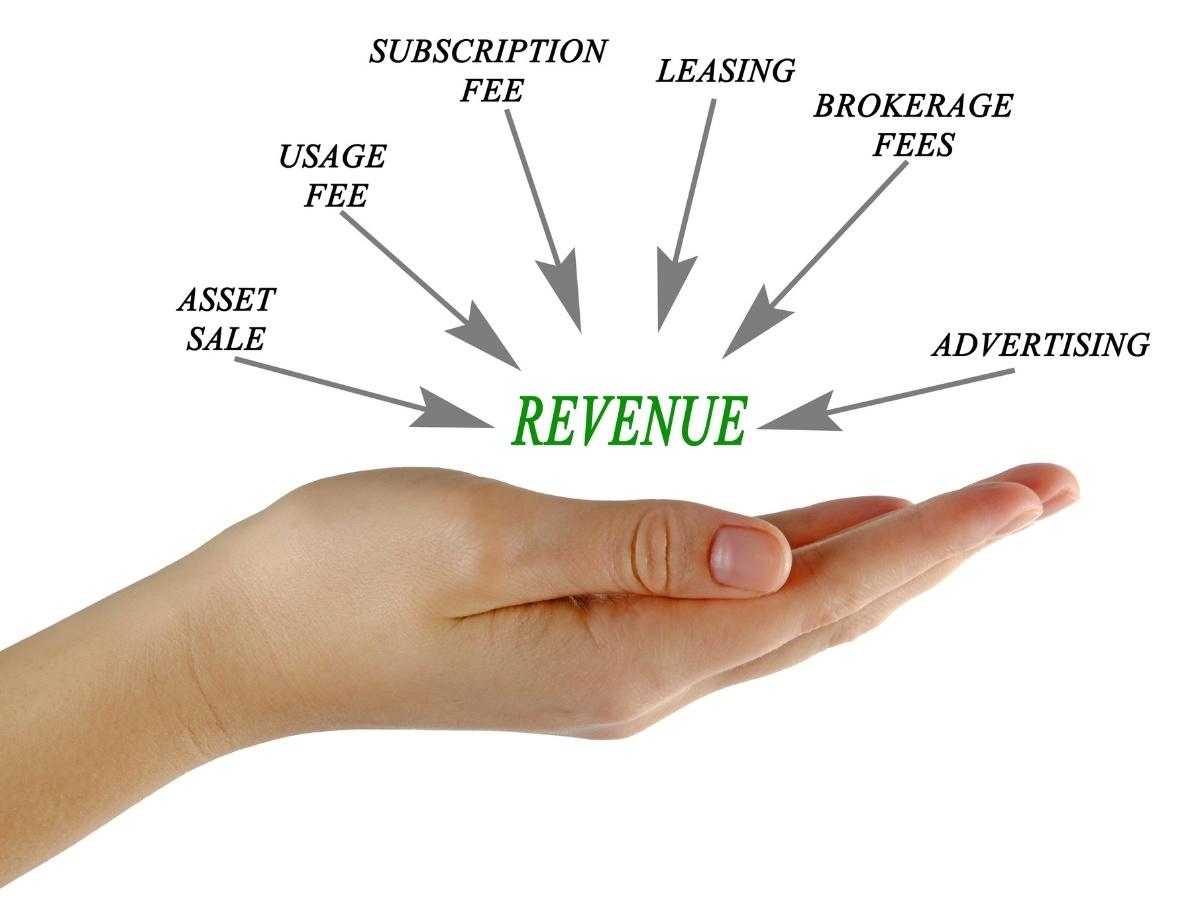
The following recurring revenue models are the most practical and proven for WordPress agencies. Most agencies can implement several of these simultaneously without significant operational changes.
Website maintenance packages
WordPress maintenance packages covering core and plugin updates, security monitoring, uptime monitoring, and regular backups are the most natural recurring revenue stream for any WordPress agency. Clients who have just paid for a new website have a clear ongoing need for maintenance, which makes upselling a maintenance package at the point of project completion the most efficient conversion in the agency’s sales process.
Monthly maintenance packages generate consistent monthly income from every client site in your managed portfolio. For agencies with large numbers of active client sites, this can represent a substantial and highly predictable income stream.
Our WordPress backups service and WordPress security service are both components that clients value highly and willingly pay for on an ongoing basis.
WordPress support and ongoing consulting calls
WordPress support packages and ongoing consulting calls structured as monthly subscriptions provide a reliable revenue stream for agencies whose clients regularly need minor technical help, content updates, or strategic guidance. Clients who need quick answers to WordPress questions, bi-monthly review calls, or a dedicated point of contact for any site-related issues are a natural fit for monthly support retainers.
This model is especially effective for clients whose websites are core operational assets, such as WooCommerce stores, membership sites, or high-traffic content sites where any technical issue has immediate business consequences.
Managed WordPress hosting
Managed WordPress hosting is one of the cleanest recurring revenue streams available to WordPress agencies because it addresses a need every client has, at a cost that is well below what most clients would pay if they sourced hosting independently while receiving professional-grade management.
Hosting clients pay a monthly fee for a service that is largely automated, making it one of the highest-margin recurring revenue streams in the WordPress space. Once established, recurring services require little time investment to maintain while generating consistent monthly income.
Retainer agreements for ongoing development and SEO
Monthly or annual retainer agreements for ongoing development work and search engine optimization provide recurring income while deepening the client relationship significantly. Clients who engage your agency on a retainer basis are embedding your team into their ongoing operations, which makes switching to a competitor considerably more costly and disruptive.
Retainers work particularly well for clients whose websites are in active development phases, adding features and improving performance over time, or for clients who need regular SEO work to maintain and grow organic search visibility.
Social media management services
Offering social media management on a monthly retainer basis generates additional revenue from existing clients without requiring significant additional infrastructure. Many WordPress agency clients run their online marketing alongside their website, and a monthly fee for content creation, scheduling, and reporting creates a predictable income stream while expanding the agency’s relationship with each client.
Content marketing subscriptions and blog content creation
Content marketing subscriptions, where your agency produces a defined volume of blog content each month at a fixed monthly fee, are another effective recurring revenue mechanism. Clients who need consistent content for SEO purposes or audience engagement often prefer a subscription model because it fits their marketing budget as a predictable line item rather than a variable cost.
How to build and increase recurring revenue before selling
If your agency currently depends primarily on project-based work, shifting toward a recurring revenue model before a sale is one of the highest-return investments you can make. Here’s how to approach it.
Convert existing project clients first
Your existing client base is the most fertile ground for recurring revenue. Clients who have already worked with your agency trust your team and understand your service quality. Converting them to an ongoing monthly arrangement requires less persuasion than acquiring a new client from scratch.
Identify clients whose sites were built in the last one to three years and reach out with a maintenance or support proposal. Frame it around the ongoing value they receive, continued site security, performance monitoring, faster response to any issues, and priority access to your team, rather than around the cost. Clients who understand the value of what they’re receiving convert at significantly higher rates.
Introduce recurring offerings at project close
The most efficient time to sell an ongoing maintenance package or support retainer is at the point of project completion, when the client’s satisfaction with your work is highest, and the value of protecting their new site is most tangible.
Build recurring service offerings into your standard project close process so that every project client receives a clear proposal for ongoing maintenance, support, or hosting at handover. Even a modest conversion rate at this stage, applied consistently across all project completions, produces meaningful recurring revenue growth over twelve to eighteen months.
Create structured monthly subscription tiers
Packaging your recurring services into tiered subscription plans makes the decision simple for clients. Rather than custom-quoting each recurring engagement individually, offer two or three clearly defined tiers covering different levels of access, update frequency, and support response time.
Structured tiers with fixed pricing at each level are easier for clients to commit to, easier to communicate in your marketing, and easier for buyers to model when projecting future revenue. Many businesses have adopted a subscription-based model, and WordPress agencies that package services this way benefit from the same client preference for simplicity and predictability.
Acquire new clients with recurring services in mind
As you grow your client base, prioritize relationships that have the potential to become long-term. Online marketing strategies that target clients with ongoing website needs, such as ecommerce businesses, content publishers, membership organizations, and growing local businesses, produce better recurring revenue outcomes than one-time brochure site clients.
Content marketing through your own agency blog, search engine optimization for relevant service terms, and referral programs that reward existing clients for introducing new business all generate a steady flow of new clients who are already predisposed to value ongoing relationships.
Offer longer payment plans for large projects
Longer payment plans for large projects spread project revenue across multiple months and create a payment rhythm that can be converted to a maintenance or support relationship at project completion. A client who has been paying monthly throughout a project build is already accustomed to a monthly billing relationship with your agency, which lowers the psychological barrier to continuing that arrangement into the post-launch phase.
What buyers will ask about your recurring revenue

Recurring revenue is viewed as a significant asset by prospective buyers, but they will probe its quality and durability carefully during due diligence. Prepare to address each of these questions with specific data before entering negotiations.
| What buyers ask | What it reveals |
|---|---|
| What are your monthly and annual recurring revenue figures? | The size and composition of the recurring income stream |
| What are your renewal rates? | Whether clients actively choose to continue each period |
| What is your churn rate? | The quality of service delivery and client satisfaction |
| What is the average customer lifetime value? | How long clients typically remain engaged |
| How diverse is your client base? | Whether recurring revenue is concentrated in a small number of accounts |
| How much revenue comes from existing vs. new clients? | The balance between retention and acquisition in your growth model |
| What percentage of total revenue is recurring? | How dependent the business is on project revenue to fill gaps |
| What are the terms and duration of your recurring contracts? | Whether contracts are month-to-month or offer a longer-term commitment |
High churn rates, heavy concentration in one or two accounts, or recurring revenue that represents only a small fraction of total income will all reduce the number of buyers willing to apply. Addressing these weaknesses before the sale, through client diversification, improved service quality, and longer-term contract structures, produces a meaningfully stronger negotiating position.
Build a Recurring Revenue Model That Makes Freshy Say Yes
Recurring revenue is not just a financial metric. It’s evidence of a well-run agency with strong client relationships, consistent service delivery, and a business model that will continue to generate income regardless of which owner is running it. That’s exactly what buyers pay a premium for.
Key takeaways:
- Recurring revenue businesses can achieve 3x to 5x valuation multiples compared to project-dependent agencies at similar revenue levels
- Monthly recurring revenue provides the income predictability that buyers most value when modeling post-acquisition performance
- Clients spend 67% more when they are returning customers, and high customer lifetime value is one of the most compelling metrics in any agency acquisition conversation
- The most practical recurring revenue streams for WordPress agencies are maintenance packages, support retainers, managed hosting, development retainers, SEO programs, and social media management
- The most efficient time to sell a recurring arrangement is at project close, when client satisfaction is highest
- Buyers will scrutinize renewal rates, churn rates, customer lifetime value, and client base diversity during due diligence, so prepare specific data for each before entering negotiations
- Converting even a moderate share of your project-based clients to monthly arrangements in the twelve to eighteen months before a sale can significantly improve your valuation multiple
Freshy is actively acquiring WordPress agencies and places significant weight on recurring revenue quality when evaluating every opportunity. We’re interested in agencies at every stage, whether you have an established recurring revenue model or are building one. Fill out our quick form to start a no-pressure conversation today.
FAQs
Does recurring revenue really increase a WordPress agency’s sale price?
Yes significantly. Recurring revenue businesses can achieve 3x to 5x valuation multiples because they offer buyers predictable income, lower acquisition risk, and a demonstrated client retention track record that project-based agencies cannot match. Buyers are willing to pay more for an agency whose income doesn’t depend on winning new projects every month.
What are the best recurring revenue streams for a WordPress agency?
The most effective recurring revenue streams for WordPress agencies are website maintenance packages, ongoing support and WordPress consulting retainers, managed hosting plans, monthly development retainers, ongoing SEO programs, and social media management services. Each addresses a genuine ongoing need that clients already have and is straightforward to package as a monthly subscription.
How much recurring revenue should my agency have before selling?
Most serious buyers want to see recurring revenue representing at least 50 to 60% of total agency revenue, with the strongest valuations going to agencies where recurring revenue represents 70 to 80% or more. Even moving from 20% to 40% recurring revenue in the twelve months before a sale can meaningfully improve the multiple buyers’ offer.
What do buyers look at when evaluating recurring revenue?
Buyers evaluate renewal rates, churn rates, average customer lifetime value, client base diversity, contract terms and duration, and what percentage of total revenue is recurring versus project-based. High renewal rates and low churn rates signal quality service delivery. Client diversity ensures the recurring revenue isn’t dangerously dependent on one or two accounts.
How do I convert project clients to recurring revenue arrangements?
The most efficient conversion happens at project close when client satisfaction is highest. Build a standard maintenance or support package proposal into your project handover process. For existing clients who completed projects in the last one to three years, reach out with a maintenance proposal framed around ongoing site security, performance monitoring, and priority access to your team. Structured monthly tiers make the decision simpler than custom-quoted arrangements.
Is recurring revenue more important than total revenue when selling an agency?
For most buyers, yes. Total revenue tells buyers how large the agency is; recurring revenue tells them how durable and predictable it is. An agency with $300,000 in annual recurring revenue from maintenance and retainer clients is typically more attractive to buyers than one with $500,000 in annual project revenue without recurring contracts, because the recurring model provides a foundation the buyer can rely on from day one.